

Imagine wandering through the peaceful waters of Hong Kong’s Mai Po Nature Reserve, expecting to spot familiar frogs or dragonflies, only to stumble upon a tiny, transparent creature that looks like it’s come straight out of a sci-fi movie. That’s exactly what happened recently when scientists discovered a venomous, cube-shaped jellyfish sporting an astonishing 24 eyes. This unexpected find not only enriches the local biodiversity but also challenges what we thought we knew about jellyfish and their underwater world.
Amazon co-founder MacKenzie Scott has donated over $19 billion to charity in just five years
Diamond batteries powered by nuclear waste promise 28,000 years of clean energy
A Surprising Encounter in Mai Po
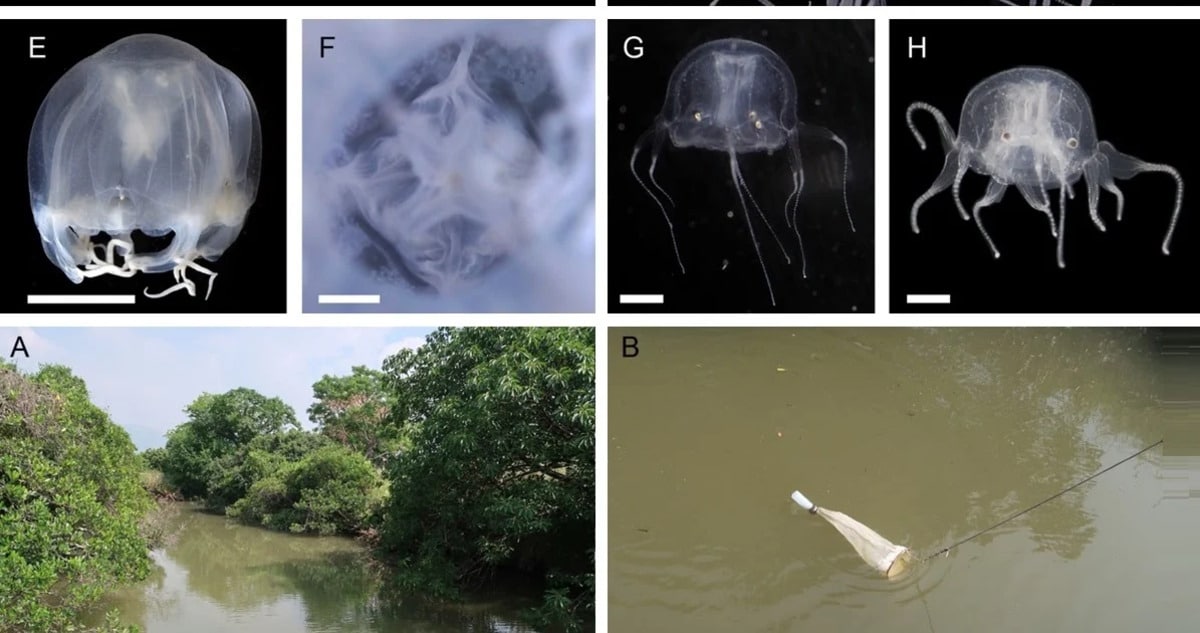
During a routine survey of water quality at Mai Po, a team of researchers cast their nets into a calm, green-hued pond, hoping to collect samples of local aquatic life. Instead, they pulled up something truly extraordinary: a minuscule jellyfish with a perfect cubic shape and an eye count that left them baffled. Published in the journal Zoological Studies, this discovery unveiled a brand-new species belonging to the notorious box jellyfish family.
Dr. Laura Chen, a marine biologist affiliated with the Hong Kong Oceanographic Society, shared her awe: “Finding a new species is always exciting, but this one’s unique characteristics make it particularly remarkable.” It’s rare to come across such a creature, especially in a place as well-studied as Mai Po.
The Venomous Marvel with 24 Eyes
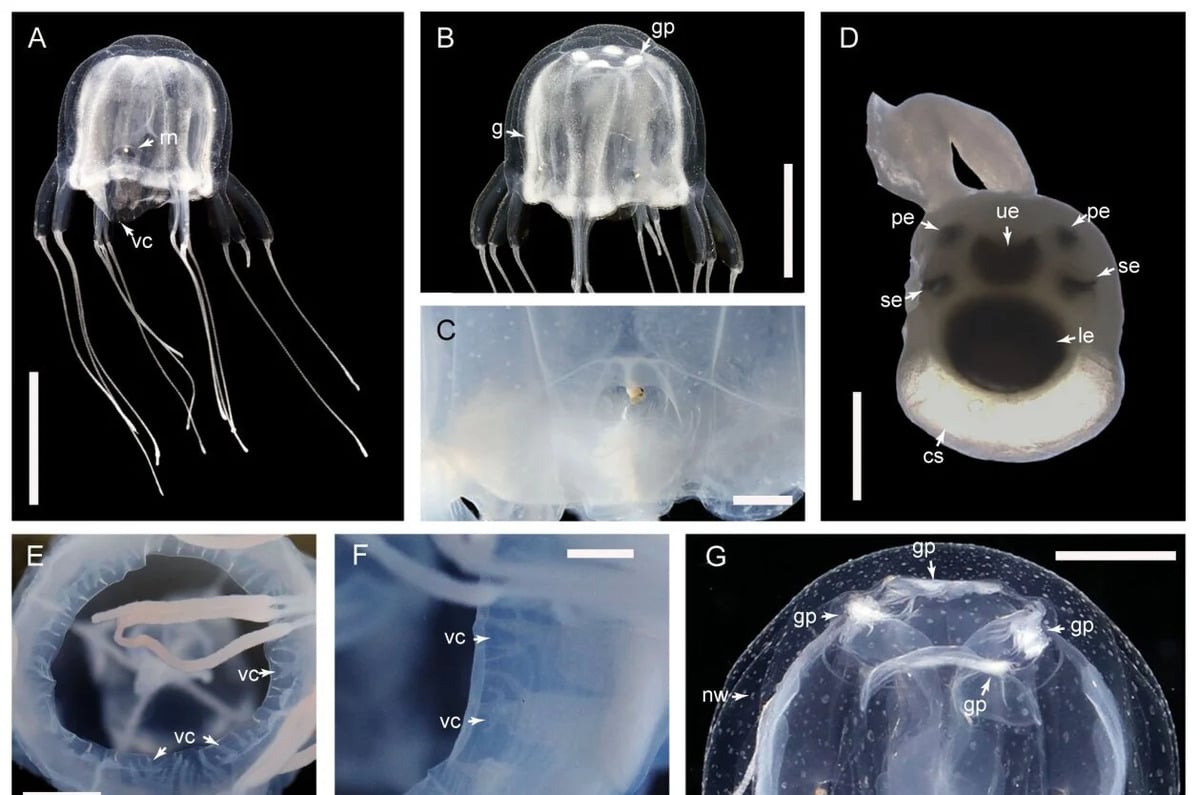
Named Tripedalia maipoensis in honor of its home waters, this jellyfish is a tiny wonder of nature. Measuring less than a centimeter, its translucent, cube-shaped body carries a faint milky tint. From each corner emerge three slender tentacles, totaling 12, while an incredible array of 24 eyes cluster around its body in groups of six.
These eyes are more than decorative—some are specialized for detailed image capture, while others detect changes in light, giving the jellyfish a wide visual range to navigate its surroundings. “Box jellyfish are among the ocean’s most venomous creatures,” notes Dr. Michael Lee from the Marine Research Institute. “Discovering a new species with such complex vision adds a fascinating chapter to their biology.”
Unique Features That Set It Apart
Beyond its shape and eyes, Tripedalia maipoensis has a clever way of getting around. At the base of its tentacles lie paddle-like structures that act like tiny oars, allowing it to swim with surprising speed and agility. This quick movement helps it hunt prey and avoid becoming someone else’s meal.
Dr. Chen recalls a dive where she observed the jellyfish darting through the water. “It was mesmerizing—watching this delicate cube zip along so gracefully was like seeing a living work of art in motion.”
NASA warns China could slow Earth’s rotation with one simple move
This dog endured 27 hours of labor and gave birth to a record-breaking number of puppies
The Significance of This Discovery
Finding Tripedalia maipoensis is more than a new name for marine biology books. It offers fresh insights into how jellyfish adapt and evolve to thrive in specific environments. By studying how this species flourishes in Mai Po’s unique conditions, scientists can better understand the delicate balance of freshwater ecosystems.
Importantly, this discovery also highlights why protecting natural habitats like Mai Po is crucial. “Every new species we uncover reminds us how rich and vulnerable these ecosystems are,” Dr. Chen emphasizes. “Preserving them ensures we keep discovering nature’s hidden wonders.”
Embracing the Wonders of Nature
Discoveries like this tiny, venomous cube-shaped jellyfish remind us that the natural world still holds endless surprises, even in places we think we know well. Whether you’re a seasoned scientist or a curious nature enthusiast, there’s always something extraordinary waiting just below the water’s surface.
Conservation organizations such as the World Wildlife Fund (WWF) stress the importance of ongoing research and habitat protection. Supporting these efforts helps ensure that future generations will continue to be amazed by the astonishing diversity of life on our planet.
So, next time you’re near a pond or exploring a coastline, keep your eyes open—you might just catch a glimpse of a creature watching back, with 24 eyes and a story to tell.