
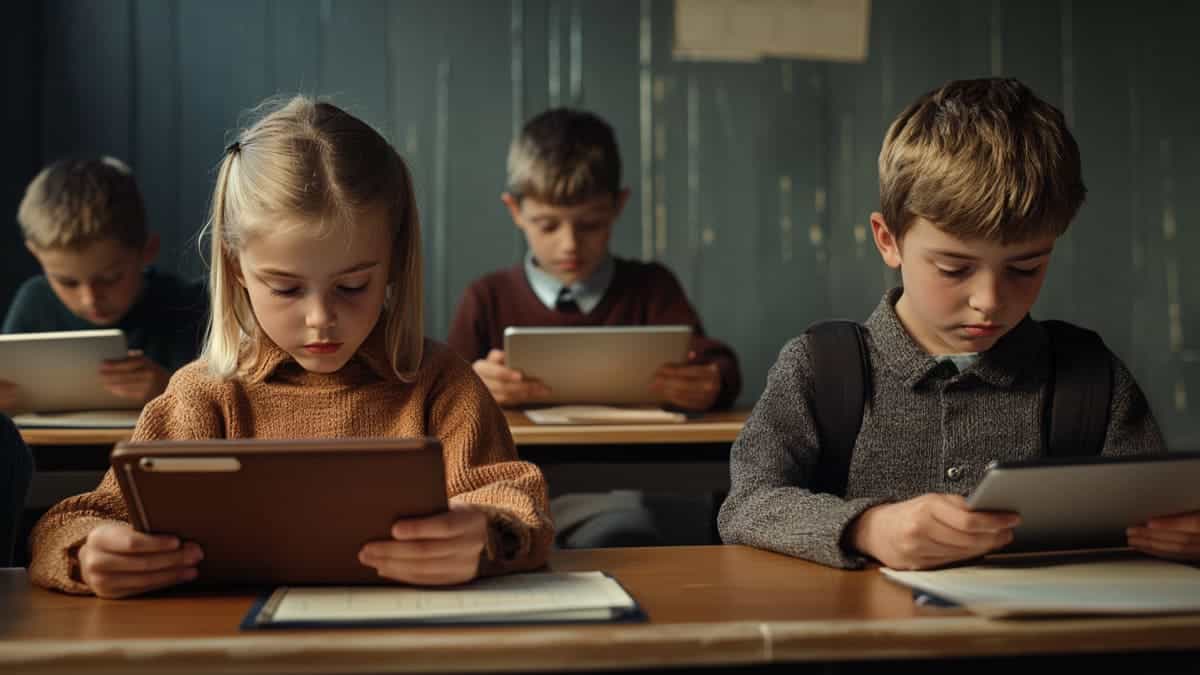
For years, technology in classrooms was hailed as the future of education, with the promise of more engaging lessons and greater access to knowledge. However, Sweden—a country often at the forefront of educational reforms—has recently raised concerns. They now argue that excessive use of screens in schools may be doing more harm than good. In response, the Swedish government is pushing to bring back traditional textbooks to combat the academic decline that’s been linked to digital tools.
Amazon co-founder MacKenzie Scott has donated over $19 billion to charity in just five years
Diamond batteries powered by nuclear waste promise 28,000 years of clean energy
How Screens Took Over Classrooms ?
Over the past decade and a half, Sweden embraced a digital-first approach in education. From elementary schools to high schools, tablets and laptops became commonplace in classrooms. These devices were used for everything from researching assignments to studying for exams. At first, this shift seemed to offer more interactivity and faster access to resources. However, it wasn’t long before the downsides began to surface.
Parents began expressing concerns about their children’s focus, worrying that students were spending more time playing games or watching videos than studying. Studies have also shown that reading on backlit screens can strain the eyes and lead to quicker fatigue, making it harder for students to retain information compared to reading from paper. Moreover, many young learners found it difficult to develop critical thinking skills when relying heavily on digital devices. This concern was underscored by Sweden’s Minister of Education, Lotta Edholm, who pointed out that over-reliance on digital tools could hinder cognitive development.
A Decline in Academic Standards
Despite Sweden’s reputation for educational excellence, the results have been sobering. Swedish students continue to perform well in reading comprehension compared to their European peers, but overall academic results have been on the decline. This trend led the government to reevaluate its tech-heavy policies. According to Edholm, the problem lies in the over-reliance on digital tools, which has led to a lack of critical thinking and an overconfidence in online sources.
Sweden is not alone in facing these challenges. Educators and policymakers around the world are grappling with how to incorporate technology into education without compromising learning outcomes. However, Sweden’s response has been notable for its decisiveness: they are scaling back on digital tools in favor of printed materials.

Returning to Traditional Textbooks
In a bold move, the Swedish government has committed to reintroducing textbooks in schools. The country has already allocated €60 million in 2023 and an additional €44 million for 2024, with plans to continue funding such initiatives through 2025. The aim is clear: every student will have access to a physical textbook for each subject. Some schools have even begun to move away from teaching literacy on tablets, opting instead for hands-on methods with paper and pencils.
This return to printed books isn’t just a nostalgic move; research shows that students tend to retain more information when they engage with material presented in print. The experience of flipping through pages, free from the distractions of digital devices, fosters deeper comprehension and greater focus.
NASA warns China could slow Earth’s rotation with one simple move
This dog endured 27 hours of labor and gave birth to a record-breaking number of puppies
Balancing Innovation with Effectiveness
While the push to bring back textbooks has been widely supported, it also raises important questions about the role of technology in modern education. After all, digital tools offer undeniable advantages—such as encouraging creativity and improving communication between teachers and parents. Platforms like Pronote, for example, have replaced traditional correspondence books in some countries, allowing teachers to easily share schedules, grades, and attendance records with parents.
The challenge, however, lies in finding the right balance. Sweden’s experience serves as a reminder that while technology can enhance learning, it is not a substitute for the foundational benefits of traditional teaching methods. As the Swedish education system recalibrates, educators worldwide will likely be keeping a close eye on the results.
A Wake-Up Call for Educators Worldwide
Sweden’s decision to scale back on the use of screens in schools is a bold acknowledgment that overuse of technology can actually hinder student progress. For parents, educators, and policymakers everywhere, it’s a call to reflect on how best to prepare students for the future. By integrating the best aspects of digital tools with the proven benefits of traditional teaching methods, we might just find the ideal learning environment that blends the old with the new.
In the end, it’s clear that technology should be used to complement, not replace, the educational techniques that have stood the test of time.