
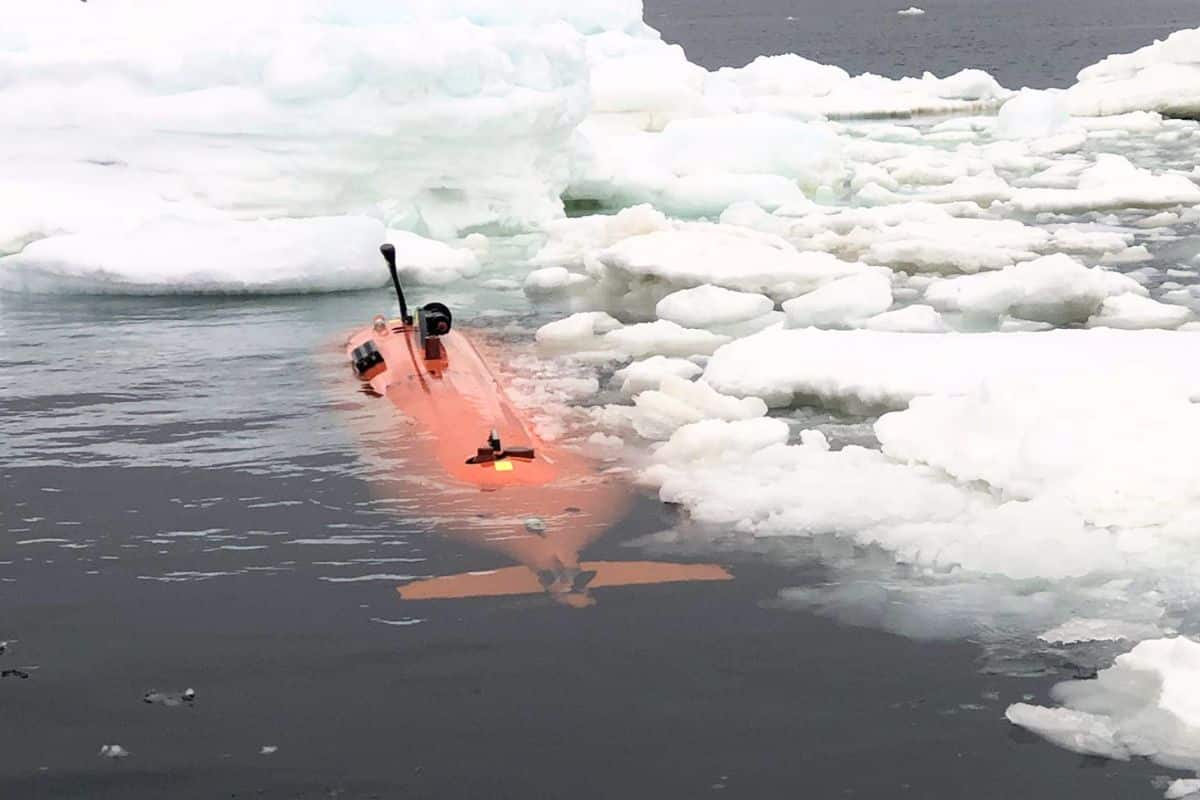
An extraordinary expedition recently ventured deep into the icy heart of Antarctica, offering a rare look at a world so remote and unexplored that it feels almost mythical. A team of international researchers from the University of Gothenburg sent an autonomous submarine named Ran beneath the towering glaciers of Western Antarctica. Its mission? To uncover hidden secrets beneath the ice and enhance our understanding of how sea levels may change in the future. As someone who’s always been captivated by polar exploration—since childhood documentaries fueled my fascination with life in extreme environments—this story is nothing short of awe-inspiring.
Amazon co-founder MacKenzie Scott has donated over $19 billion to charity in just five years
Diamond batteries powered by nuclear waste promise 28,000 years of clean energy
Penetrating the Mysteries of Antarctic Ice
Every trip into Antarctica feels like stepping into the unknown, where the landscape is both harsh and mysterious. The Ran submarine was programmed to dive deep into a vast cavity under the Dotson Glacier, equipped with an advanced sonar system. Over 27 days, the submarine traveled more than 1,000 kilometers, plunging 17 kilometers into the glacier’s secretive interior. When I first saw images of glacial caverns on TV, they struck me as otherworldly—almost like viewing a hidden world, reminding me just how much remains undiscovered beneath the ice.
A Window to the Invisible
The data collected by Ran has provided unprecedented insight into the glacier’s underside. Oceanography experts have described the submarine’s high-resolution maps as offering a view akin to seeing “the dark side of the moon.” These detailed images reveal the hidden landscapes beneath the glacier, from rugged peaks to deep valleys and formations that resemble sand dunes. Understanding these intricacies is crucial for scientists, as it helps them better comprehend the physical processes occurring beneath these vast ice sheets. Institutions like the National Snow and Ice Data Center (NSIDC) emphasize the importance of these revelations in understanding future climate impacts.
Key Discoveries Under the Glacier
The expedition uncovered a series of groundbreaking discoveries. For the first time, scientists could measure the subglacial currents and document the rapid melting occurring at vertical fractures within the glacier. These findings offer new insight into why certain parts of the Dotson Glacier are melting faster than expected. The detailed mapping revealed a surprisingly complex landscape at the base of the glacier, with peaks, valleys, and plateaus that challenge our previous assumptions about how glaciers form and behave. It reminds me of a time when I explored a museum exhibit on glaciers, and the new maps bring that experience to life—only now, it’s on a global scale.
New Models and Emerging Questions
Ran’s data has prompted scientists to rethink existing models of glacial behavior. The glacier’s base is far more complex than previously imagined, featuring diverse landforms that could be influenced by both moving water and the Earth’s rotation. This has led glaciologists to develop improved models to predict the speed and extent of glacier melt. Experts from NASA and other international research bodies agree that these insights are vital for refining projections of sea-level rise.
Implications for Glacier Modeling
The high-resolution maps provided by Ran are poised to revolutionize our understanding of Antarctic ice. Not only do they help validate and calibrate satellite observations, but they also enable more accurate simulations of glacial dynamics. Experts like Karen Alley, a renowned glaciologist, believe this data will be a game-changer for glacier modeling. With these enhanced models, we can better predict how changes in the ice sheets will affect global sea levels—a critical factor in the ongoing discussions about climate change.
Future Perspectives of the Study
While there are still many unanswered questions, the success of the Ran mission marks a significant leap forward in polar research. The discoveries made offer hope that, with further exploration and technological advancements, we can unlock even more secrets of the Antarctic ice. Researchers are eager to build on this pioneering work, continuing to push the boundaries of what we know about the planet’s most remote regions.
Stories like this highlight the incredible strides we’re making in environmental science and remind us that there are still many wonders beneath the surface of our planet waiting to be explored. It’s moments like these that ignite our curiosity and deepen our connection to the Earth. Have you ever been amazed by the hidden corners of nature? I’d love to hear your thoughts or experiences that have sparked your own curiosity about our ever-changing world.
NASA warns China could slow Earth’s rotation with one simple move
This dog endured 27 hours of labor and gave birth to a record-breaking number of puppies