
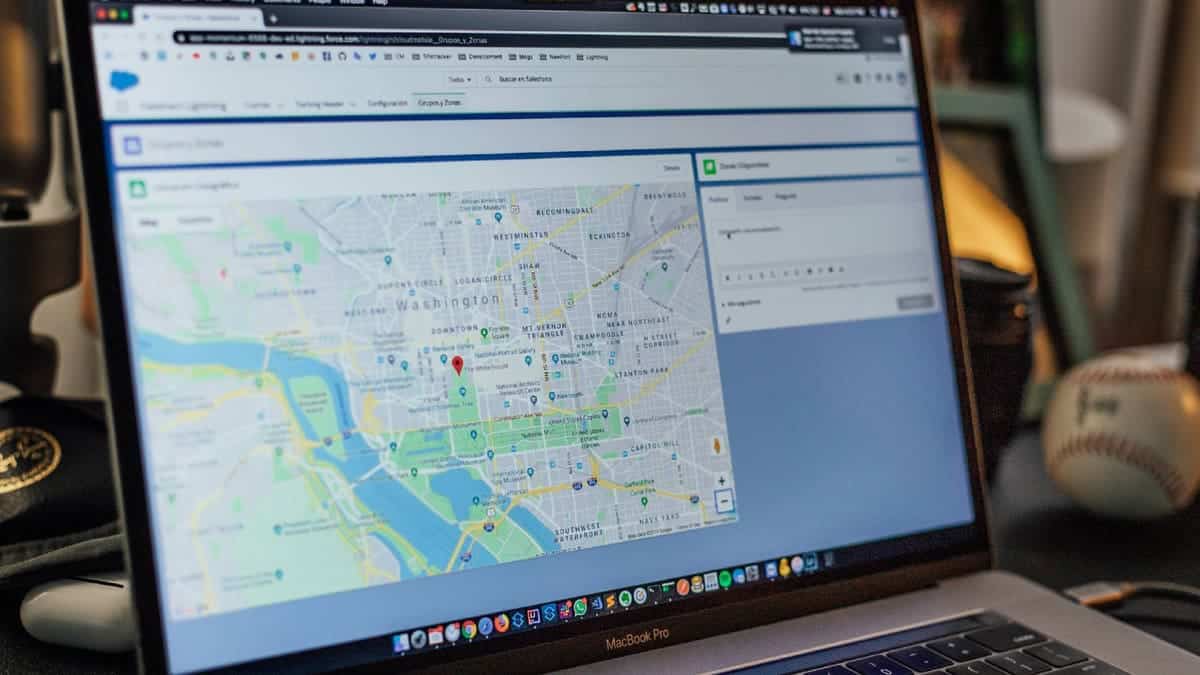
For years, Google Maps has been the go-to app for millions, providing instant directions, location details, and more. But a recent change has disrupted the familiar flow for users in the European Union. If you’ve noticed a missing feature on Google’s search results lately, it’s not just you—Google Maps no longer appears in the search results, thanks to the European Union’s new regulations. This change marks a significant shift in how we interact with the tech giant.
Amazon co-founder MacKenzie Scott has donated over $19 billion to charity in just five years
Diamond batteries powered by nuclear waste promise 28,000 years of clean energy
The Digital Markets Act Shakes Up the Tech Landscape
The driving force behind this shift is the Digital Markets Act (DMA), a set of regulations aimed at curbing the dominance of major tech companies and promoting a more competitive digital ecosystem. Introduced by the EU, the DMA is designed to prevent monopolistic behavior by large corporations like Google. Essentially, it’s an effort to give consumers more choice, ensuring that no single company dominates multiple digital sectors.
Google’s tight integration of its services—such as Maps, Calendar, and Docs—into its search engine has been a focal point of criticism for years. The idea was that by embedding these tools into search results, Google made it difficult for competitors to thrive. With the new rules under the DMA, Google is now required to untangle these connections, starting with the removal of Google Maps from search results.
Google Maps Disappears from Search Results
Until recently, it was almost second nature to search for a location on Google and have a map preview appear in the corner of the screen, complete with directions. But now, for users in the EU, that convenience is gone. Not only has the Maps preview disappeared, but the Maps tab—which once sat proudly alongside tabs for Images and News—has also been removed.
For many, this change has been frustrating. What used to be a two-click process to get directions now requires an extra step: opening the Google Maps app or website separately. While this may seem like a minor inconvenience, it’s a noticeable change for users who were accustomed to having it all in one place.
Balancing Convenience and Fair Competition
Why is this happening? The EU’s decision to enforce these changes stems from concerns over unfair competition. Google dominates the global search engine market with an overwhelming share of users. By bundling its Maps service with its search engine, it effectively pushed out competing mapping services and made it difficult for them to gain traction.
While this integration was convenient for users, it created an imbalance in the market. Other companies offering mapping and navigation services, like HERE WeGo and OpenStreetMap, struggled to attract new users. By forcing Google to remove Maps from search results, the EU aims to foster a more competitive environment, though it has left some wondering if the inconvenience is worth the long-term gain.
What’s Next for Google and Its Competitors?
The removal of Maps from search results is just one of several measures imposed by the Digital Markets Act. Other tech giants, like Apple, are also facing similar regulatory pressure. For Apple, the act requires them to open up their App Store to alternative platforms in the EU, a move that further decentralizes the tech ecosystem.
NASA warns China could slow Earth’s rotation with one simple move
This dog endured 27 hours of labor and gave birth to a record-breaking number of puppies
For Google, this means finding new ways to meet user expectations while complying with the DMA. On the other hand, competitors in the mapping space—such as HERE WeGo and OpenStreetMap—might see an opportunity. With Google Maps no longer automatically appearing in searches, users now need to seek out other navigation options, potentially opening the door for these alternatives to capture new users.
A New Digital Landscape?
These changes are part of a broader effort to reshape how tech companies operate in Europe and could eventually shift the global digital landscape. While some users may experience temporary inconvenience, the long-term effects could mean a more open and diverse digital marketplace, where innovation thrives and no single company wields too much power.
In the short term, the absence of Google Maps in search results is frustrating for those accustomed to seamless navigation. But in the long run, this could lead to a more balanced market, offering consumers better choices and ultimately making the digital world a more competitive—and perhaps more creative—place.
So, while this change might leave some users scratching their heads, it’s a step toward a future where technology serves consumers more fairly. And who knows? It might even open up new possibilities for smaller companies to rise and innovate in the space that Google once dominated so exclusively.