
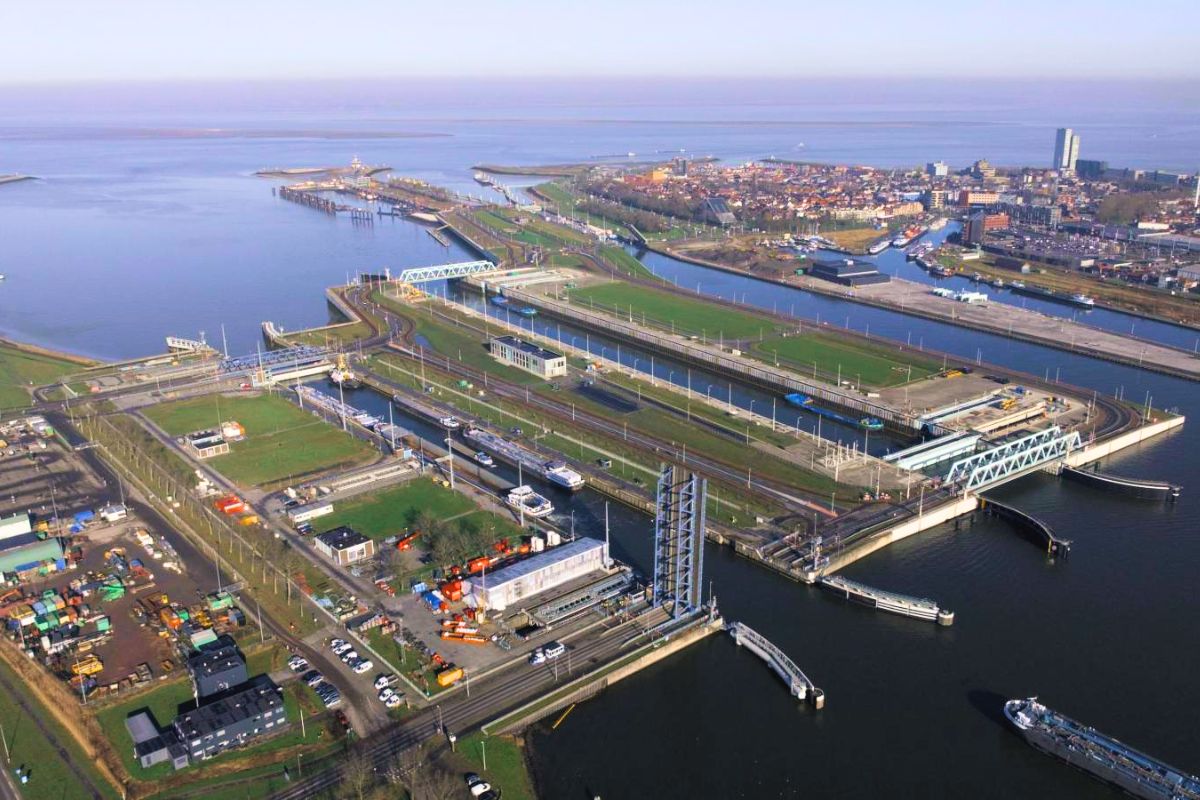
This colossal lock on the Ghent–Terneuzen Canal—opened on 11 October 2024—spans 427 m by 55 m by 16.44 m, enabling larger vessels for the Netherlands, Belgium and France, and was delivered on budget thanks to Building Information Modeling (BIM).
Amazon co-founder MacKenzie Scott has donated over $19 billion to charity in just five years
Diamond batteries powered by nuclear waste promise 28,000 years of clean energy
The Terneuzen Lock: a strategic link for the Netherlands, Belgium and France
I still recall watching a convoy of barges inch along a narrow canal in southern France—an exercise in patience that underscored how vital smooth inland waterways are for trade. Now multiply that bottleneck by ten, and you understand why the new Terneuzen Lock on the Ghent–Terneuzen Canal has become a game-changer for the Netherlands, Belgium and France. Opened on 11 October 2024, this lock stretches 427 m long, spans 55 m wide and plunges 16.44 m deep¹, allowing much larger vessels to glide through without delay. According to the TEN-T framework, such upgrades are “essential to bolster Europe’s internal market and reduce road congestion,” demonstrating the lock’s strategic importance¹.
Major technical challenges
This wasn’t a matter of digging a hole and pouring concrete. The Sassevaart consortium dredged 11.5 million m³ of sediment to widen the canal², cast 300 000 m³ of high-strength concrete and installed 32 000 tonnes of steel reinforcement and 60 000 tonnes of structural steel. Meanwhile, a temporary channel and interim lock kept freight moving—a logistical ballet that required precise coordination².
Did you know? The volume of material removed could fill over 4 600 Olympic-sized swimming pools.
BIM: the heavyweight ally
Enter Building Information Modeling (BIM), the digital backbone that kept this leviathan on track. By creating a unified 3D model via the Bimplus platform, engineers spotted clashes—such as misaligned steel beams—before construction began. Silvy Santosa, BIM specialist at BAM Infraconsult, explains: “With BIM, our entire team can view and update the model in real time, reducing rework and accelerating delivery.” The result? Fewer errors, leaner schedules and a project delivered within its 1.208 billion-euro budget³.
A template for future projects?
The European BIM Task Group reports that projects using BIM enjoy up to 30 % fewer cost overruns and a 20 % faster delivery. With Terneuzen’s success, other mega-infrastructure schemes—from Alpine tunnels to Mediterranean ports—are adopting the same approach to standardize digital workflows and share best practices across borders.
Sources:
-
North Sea Port. “New Lock in Terneuzen provides economic boost and bigger ships for North Sea Port.” https://en.northseaport.com/new-lock-in-terneuzen-provides-economic-boost-and-bigger-ships-for-north-sea-port
-
GWW Bouw. “New Terneuzen Lock: 11.5 million m³ of land finds a new use.” https://gww-bouw.nl/en/waterworks/new-lock-terneuzen-how-115-million-cubic-meters-of-land-finds-a-new-use/
-
ALLPLAN. “How BIM Helped Build the New Lock Terneuzen.” https://www.allplan.com/blog/how-bim-helped-build-the-new-lock-terneuzen/