
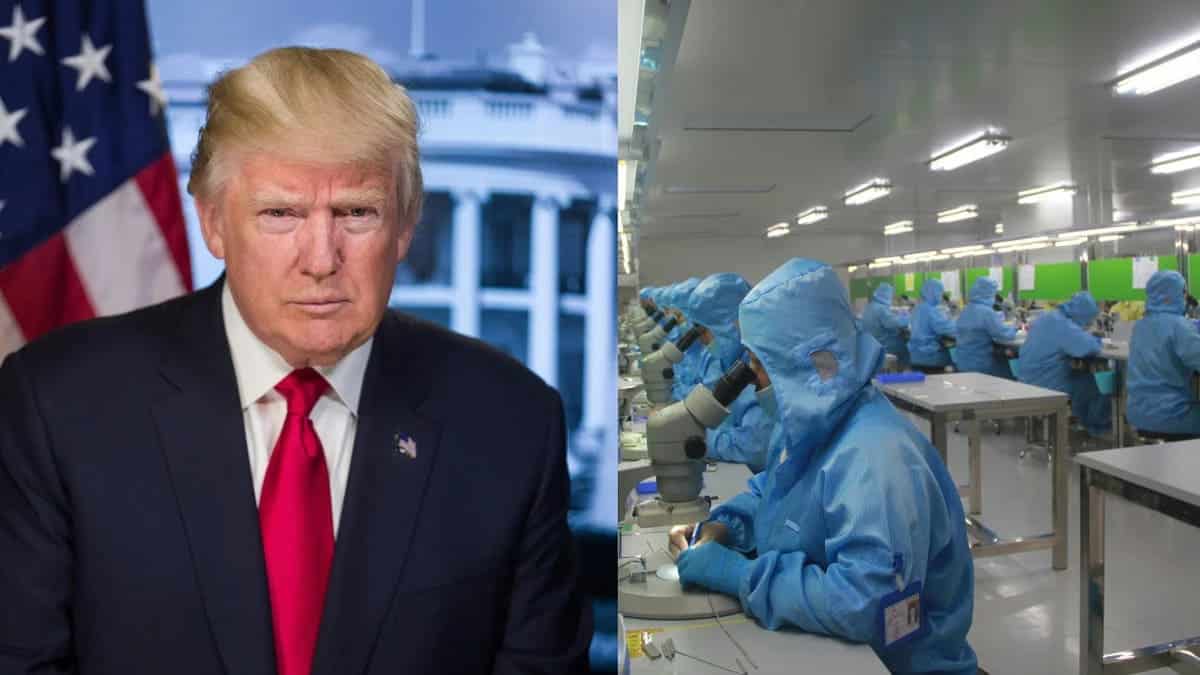
For years, the United States has dominated the semiconductor industry, leading the world in the development of electronic chips. However, in recent years, China has made impressive strides, narrowing the technological gap at an astonishing rate. The key players in this transformation? Huawei and Xiaomi—two of China’s tech giants. Their rise is prompting important questions in Washington about how China closed the gap so quickly and what this means for global tech dominance.
Amazon co-founder MacKenzie Scott has donated over $19 billion to charity in just five years
Diamond batteries powered by nuclear waste promise 28,000 years of clean energy
The Embargo That Sparked a Surge
The turning point came in 2019 when the U.S. government imposed strict sanctions on several prominent Chinese tech companies, with Huawei at the center. These sanctions restricted Huawei’s access to essential components from American suppliers like Qualcomm and Intel, both crucial for producing advanced chips. The goal behind these sanctions was to stifle China’s technological growth, particularly in semiconductor manufacturing, and to maintain the U.S.’s global leadership in this critical field.
But instead of slowing China down, the sanctions acted as a powerful catalyst for innovation. The restrictions pushed China to accelerate its efforts to develop its own semiconductor capabilities. Billions of yuan were funneled into domestic chip manufacturing, research, and talent development. Instead of relying on foreign technology, China focused on building self-sufficiency in chip production. While Chinese chips may not yet match the ultra-advanced 3-5 nanometer chips produced in Taiwan or South Korea, they represent a giant leap forward in reducing China’s dependency on foreign suppliers and boosting its position in global tech¹.
Huawei and Xiaomi: Front-runners in the Race
The advancements made by Huawei and Xiaomi have been particularly noteworthy. Huawei made headlines when it developed its own Kirin 9000S processor, which was used in the company’s latest Mate 60 Pro smartphone. Manufactured at SMIC (Semiconductor Manufacturing International Corporation) in Shanghai, this chip demonstrated China’s growing ability to produce sophisticated semiconductors domestically, despite the U.S. embargo.
Xiaomi also made significant progress by designing its own chips, focusing on areas such as energy management and camera systems. Although Xiaomi’s chips still lag behind industry leaders like Qualcomm and Apple, they represent a crucial step forward for China. These innovations indicate that China is no longer entirely dependent on foreign suppliers for important components, a major milestone in the country’s technological journey².
What’s even more significant is not just the individual successes of Huawei and Xiaomi, but the broader shift in China’s approach to chipmaking. The Chinese government has heavily invested in establishing research institutes, funding domestic chip foundries like SMIC, and pushing for innovative chip architectures. For example, the RISC-V architecture is an open-source alternative to Western technologies like ARM and x86. These steps have allowed China to create its own industry standards and reduce reliance on dominant Western firms³.
The Growing American Concern
China’s rapid progress in the semiconductor industry hasn’t gone unnoticed in the U.S. As Huawei and Xiaomi continue to break new ground, U.S. officials have become increasingly concerned. The U.S. has long been the leader in semiconductor manufacturing, but with China’s advancements, that position is now under threat.
NASA warns China could slow Earth’s rotation with one simple move
This dog endured 27 hours of labor and gave birth to a record-breaking number of puppies
Some experts predict that within the next decade, China could be capable of producing its own high-end chips independently of any foreign technologies. If this happens, it would radically shift the global technology landscape, particularly in industries that depend on semiconductors, such as telecommunications, computing, and electronics⁴.
The U.S. now faces stiff competition, as the once unchallenged monopoly on cutting-edge semiconductor production is increasingly being challenged by China. The embargo, originally intended to stunt China’s growth, has inadvertently propelled the country into the forefront of semiconductor innovation. It’s a testament to how restrictions can sometimes lead to unexpected breakthroughs and, in this case, could tilt the balance of power in the global semiconductor market.
Conclusion: A Technological Battle Ahead
Although China has not yet claimed victory in the semiconductor race, its achievements to date prove that sanctions can sometimes accelerate technological progress. Huawei and Xiaomi serve as prime examples of how China has adapted, innovated, and invested in its own chip development. As competition intensifies, the U.S. is realizing that it can no longer rest on its laurels in the semiconductor sector. The fight for technological supremacy is now more competitive than ever, and China is no longer just playing catch-up—it’s racing ahead.
With its growing expertise in chipmaking, China is laying the groundwork for a future where it could become a true competitor to the West in the semiconductor space, and the global technology landscape is in for a dramatic shift. The future of electronic chips is no longer just about American dominance—it’s a battleground where China is proving its strength and ambition.
Sources:
-
“Sanctions and Their Impact on Global Semiconductor Supply Chains.” https://www.logisticsinsider.in/silicon-sanctions-assessing-the-impact-of-u-s-semiconductor-tariffs-on-global-tech-supply-chains-and-economic-stability/
-
Xiaomi. “Xiaomi’s Innovations in Chip Design and Manufacturing.” https://www.mi.com/global/discover/article?id=4926
-
“The Rise of RISC-V in China’s Semiconductor Strategy.” https://marketanalysis.com/chinas-strategic-shift-to-risc-v-market-implications-and-growth-prospects/
-
Semiconductor Industry Association. “The Future of Semiconductors: The Growing Competition.” https://www.semiconductors.org/winthefuture/