
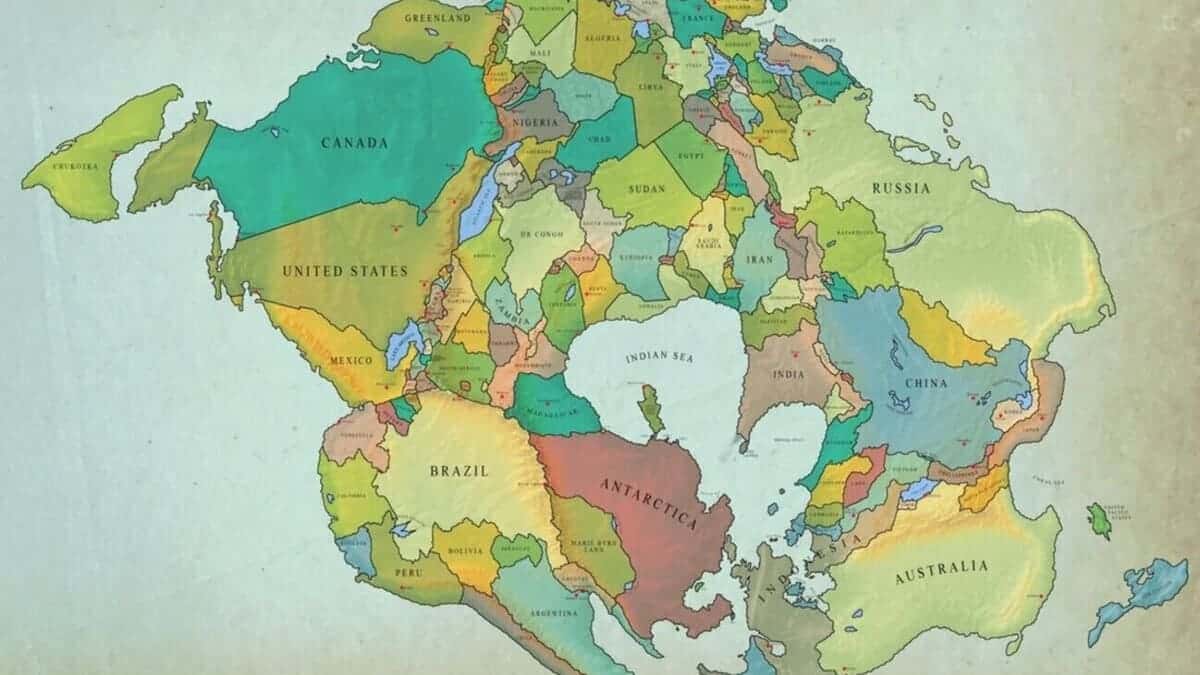
Imagine a world where all the continents have slowly drifted together, forming a vast landmass surrounded by an enormous ocean. It may sound like something from a sci-fi novel, but in reality, this is the natural process of tectonic plate movement at work. According to scientists, in 250 million years, Earth could very well host a brand-new supercontinent, reshaping the planet’s geography as we know it. Let’s take a closer look at the fascinating possibilities of this far-off future.
Amazon co-founder MacKenzie Scott has donated over $19 billion to charity in just five years
Diamond batteries powered by nuclear waste promise 28,000 years of clean energy
The Science Behind Supercontinents
To understand the potential future of Earth’s continents, it’s helpful to think of the planet’s surface like a giant jigsaw puzzle. Each piece represents a tectonic plate, which moves at a very slow pace. These movements—though imperceptible in the short term—are responsible for things like earthquakes, the formation of mountain ranges, and the drift of continents across the globe. Over millions of years, plates collide, separate, and shift, resulting in the formation of supercontinents.
One of the most famous supercontinents in history was Pangaea, which existed around 335 million years ago. Over time, it broke apart, giving rise to the continents we know today. But Pangaea wasn’t the first supercontinent. Before it, there was Columbia, formed about 1.5 billion years ago, followed by Rodinia, which assembled roughly a billion years ago and later broke apart. This cycle of landmass assembly and disassembly is a constant, slow process that will continue long after we’re gone.
What Could the Next Supercontinent Look Like?
Predicting exactly what Earth’s continents will look like in 250 million years is a complex task. The speed at which tectonic plates move and the ways they interact are difficult to forecast with certainty. However, scientists have come up with four potential scenarios for the next supercontinent, each offering a different vision of what the world might look like:
- Novopangaea: In this scenario, the continents would drift toward the Pacific Ocean, eventually closing it off completely.
- Aurica: Here, India takes center stage, bringing surrounding continents together in a vast landmass.
- Amasia: This model imagines North America and Asia colliding at the North Pole, creating a supercontinent that would dominate the Arctic region.
- Pangaea Proxima: Perhaps the most likely model, this scenario envisions the reunion of Africa, the Americas, Eurasia, Australia, and Antarctica into one enormous landmass.
Each of these possibilities offers a unique perspective on how the continents might align, driven by the unpredictable forces beneath the Earth’s crust.
A Glimpse of Pangaea Proxima
Among these various models, Pangaea Proxima stands out as the most well-developed and realistic projection. According to paleogeographer C. R. Scotese, this supercontinent would bring nearly all of today’s continents together, closing off the Atlantic Ocean while shifting Europe northward to meet Asia. Imagine South America merging with Africa, creating a massive landmass with dramatic geographical shifts.
Some areas, like Scotland and New Zealand, may remain isolated, but the vast majority of the world’s countries would find themselves neighbors to places they’re not used to. These shifts would completely transform not just the physical landscape but also the geopolitical dynamics of the future.
More Than Just a Thought Experiment
While the idea of a new supercontinent is fascinating, the study of these landmass cycles offers much more than just geological curiosity. Supercontinents play a significant role in shaping ocean currents, climate patterns, and biodiversity. The formation of a supercontinent can dramatically alter global weather, influencing everything from rainfall patterns to ecosystem diversity.
NASA warns China could slow Earth’s rotation with one simple move
This dog endured 27 hours of labor and gave birth to a record-breaking number of puppies
By studying the past supercontinents, scientists gain a clearer understanding of Earth’s history and the potential environmental changes in our future. For example, the collision of continents could trigger extreme weather events or shifts in biodiversity, which are crucial factors in understanding and predicting climate change and environmental challenges.
Earth’s Ever-Changing Future
Although none of us will live to see Pangaea Proxima take shape, contemplating its eventual arrival serves as a powerful reminder of how dynamic and ever-changing our planet is. The idea of tectonic forces shaping the world in ways we can’t see day-to-day offers a humbling perspective on the slow, yet relentless power of Earth’s geological processes.
The supercontinent that will form in the next 250 million years is just one chapter in the ongoing story of Earth’s transformation. As we continue to study and understand these processes, we gain a deeper appreciation for the complex and dynamic nature of the planet we call home. Whether it’s the rise and fall of supercontinents or the forces shaping life on Earth, the future is an ever-evolving landscape—one that continues to unfold at a pace beyond our comprehension.