
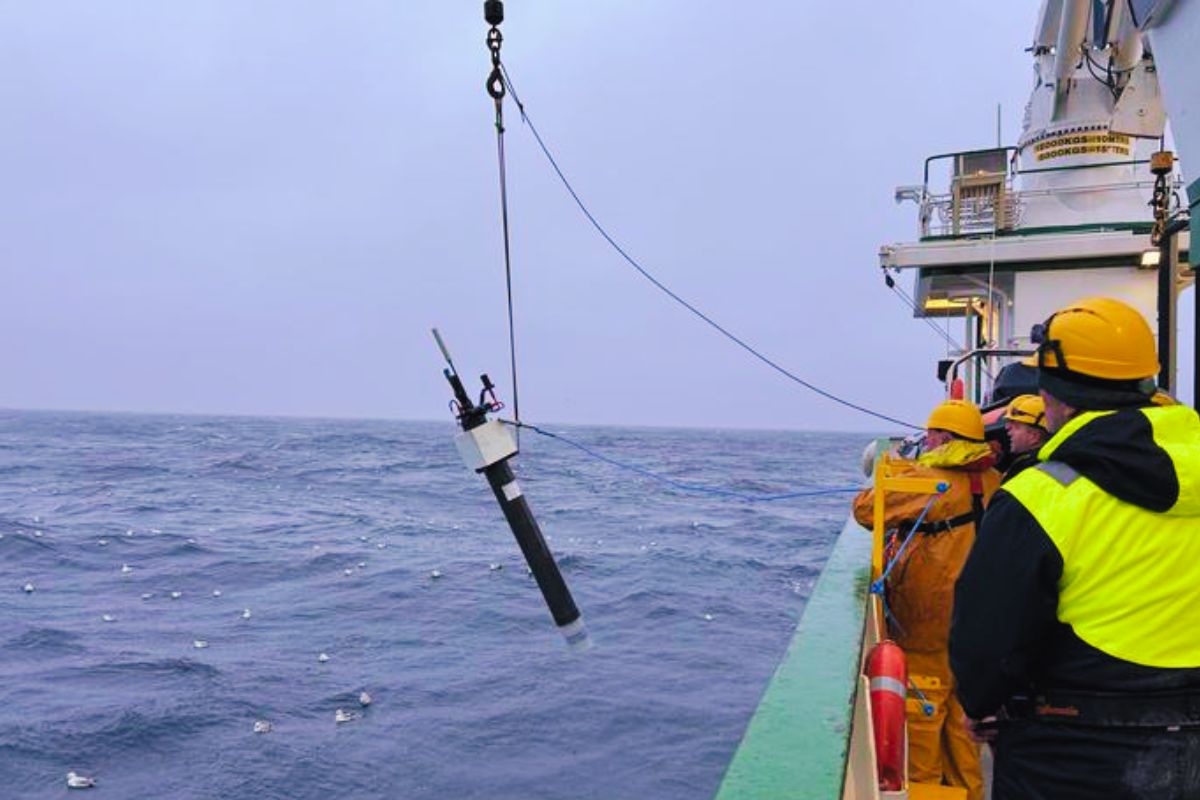
Imagine deploying nearly a thousand tiny robots into the vast expanse of the ocean, each one diligently collecting data that could reshape our understanding of marine ecosystems. This is exactly what a team of dedicated researchers from Dalhousie University in Canada has accomplished, revealing a staggering biomass of phytoplankton equivalent to 250 million elephants.
Amazon co-founder MacKenzie Scott has donated over $19 billion to charity in just five years
Diamond batteries powered by nuclear waste promise 28,000 years of clean energy
Measuring the Massive Biomass of Phytoplankton
In a groundbreaking study, scientists utilized 903 advanced floats, each equipped with sensors to gauge the amount of phytoplankton floating beneath the ocean’s surface. Phytoplankton, often overshadowed by larger marine life, play a pivotal role in our planet’s health. The researchers estimated the global biomass of these microscopic organisms to be around 346 million tonnes. To put that into perspective, that’s about the same weight as 250 million elephants roaming the Earth.
This monumental discovery underscores the sheer scale of phytoplankton populations and their crucial presence in marine ecosystems. While satellites have been the primary tool for monitoring oceanic life, they fall short in capturing the full picture. The robotic floats delve deeper, providing insights that were previously unattainable.
The Role of Biogeochemical-Argo Floats in Ocean Analysis
The Biogeochemical-Argo (BGC-Argo) network was at the heart of this innovative project. These high-tech floats navigate the ocean’s depths, collecting detailed profiles of water columns. The data gathered from approximately 100,000 water column profiles allowed scientists to paint a more accurate picture of phytoplankton biomass.
Traditionally, satellite models have been the go-to method for estimating phytoplankton levels. However, this study revealed that such models might not be as reliable as once thought. The robotic floats provided a level of precision that satellites simply cannot match, especially when it comes to detecting phytoplankton below the surface layers.
Advancements in Ocean Monitoring Technology
The integration of robotic float technology with satellite observations marks a significant advancement in oceanographic research. This dual approach offers a more comprehensive understanding of what lies beneath the ocean’s surface, ensuring that no vital data slips through the cracks.
These findings have far-reaching implications, particularly in the realm of climate change monitoring. With a more accurate assessment of phytoplankton biomass, scientists can better predict and understand the impacts of climate variations on marine life. This enhanced monitoring capability is essential for developing strategies to mitigate the adverse effects of climate change on our oceans.
The Crucial Importance of Phytoplankton in Our Environment
Phytoplankton might be tiny, but their impact on the environment is colossal. Serving as the foundation of the marine food web, they provide sustenance for a diverse array of organisms, from the smallest crustaceans to the largest marine mammals. Moreover, phytoplankton play a vital role in regulating the Earth’s climate. Through photosynthesis, they absorb carbon dioxide, helping to reduce greenhouse gas levels in the atmosphere and combat global warming.
NASA warns China could slow Earth’s rotation with one simple move
This dog endured 27 hours of labor and gave birth to a record-breaking number of puppies
Additionally, phytoplankton contribute to the production of approximately 50% of the world’s oxygen, making them indispensable for both marine and terrestrial life. Their ability to influence not just marine ecosystems but also global air quality and climate stability highlights their extraordinary significance.
Addressing Climate Change Challenges
Understanding the global biomass of phytoplankton is crucial for predicting future climate scenarios. This knowledge becomes even more vital as researchers explore potential geo-engineering solutions to combat climate change. Any proposed interventions must account for the natural variability in phytoplankton populations to ensure that environmental impacts are thoroughly assessed and managed.
The study emphasizes that accurate, large-scale monitoring of phytoplankton is indispensable for informing climate models and guiding effective policy decisions. As our climate continues to change, the role of phytoplankton in mitigating these effects cannot be overstated.
Pioneering New Horizons in Marine Research
The success of the BGC-Argo floats opens up exciting new possibilities for marine science. With the ability to conduct more precise and extensive studies on ocean ecosystems, researchers are better equipped to protect and sustainably manage marine resources. This technological leap promises to enhance our understanding of the oceans, ensuring that we can address environmental challenges with greater efficacy and foresight.
As we stand on the brink of a new era in oceanographic research, the contributions of these Canadian robots highlight the innovative spirit driving scientific discovery. By uncovering the hidden depths of phytoplankton biomass, they provide a foundation for safeguarding our oceans and, by extension, our planet’s future.