
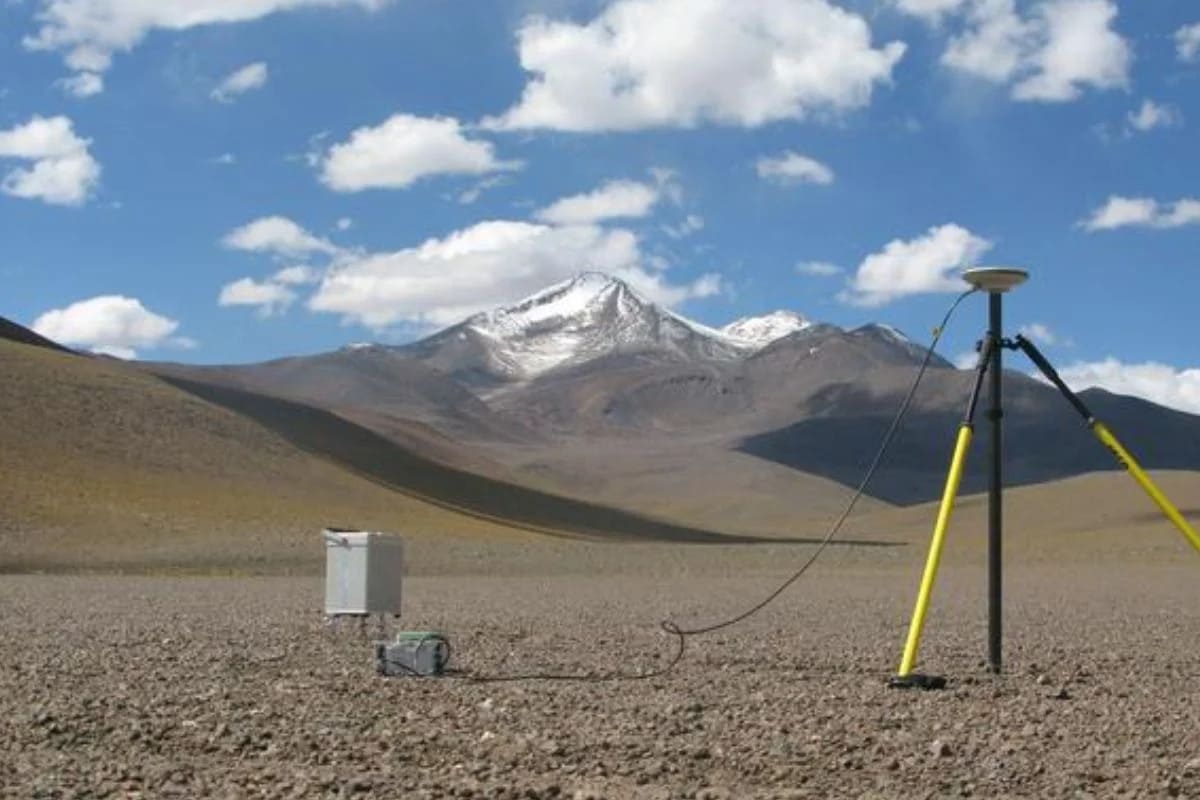
A dormant giant in Bolivia stirs once again, and scientists are racing to understand the sudden activity beneath its surface.
Amazon co-founder MacKenzie Scott has donated over $19 billion to charity in just five years
Diamond batteries powered by nuclear waste promise 28,000 years of clean energy
Uturuncu: A Volcano That Refuses to Be Forgotten
Perched high in the Andes Mountains, at over 6,000 meters, Bolivia’s Uturuncu volcano has been largely forgotten for over 250,000 years—until recently. Once a titan of volcanic activity, it fell silent, leaving geologists to wonder if it had truly gone dormant. However, signs of life beneath its surface have sparked new concerns, as seismic tremors and gas emissions are now being detected, hinting at a volcano waking from its long slumber.
Scientists from around the world have teamed up to unravel the mystery. Their goal is to predict the volcano’s behavior with advanced seismology and sophisticated modeling techniques. As part of this investigation, they’ve uncovered remarkable images of the volcano’s underground structure, offering a glimpse into its complex inner workings.
Unveiling the Volcano’s Secrets: High-Tech Imaging of Uturuncu’s Depths
To get a better understanding of what lies beneath Uturuncu, the research team analyzed over 1,700 seismic events, using a technique known as seismic tomography. This method maps the variations in the speed of seismic waves, which pass through different materials, helping scientists create high-resolution images of the Earth’s crust. What they found was a striking formation—a “sombrero-shaped” deformation in the ground. The central area is rising, while the outer edges are slowly sinking, which is highly unusual and suggests some form of internal fluid or gas movement.
While the image of the deformed land is intriguing, it doesn’t bode well for the nearby communities. The formation hints that beneath the surface, something significant is at play—potentially a brewing threat to the surrounding environment.
Is an Eruption Imminent?
So, the big question is: Is Uturuncu about to erupt? The scientific team’s findings offer a bit of reassurance but leave plenty of uncertainty. The current activity does not indicate an immediate eruption, but the causes of the land uplift are concerning. The team believes that geothermally heated liquids and gases are accumulating in shallow reservoirs beneath the crater, causing the ground to rise. However, the “zombie” behavior of the volcano, where there is no large-scale magma movement, suggests the situation is more complex.
Despite these reassurances, experts remain cautious. The world of volcanoes is unpredictable, and even slow awakenings can quickly turn violent. Volcanic activity, especially when it’s been dormant for such a long time, can escalate unexpectedly. Geologists stress the importance of continued monitoring, as even small changes can signal something far more dangerous.
A Model for Monitoring Inactive Volcanoes
What makes the study of Uturuncu so important goes beyond just one volcano in Bolivia. Researchers have demonstrated that by combining geophysics, geology, and advanced modeling, they can monitor volcanoes that have long been considered inactive. This approach is revolutionary and could help track many of the 1,400 potentially active volcanoes around the world that are exhibiting “silent” behavior, just like Uturuncu.
This method could become a valuable tool for global volcanic monitoring, providing early warning systems for areas that were once considered low-risk. If successful, it could prevent disasters by identifying volcanoes that are showing subtle signs of awakening long before an eruption.
NASA warns China could slow Earth’s rotation with one simple move
This dog endured 27 hours of labor and gave birth to a record-breaking number of puppies
Global Collaboration Paves the Way for Future Discoveries
The groundbreaking research on Uturuncu wouldn’t have been possible without international collaboration. Experts from the University of Oxford, Cornell University, and the University of Science and Technology of China have pooled their knowledge and resources to analyze the seismic data and model the volcano’s activity. This cooperation underscores how critical global partnerships are in addressing the complex challenges posed by natural disasters.
Their work is proving that when countries come together, even the most unpredictable natural phenomena can be better understood and managed. By sharing expertise, scientists are improving their ability to predict geological events, which could ultimately save lives and minimize damage when disasters strike.
A New Chapter in Understanding “Zombie Volcanoes”
The findings of the Uturuncu study, published in PNAS, open up a new chapter in the study of what are known as “zombie volcanoes”—massive dormant volcanoes that are never fully dead. These volcanic giants may be quiet for centuries, but their potential for eruption is never completely gone. The study offers valuable insights into how volcanoes behave when they are not actively erupting, and why they might suddenly come back to life.
Though an eruption may not be on the horizon for Uturuncu, the findings emphasize the importance of vigilance. Even a subtle change in behavior, like the one observed at Uturuncu, can provide a valuable window into understanding the more unpredictable volcanoes around the world. Monitoring these changes could be key to future disaster prevention strategies and helps inform the broader science of volcanic hazard forecasting.
A Global Look at Volcanoes to Watch
As scientists around the world sharpen their tools for monitoring volcanic activity, places like Yellowstone in the U.S., Kilauea in Hawaii, and Mount Fuji in Japan remain under close observation. These volcanoes, along with Uturuncu, represent both the challenge and promise of modern volcanology. They serve as reminders of the Earth’s raw power and the need for constant vigilance, particularly in regions where dormant volcanoes may yet stir to life.
As research continues, the scientific community’s growing ability to predict volcanic behavior will likely change the way we prepare for natural disasters, leading to safer and more informed responses in the future. Until then, the study of Uturuncu serves as a vital lesson in the unpredictable yet fascinating world of volcanoes.