
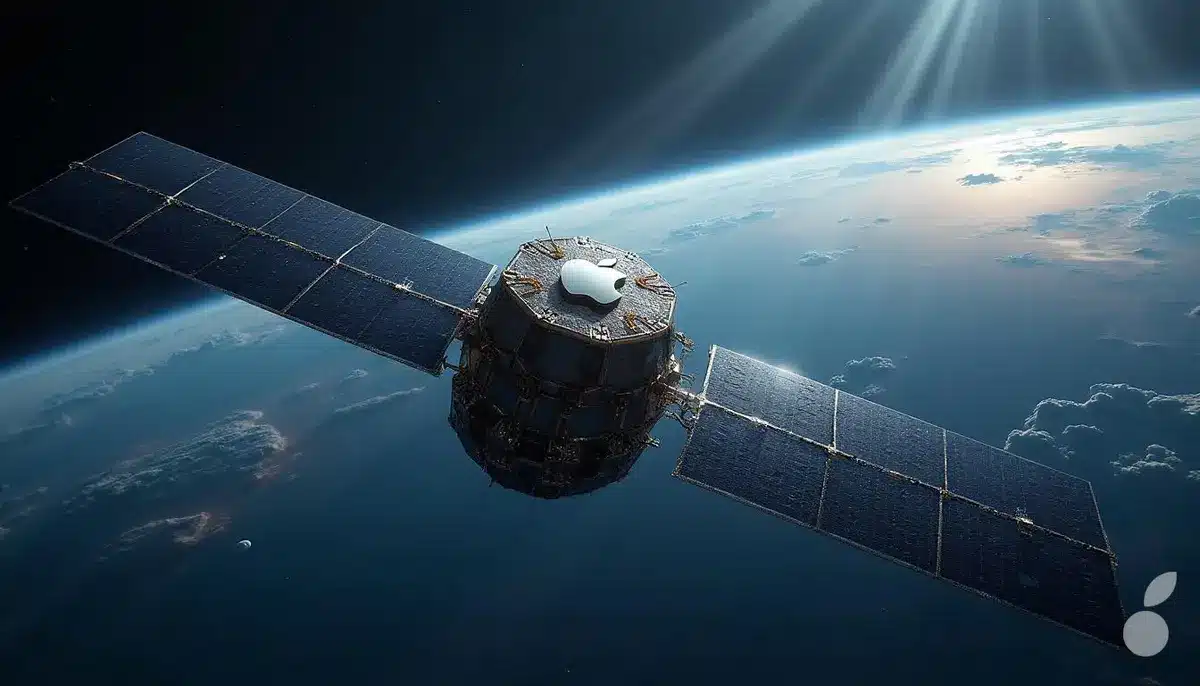
Project Eagle, was aimed at freeing the iPhone from its reliance on telecom operators, but it never came to fruition.
Amazon co-founder MacKenzie Scott has donated over $19 billion to charity in just five years
Diamond batteries powered by nuclear waste promise 28,000 years of clean energy
Project Eagle: Apple’s Operator-Free Internet
Initiated in 2015, Project Eagle
planned to deploy thousands of satellites to provide wireless internet connectivity directly to iPhones and homes, bypassing traditional cellular networks. Apple intended to market antennas that could be attached to windows to capture the satellite signals and distribute them throughout a residence.
Company leaders believed this project was in line with the shift towards Apple Silicon chips: reducing dependency on partners deemed unreliable or overly restrictive. Specifically, telecom operators were seen as necessary but inconvenient partners
. Apple reportedly invested $36 million to test the concept at a facility in El Segundo, California. The commercial launch was initially targeted for 2019.
Tim Cook Was Lukewarm on the Idea
Despite the ambition of the program, the project was scrapped in 2016, led by Tim Cook. The CEO was concerned that this new direction might jeopardize Apple’s strategic commercial relationships with global mobile operators. He was also wary of the massive costs associated with the project, coupled with uncertain short-term profitability.
Most executives involved in the project left the company following its cancellation. Dan Riccio, then head of hardware engineering, however, redirected his efforts toward exploring new wireless connectivity opportunities to differentiate Apple products.
New Attempts… and More Failures
In 2018, Apple re-engaged with the space sector, including with OneWeb, a competitor of SpaceX. The goal was to revive the concept of an in-house satellite internet. Yet again, financial projections (ranging between $30 and $40 billion) were not convincing. The same obstacles faced by Project Eagle emerged again: high costs, the need to maintain relationships with operators, and an unclear business model.
Apple then decided to focus on a more modest approach centered on the iPhone. It was in this context that the emergency SOS via satellite feature emerged in 2022, in partnership with Globalstar.
A Complex Commercial and Political Equation
In 2023, Apple briefly considered expanding this capability with a new generation of satellites, capable of providing more comprehensive internet access in underserved areas. However, this idea was also shelved: the required number of satellites (several hundred) and the risk of backlash from operators spelled the end of the initiative.
Today, some senior executives—including Craig Federighi (VP of Software) and Adrian Perica (VP of Business Development)—even suggest ending these costly and challenging-to-sustain services. Apple’s satellite subscription relies on a Globalstar network considered obsolete by former project engineers, especially compared to players like SpaceX.
NASA warns China could slow Earth’s rotation with one simple move
This dog endured 27 hours of labor and gave birth to a record-breaking number of puppies
Apple continues to offer its satellite access for free to users until September 2025. According to The Information, this free service is likely because Apple fears being seen as a telecom operator, which could expose it to regulatory obligations, such as surveillance mandates (like backdoors in iMessage). The existing satellite services reportedly cost Apple several hundred million dollars annually, with no viable economic model in sight. And in these times of budget constraints, the story might yet gain a few more chapters…