

In a move that caught the aerospace industry off guard, a California startup is preparing to redefine how we send satellites into low-Earth orbit. By swapping chemical rockets for a massive centrifugal cannon, SpinLaunch promises a cost-effective, environmentally friendly alternative. As someone who once waited for hours in the desert to watch a traditional rocket liftoff, I marvel at how quickly the landscape has evolved—what used to be a multi-stage process now hinges on sheer rotational force.
Amazon co-founder MacKenzie Scott has donated over $19 billion to charity in just five years
Diamond batteries powered by nuclear waste promise 28,000 years of clean energy
A New Era of Satellite Launches
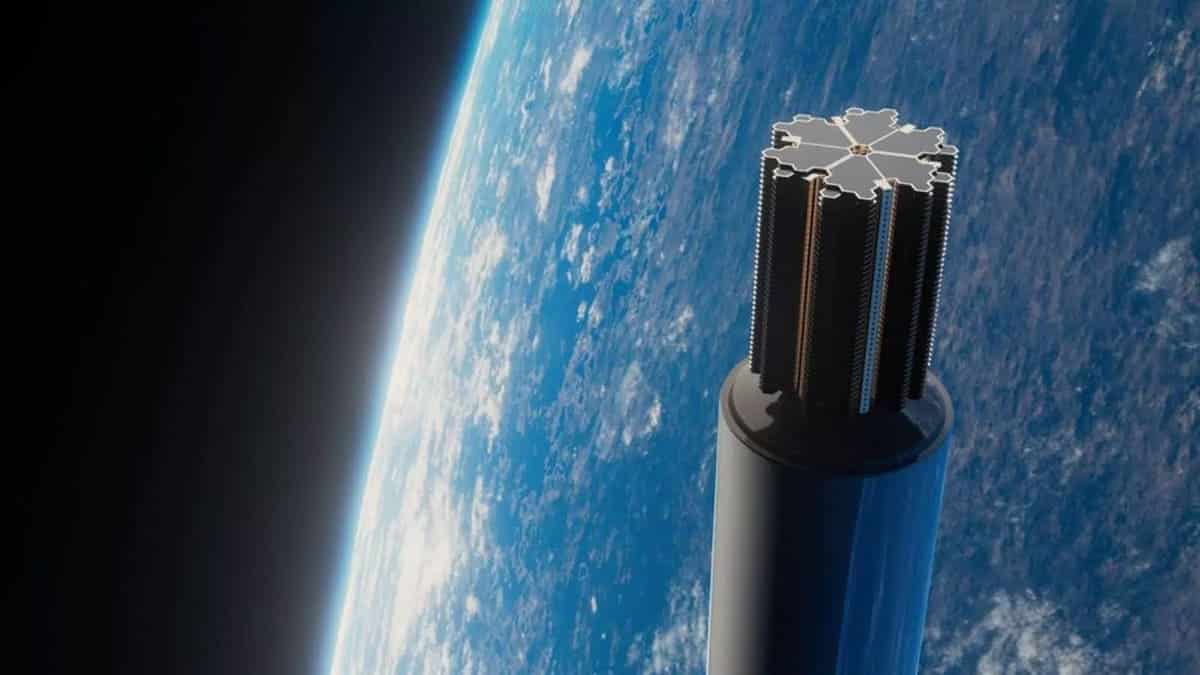
For decades, launching a satellite meant stacking fuel, engines, and payload in a towering rocket. I still remember standing beside a colleague at Vandenberg Air Force Base, their camera trained on the ascending plume of smoke as SpaceX’s Falcon 9 roared into the sky. Today, SpinLaunch aims to disrupt that tradition by using a giant centrifugal cannon to hurl flattened “microsatellites” straight into orbit. Each satellite, roughly 7.5 feet across and about 154 pounds, is stacked like pancakes inside a specialized “launch bus.”
By stacking satellites in this fashion, SpinLaunch’s approach reduces both weight and launch complexity. Microsatellites that would normally hitch a ride on an expensive Falcon 9 can instead be spun up to speeds approaching 5,000 mph inside a vacuum-sealed chamber. According to Kongsberg Defence and Aerospace (KDA), which recently invested an additional $12 million, this technology not only lowers costs but also slashes greenhouse gas emissions compared to traditional propellant-driven rockets.
The Revolutionary Launch System
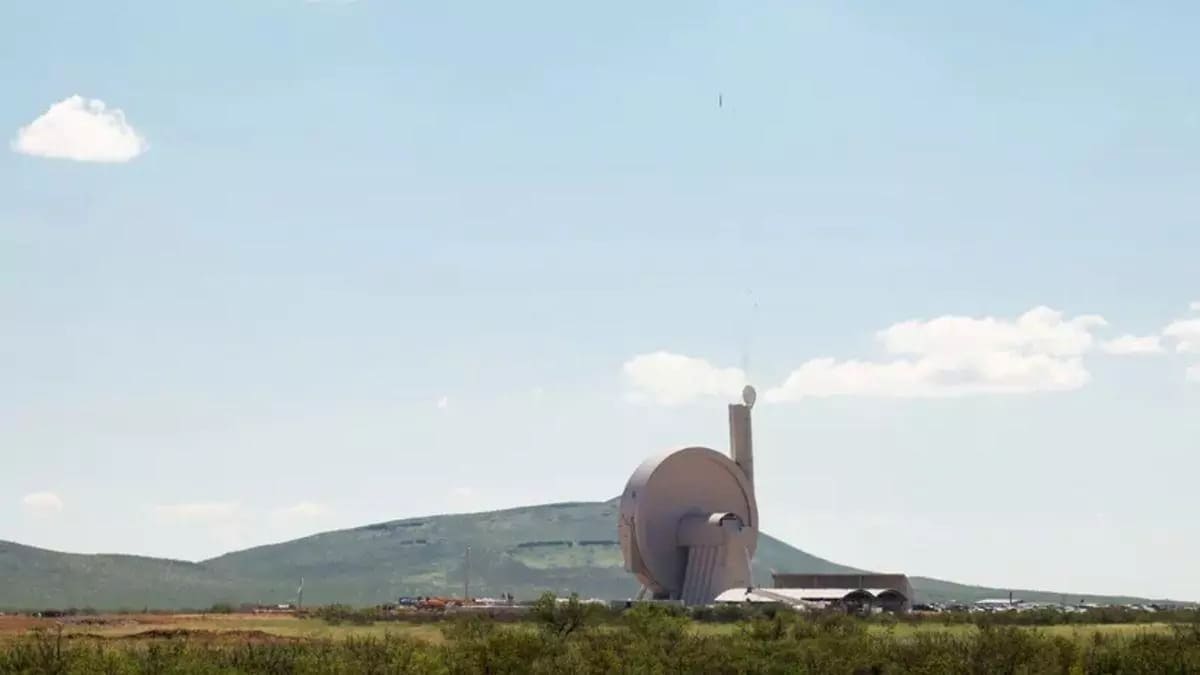
At the heart of this innovation lies the Suborbital Accelerator, a marvel of modern engineering. Unlike conventional rockets that burn tons of fuel in seconds, SpinLaunch’s system relies on kinetic energy. Inside a reinforced, vacuum-sealed chamber, mechanical arms spin a payload to extreme speeds—subjecting it to forces up to 10,000 Gs—before releasing it skyward. If you’ve ever felt your coffee swirl in a mug, imagine that on a gargantuan scale.
SpinLaunch has already validated the concept with suborbital test flights from New Mexico, successfully sending ten test rockets on parabolic arcs above Earth. Now, the plan is to take the same machine a step further: an orbital demonstration where the payload won’t just arc back to Earth but instead settles into a stable trajectory around the planet. If all goes according to plan, 2026 will see the first batch of 250 pancake-like satellites—built by NanoAvionics for SpinLaunch’s Meridian Space constellation—deployed into low-Earth orbit.
The technical advantage is clear: with no need for booster rockets or large fuel tanks, launch costs could drop to $1,250–$2,500 per kilogram—less than half of what SpaceX currently charges for Falcon 9 missions (according to a recent SpaceX fact sheet). Moreover, because there’s no combustion, there are no harmful emissions at the launch site. For communities near launch facilities, that’s a welcome relief.
NASA warns China could slow Earth’s rotation with one simple move
This dog endured 27 hours of labor and gave birth to a record-breaking number of puppies
Implications for the Satellite Industry
As someone who worked briefly at a small satellite manufacturer, I’ve seen firsthand how launch expenses can dictate project scope. When a satellite company budgets $60 million for design and construction, tacking on $10 million–$20 million for a rocket ride can be prohibitive. By offering cost-effective launches, SpinLaunch could democratize access to space, enabling universities, startups, and even developing nations to send their own microsatellites aloft.
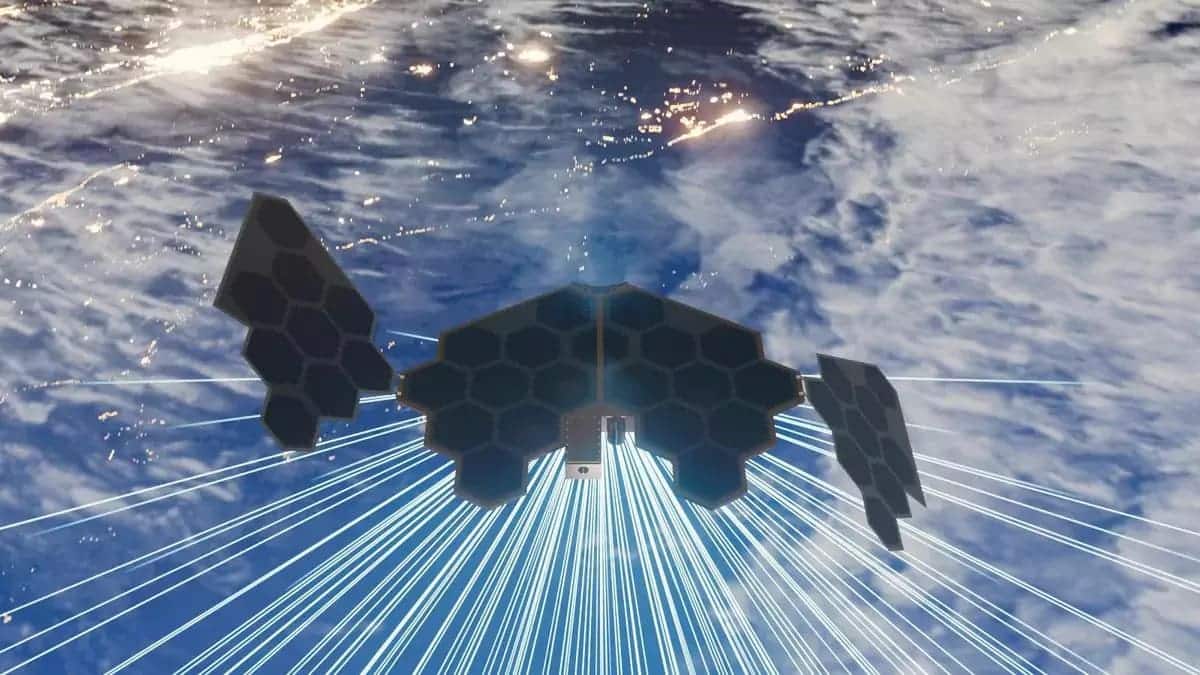
SpinLaunch’s Meridian Space constellation intends to deliver superfast communications services at a fraction of current prices. Imagine remote villages in Madagascar or rural clinics in Peru gaining reliable internet access via a network of low-cost satellites. That’s precisely the kind of mission that could benefit from this approach. With an expanded Orbital Accelerator, SpinLaunch could eventually send up to five payloads per day—dramatically increasing launch cadence compared to the weekly or biweekly schedule of traditional providers.
However, this flurry of activity raises concerns. More objects in low-Earth orbit means a higher risk of collisions, adding to the growing cloud of space debris. Astronomers worry that increased satellite reflectivity could interfere with ground-based observations. As amateur stargazers, many of us cherish clear night skies; the last thing anyone wants is a handful of new streaks cluttering that view.
Looking Ahead: Challenges and Opportunities
SpinLaunch’s bold vision comes with its share of hurdles. For one, subjecting delicate electronics to 10,000 Gs demands rigorous engineering. Early prototypes have used ruggedized components tested under extreme conditions, but scaling this to operational satellites will be a litmus test of durability. If even one of those pancake-like microsatellites fails to separate cleanly post-release, it could tumble back toward Earth—raising safety alarms.
Furthermore, while the system boasts minimal greenhouse gas output at launch, payloads still require onboard propulsion for fine orbital adjustments. That means satellite operators must balance the initial environmental gains against the reality of conventional thrusters used for station-keeping and deorbit maneuvers.
On the regulatory side, international agreements around space traffic management may need updating. The US Federal Aviation Administration (FAA) and the European Space Agency (ESA) have already flagged potential issues concerning satellite congestion. Collaboration with organizations like the Inter-Agency Space Debris Coordination Committee (IADC) will be vital to ensuring operations remain sustainable.
Yet with challenges come opportunities. Should SpinLaunch succeed, we could see a surge of affordable launches that unlock new markets: disaster monitoring, climate science, and global positioning services tailored to underserved regions. On a personal note, I recall a friend’s nonprofit working to map deforestation in the Amazon. If they had access to a constellation of low-cost satellites, their data would be more frequent, more precise, and infinitely more impactful.
Ultimately, SpinLaunch’s upcoming 2026 orbital demonstration may set a new standard for satellite deployment. By championing sustainability, affordability, and frequency, this California startup is challenging the notion that space can only be reached by megatons of rocket fuel. As the countdown to their first orbital test begins, the entire industry is waiting—some with excitement, others with cautious skepticism—to see if the future of space truly lies in spinning cannons.