
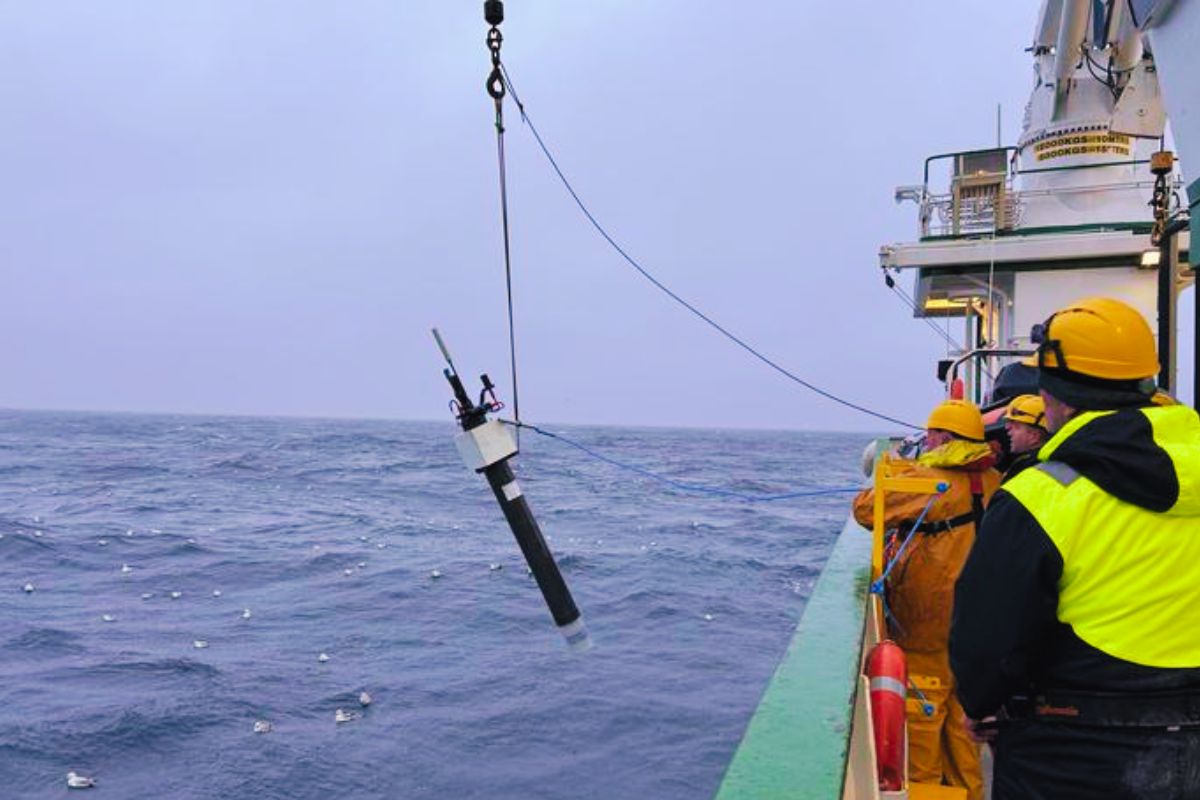
A groundbreaking discovery from the depths of the ocean has recently emerged, with findings so remarkable that they are compared to the combined weight of 250 million elephants. Canadian scientists, utilizing the latest in robotic technology, have uncovered hidden marine life that reshapes our understanding of ocean ecosystems and their vital role in regulating the planet’s climate.
Amazon co-founder MacKenzie Scott has donated over $19 billion to charity in just five years
Diamond batteries powered by nuclear waste promise 28,000 years of clean energy
Unveiling Hidden Phytoplankton Biomass
Imagine exploring the vast ocean depths, where much of the life supporting our seas is invisible from the surface. That’s exactly what Canadian researchers have revealed through the deployment of a sophisticated network of 903 robotic floats. These autonomous devices are part of the Biogeochemical-Argo (BGC-Argo) program, a pioneering initiative that measures the global biomass of phytoplankton with unparalleled precision.
Phytoplankton, those tiny but mighty plants that thrive beneath the waves, make up an astonishing 314 teragrams (roughly 346 million tons) of organic matter. This mass is so enormous that it’s equivalent to the combined weight of 250 million elephants. I remember speaking with a marine biologist who described this discovery as “a silent revolution” in oceanography, and it truly is—a whole new understanding of how life exists unseen beneath the ocean’s surface. The findings have been widely recognized by institutions like the International Oceanographic Commission, which views them as a game-changer in marine biology.
The Role of Phytoplankton in Climate Regulation
Despite their small size, phytoplankton have an outsized impact on our planet’s health. They are the foundation of the ocean’s food chain, providing sustenance for marine life, and they play a pivotal role in the climate regulation process. Through photosynthesis, phytoplankton produce around 50% of the world’s oxygen, while also absorbing massive amounts of carbon dioxide, thus acting as a natural carbon sink.
I once watched a documentary that likened phytoplankton to “the lungs of the sea,” which is a fitting metaphor for their essential function in moderating climate change. This role was emphasized by experts from the National Oceanic and Atmospheric Administration (NOAA), who underscore the importance of phytoplankton in mitigating global warming by absorbing carbon from the atmosphere.
Implications for Climate Change Monitoring
This discovery carries profound implications for our ability to monitor and understand climate change. While traditional satellite technology is powerful, it has limitations when it comes to detecting life in the deep ocean. The robotic floats, however, provide crucial data from depths that satellites cannot reach, offering a much more comprehensive picture of the ocean’s carbon cycle.
By integrating these new measurements with satellite data, scientists are refining climate models and providing policymakers with better tools to address global warming. This comprehensive approach, praised by environmental organizations, holds the potential to dramatically improve our ability to predict climate trends and natural responses to warming, ultimately aiding in the fight against climate change.
NASA warns China could slow Earth’s rotation with one simple move
This dog endured 27 hours of labor and gave birth to a record-breaking number of puppies
Advancements in Oceanographic Research
The deployment of these BGC-Argo floats represents a significant leap forward in oceanographic research. Unlike traditional methods that only study surface-level data, these robotic devices dive deep into the ocean, gathering valuable insights on phytoplankton distribution and biomass. This data is critical not only for understanding the current health of marine ecosystems but also for safeguarding their future.
What’s particularly fascinating is that this technology, initially developed for industrial purposes, is now a cornerstone of environmental science. These advances don’t just help us understand the ocean better—they empower governments and conservation organizations to take proactive steps in preserving our oceans for future generations.
Conclusion
In conclusion, the Canadian robotic floats have revealed a hidden world beneath the ocean, a world whose biomass is equivalent to 250 million elephants. This discovery is not only a major milestone in science, but also a testament to human ingenuity and the pursuit of knowledge. As we face increasing climate challenges, innovations like these offer hope. Every step forward in understanding the planet’s ocean ecosystems helps us in our collective efforts to mitigate the impacts of global warming and ensure a sustainable future for our world.