

The global semiconductor industry is at the heart of a high-stakes competition that could shape the future of technology and economic power. As the United States imposes tighter restrictions on China’s access to critical chip technologies, Beijing is responding with a bold move—a massive $41 billion investment aimed at developing its own lithography technology. This is part of China’s broader strategy to reduce its dependence on foreign technologies and challenge the dominance of Western chip manufacturers.
Amazon co-founder MacKenzie Scott has donated over $19 billion to charity in just five years
Diamond batteries powered by nuclear waste promise 28,000 years of clean energy
A Rivalry Between SMIC and ASML
China’s ambition to achieve semiconductor independence is not new. For nearly a decade, the country has been ramping up its efforts to build a robust domestic chip industry. At the forefront of this battle is SMIC (Semiconductor Manufacturing International Corporation), which is locked in a fierce rivalry with ASML, the Dutch company that controls the market for advanced photolithography machines.
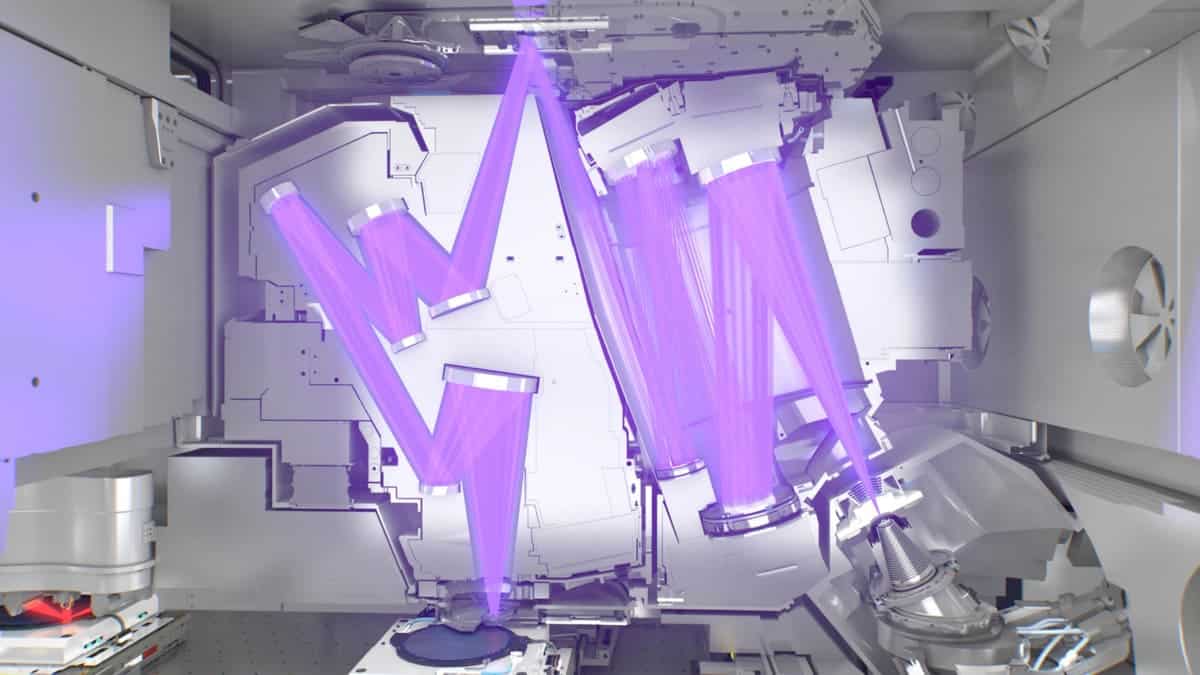
Photolithography, the process that uses light to create intricate patterns on semiconductor wafers, is essential for manufacturing cutting-edge chips. The precision required for modern chips—such as those used in artificial intelligence and next-generation electronics—demands advanced equipment like ASML’s EUV (Extreme Ultraviolet) machines, which enable the production of chips as small as 3 nanometers. However, due to U.S. export restrictions, China has been largely cut off from accessing these critical tools, keeping SMIC at a significant disadvantage in the race for semiconductor dominance.
China’s Bold Investment Plan
In response, the Chinese government is channeling a massive $41 billion into companies like SMIC, Hua Hong Semiconductor, Naura Technology Group, and Advanced Micro-Fabrication Equipment. The goal is clear: to create a domestic alternative to ASML’s lithography systems and build a self-sufficient, resilient semiconductor supply chain within China.
Despite the size of this investment, China faces a monumental challenge. Even with billions of dollars in funding, it lags far behind Western manufacturers in both technical expertise and production capacity. The gap between China and the U.S. in semiconductor technology remains vast, and while China is pushing hard to catch up, the timeline for achieving self-sufficiency is still uncertain.
The Huawei Mate 60 Pro Incident
One of the clearest indicators of the growing importance of semiconductor technology came in 2023 with the launch of the Huawei Mate 60 Pro. This smartphone was equipped with a 5G processor developed and manufactured entirely within China, despite the strict sanctions imposed by the U.S. on Huawei. The device’s launch marked a significant achievement for China’s semiconductor ambitions, signaling that the country was making headway in overcoming international restrictions.
Beyond its commercial success, the Mate 60 Pro was a clear reminder of the geopolitical importance of semiconductor manufacturing. For China, controlling the production of semiconductors is not just about economic growth; it’s about strategic autonomy, military capabilities, and control over vital global supply chains.
NASA warns China could slow Earth’s rotation with one simple move
This dog endured 27 hours of labor and gave birth to a record-breaking number of puppies
ASML’s High-NA Technology: A Moving Target
While China is focused on building its own lithography capabilities, ASML continues to advance its technology, developing High-NA EUV systems—the next generation of photolithography machines. Expected to be released in the mid-2020s, these machines will allow chipmakers to create even more precise and intricate circuit patterns, pushing the boundaries of semiconductor innovation.
Each High-NA EUV system is expected to cost around $300 million, making it a highly valuable asset in the ongoing race for technological superiority. These advancements will likely keep Western chipmakers, particularly those in the U.S. and Europe, at the forefront of semiconductor manufacturing for the foreseeable future.
What Lies Ahead?
China’s decision to invest $41 billion in lithography technology is a clear sign of its intent to challenge the status quo of the global semiconductor industry. While it may take years before China can compete directly with ASML’s advanced machines, this bold move demonstrates the strategic importance of semiconductors in the global balance of power.
As Western nations continue to restrict China’s access to state-of-the-art chipmaking tools, the race for technological self-reliance will only intensify. If China can overcome the technical and financial hurdles in its path, it could potentially reshape the semiconductor industry, disrupt global supply chains, and alter the dynamics of international relations.
For now, the question remains: Can China close the gap in time to compete with the world’s leading chipmakers, or will the technological divide continue to grow? Whatever the outcome, the semiconductor race is far from over, and the stakes have never been higher.