
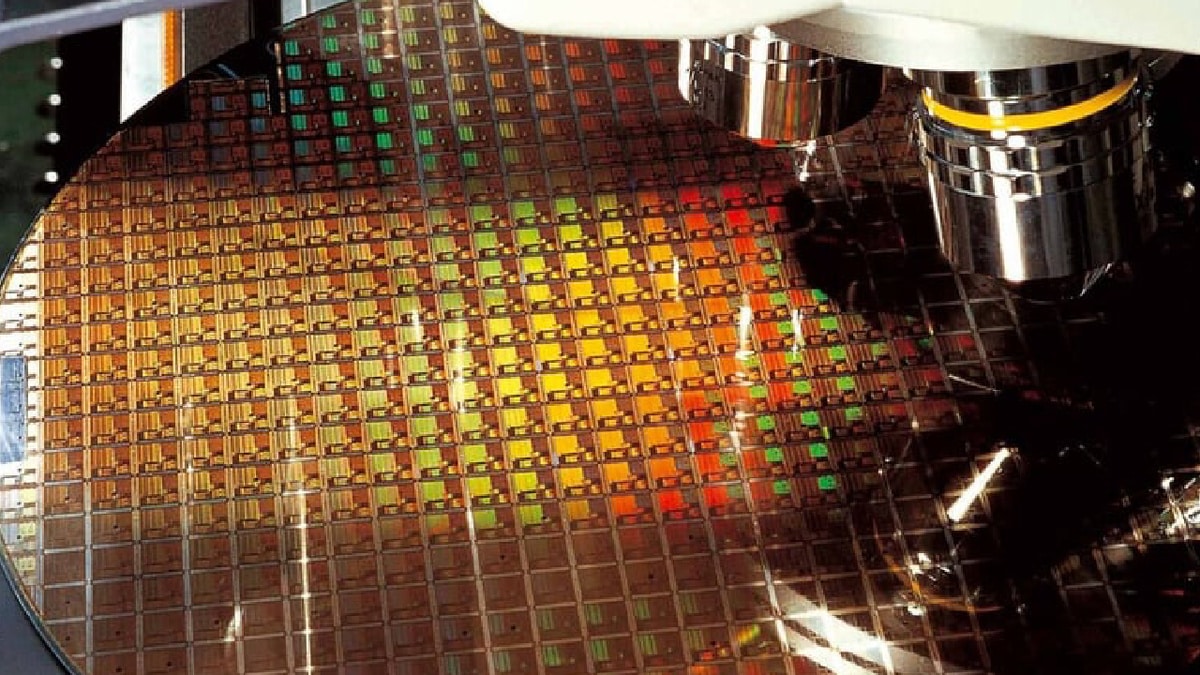
In the ever-evolving world of global technology, semiconductors are the silent powerhouses driving both economic and military dominance. As countries compete for control over this critical sector, China is taking bold steps to challenge Europe’s leadership, particularly in the field of lithography equipment. With a massive $41 billion investment, China is accelerating its pursuit of technological self-sufficiency and aiming to lessen its reliance on foreign expertise.
Amazon co-founder MacKenzie Scott has donated over $19 billion to charity in just five years
Diamond batteries powered by nuclear waste promise 28,000 years of clean energy
The Rivalry Between SMIC and ASML
At the heart of this technological rivalry are two industry giants: SMIC (Semiconductor Manufacturing International Corporation) from China, and ASML, a Dutch company that holds a virtual monopoly on the photolithography equipment crucial for producing advanced semiconductors. Photolithography is the process that etches intricate circuits onto silicon wafers, a pivotal step in chip manufacturing.
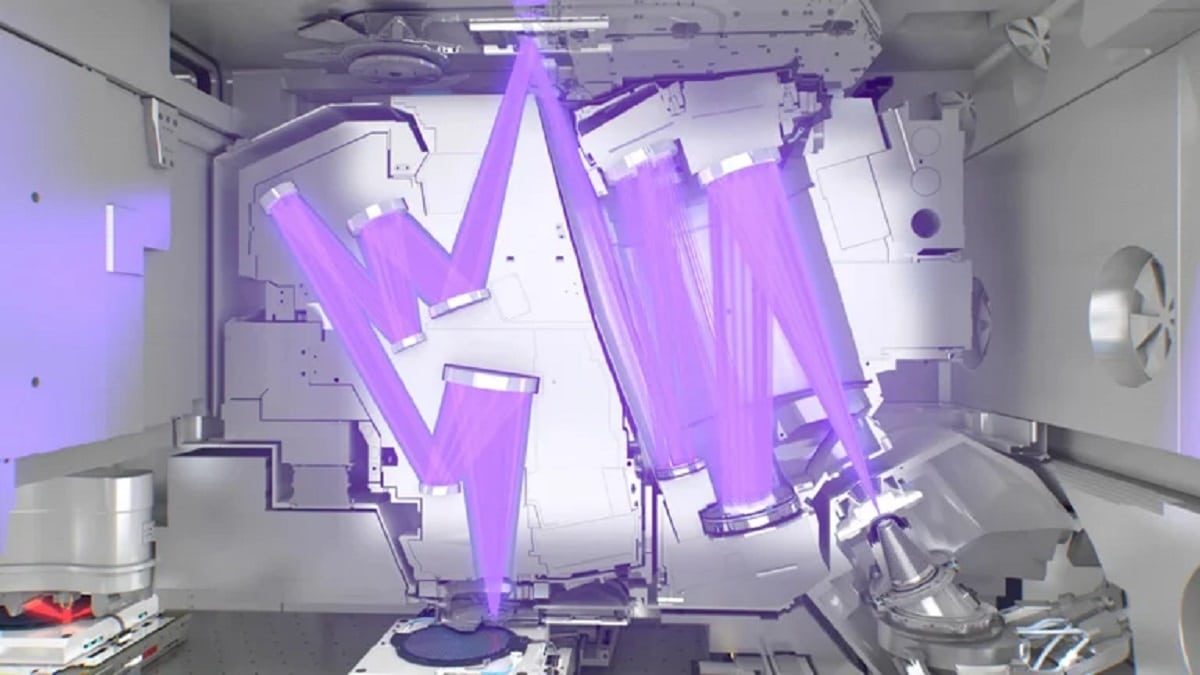
ASML’s Extreme Ultraviolet (EUV) lithography machines are essential for creating the next generation of chips with features as small as 3 nanometers—critical for advancements in computing and artificial intelligence. Dr. Li Wei, a semiconductor analyst at the Institute of Electrical and Electronics Engineers (IEEE), highlights the gap: “ASML’s technology is currently unparalleled, giving them a significant edge in the global semiconductor supply chain. For China, achieving parity in lithography is not just an economic goal—it’s a strategic necessity.”
China’s Strategic Investment in Lithography Technology
In response to the United States’ efforts to curb China’s access to advanced semiconductor technology, Beijing has unveiled an ambitious plan to enhance its own lithography capabilities. This $41 billion investment is focused on developing domestic lithography machines to reduce dependence on ASML and other foreign suppliers.
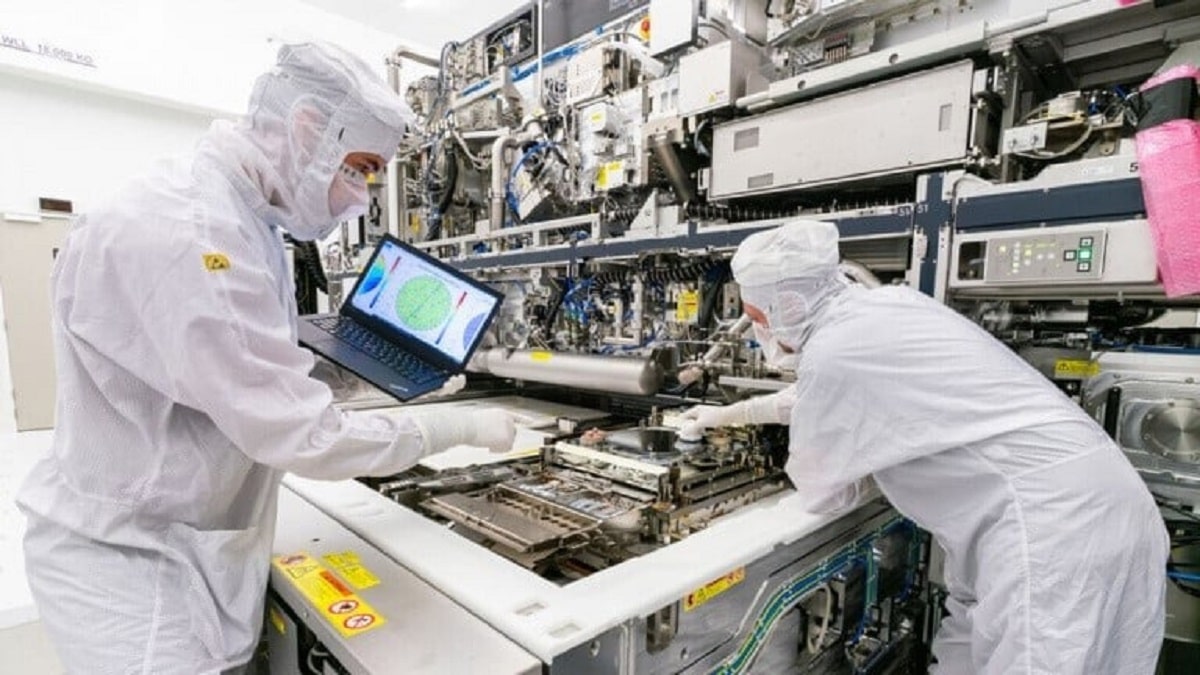
Chinese companies like Hua Hong Semiconductor, Honghu Suzhou Semiconductor Technology, and Naura Technology Group are leading the charge in research and development, working tirelessly to create competitive lithography systems. This financial commitment underscores China‘s broader ambition to become a dominant force in the global semiconductor industry. Professor Zhang Ming from the Chinese Academy of Sciences notes, “This investment is a clear indication of China’s determination to close the technological gap and emerge as a self-reliant superpower in semiconductor manufacturing.”
The Huawei Incident
A pivotal moment in this ongoing semiconductor struggle came with the launch of the Huawei Mate 60 Pro. This smartphone, powered by a 5G processor designed and manufactured entirely in China, defied US sanctions and underscored China’s progress in semiconductor development. The success of the Mate 60 Pro was a statement to the global tech community, proving that China can innovate independently and compete on the world stage.
NASA warns China could slow Earth’s rotation with one simple move
This dog endured 27 hours of labor and gave birth to a record-breaking number of puppies
Emily Chen, a technology correspondent for TechCrunch, remarked, “Huawei’s achievement with the Mate 60 Pro sends a strong message to the global tech community. It demonstrates that with the right investment and focus, China can produce high-quality, competitive technology—even under significant external pressures.”
ASML’s Technological Advances
While China ramps up its efforts, ASML isn’t standing still. The company has recently announced the development of High-NA EUV systems—an advanced iteration of its existing EUV machines. These new systems promise even greater precision, allowing for the production of chips with feature sizes below 2 nanometers. Despite the hefty price tag of about $300 million per machine, ASML’s High-NA EUV systems are expected to play a crucial role in the next generation of semiconductor manufacturing, ensuring that ASML remains a dominant player in the market.
James Thompson, a semiconductor expert at Gartner Inc., explains, “ASML’s advancements in EUV technology solidify their position as a crucial player in the semiconductor industry. Their ability to innovate continuously keeps them ahead of competitors and reinforces the global market’s dependence on their equipment.”
The Geopolitical Stakes
The competition over semiconductor technology extends far beyond economics—there are geopolitical ramifications at play. Mastery over semiconductor production means greater control over global supply chains, enhanced national security, and the power to drive innovation in both civilian and military technologies. By investing heavily in lithography equipment, China is positioning itself to secure a prominent role in this critical sector and reduce its vulnerability to foreign sanctions and technology blockades.
Dr. Maria Gonzalez, a geopolitical analyst at the Council on Foreign Relations (CFR), observes, “Control over semiconductor technology translates to significant geopolitical leverage. China’s push to develop domestic lithography capabilities is a clear move to assert its independence and influence on the global stage.”
Conclusion
China’s $41 billion investment in domestic lithography equipment marks a crucial moment in the ongoing battle for semiconductor supremacy. While ASML remains the undisputed leader in photolithography technology, China’s drive to develop its own competitive systems highlights the intensity of the competition and the high stakes involved in this sector. As global powers continue to invest heavily in innovation, the outcome of this race will have far-reaching consequences for the future of technology, economics, and international relations.