
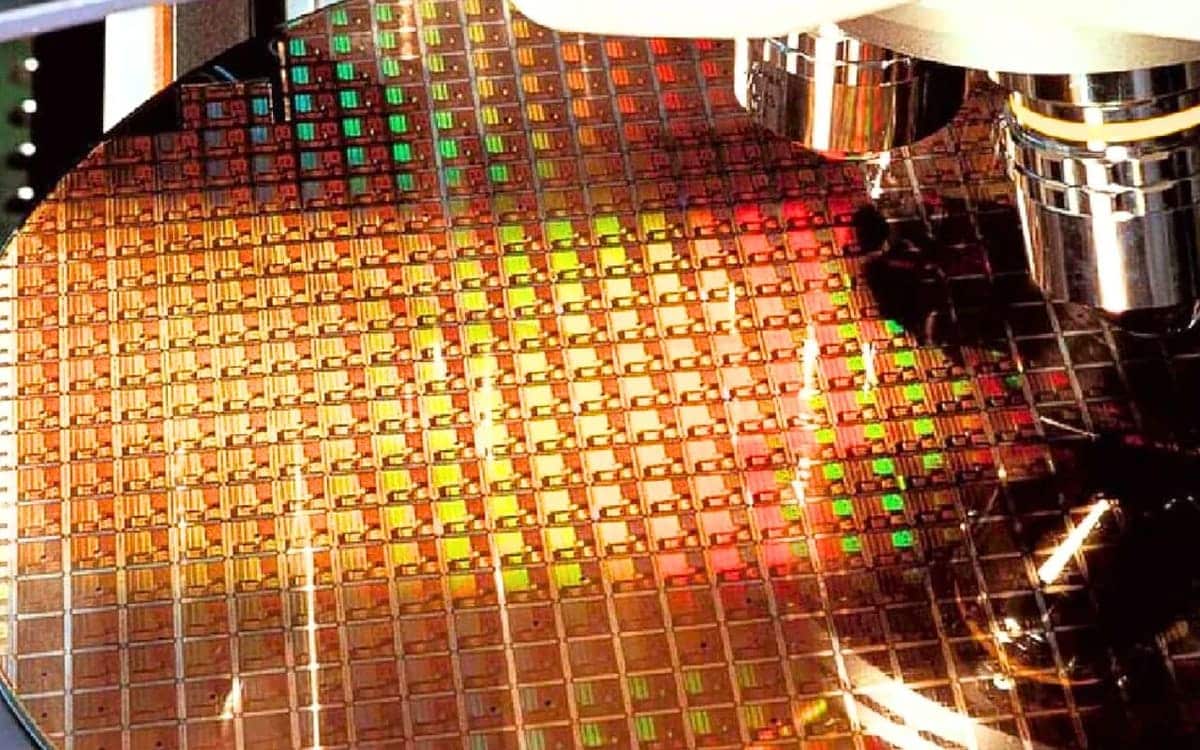
Semiconductors are more than just a crucial component of modern technology—they are the backbone of global economies, from consumer electronics to military systems. In a bold and strategic move, China has unveiled a €37 billion investment plan aimed at bolstering its domestic chip production and reducing its reliance on foreign technology. This investment signals Beijing’s determination to reduce its dependence on Western companies and build a self-sufficient semiconductor industry, a goal that could fundamentally reshape the competitive dynamics of global technology.
Amazon co-founder MacKenzie Scott has donated over $19 billion to charity in just five years
Diamond batteries powered by nuclear waste promise 28,000 years of clean energy
SMIC vs. ASML: A Clash of Giants
At the heart of the semiconductor battle between China and the West stand two titans: SMIC (Semiconductor Manufacturing International Corporation), China’s leading chip manufacturer, and ASML, the Dutch firm that holds an effective monopoly on photolithography—a technology essential for producing cutting-edge microchips.
Photolithography involves using light to etch intricate circuit patterns onto silicon wafers, a process that’s critical for the production of advanced microchips. ASML’s dominance in this technology has made it a key player in the race for semiconductor supremacy, and its importance is only growing as the demand for increasingly complex chips rises. The ongoing technological rivalry between SMIC and ASML highlights the larger global struggle between Eastern and Western forces in the tech sector.
When I think about the pressure China is under to catch up in this arena, I can’t help but recall my own experiences working in industries dependent on the latest technology. In a way, it’s like trying to catch up to a competitor that has been years ahead in the race. That’s the situation China finds itself in today with ASML leading the way in semiconductor technology.
China’s Bold Move in Photolithography
With U.S. trade restrictions limiting China’s access to some of the most advanced chip-making technologies, including photolithography, China is making an aggressive push to develop its own capabilities in this field. The €37 billion investment plan is a direct response to these restrictions, aiming to create competitive lithography machines that could reduce China’s dependence on Western companies like ASML.
If successful, China’s efforts could drastically alter the global semiconductor landscape. It’s a massive gamble for Beijing, but one that underscores just how important control over semiconductor production has become in today’s geopolitical climate. This isn’t just about economic power; it’s about national security and technological sovereignty. If China can develop its own lithography technology, it would be a game-changer for its chip-making industry and for its broader tech ambitions.
I remember reading about China’s drive to independently develop technology in various sectors. It’s not just a matter of competition; it’s about ensuring the country can thrive without depending on external powers. This investment shows just how serious China is about achieving that self-sufficiency.
The Huawei Catalyst : A Game-Changing Moment
A key milestone in this ongoing struggle was the release of the Huawei Mate 60 Pro in 2023. Despite facing severe U.S. sanctions, this device was equipped with an advanced 7nm processor, a clear indication that China’s semiconductor industry was able to innovate even under extreme pressure. The success of the Mate 60 Pro marked a turning point in the semiconductor race and solidified China’s commitment to developing its own high-end chip-making capabilities.
NASA warns China could slow Earth’s rotation with one simple move
This dog endured 27 hours of labor and gave birth to a record-breaking number of puppies
This event was significant not just because of the product itself, but because it demonstrated that China could overcome some of the hurdles posed by Western sanctions and continue to make strides in semiconductor development. The Huawei example became a rallying point for China, proving that the country could stand up to technological restrictions and still find ways to innovate.
I can recall how much of a game-changer it was when China proved it could still thrive, despite the odds. It’s like when a startup, underfunded and faced with overwhelming competition, comes out with a groundbreaking product—it sends a message that things are changing.
ASML’s Technological Advancements
While China is ramping up its efforts to compete in photolithography, ASML is far from slowing down. The Dutch company is currently developing EUV High-NA (Extreme Ultraviolet Lithography with High Numerical Aperture) technology, which promises unprecedented precision for chips that are smaller than 2 nanometers. This new technology is expected to push the boundaries of semiconductor manufacturing, enabling the production of chips with even more powerful capabilities and smaller form factors.
ASML’s relentless pursuit of cutting-edge technology ensures that it remains the leader in photolithography. The company’s continuous innovation not only keeps it ahead of China but also underscores the immense challenge that China faces in its quest to develop competitive lithography systems. While SMIC and other Chinese firms have made impressive progress, ASML’s technological edge still holds the key to the next phase of semiconductor production.
From my perspective, this race reminds me of the importance of innovation in staying ahead. It’s not just about competing—it’s about constantly reinventing and pushing boundaries, something ASML has mastered and that China will have to catch up to in order to compete on an equal footing.
The Geopolitical Stakes of Semiconductor Control
Control over semiconductor production is no longer just a business matter. It has become a central issue in global geopolitics, with profound implications for both civilian and military technologies. The global semiconductor market is a strategic asset, and the country that dominates this sector holds significant influence over global supply chains and technological development.
As nations recognize the importance of semiconductor dominance, these technologies have become a central pillar of national security strategies. China’s €37 billion investment signals that the country is ready to stake its claim in this critical field, which could have far-reaching implications for the global tech landscape.
Thinking about the stakes here, it’s almost like when a country has access to critical infrastructure—that control becomes indispensable for its global position. And that’s exactly what China is vying for in this case: control over an essential sector that influences much more than just smartphones and computers.
What China’s €37 Billion Investment Means for the Industry ?
China’s €37 billion bet on developing its own lithography technology is a game-changing move in the semiconductor wars. While ASML remains the global leader, China’s push to reduce its reliance on the West could alter the landscape in ways that we’re only beginning to understand. If successful, this strategy could significantly impact the global semiconductor market, reshaping competition and perhaps even the future of technological development.
For now, the battle for semiconductor supremacy is intensifying, and with high stakes, the global market is watching closely. The outcome of this rivalry could shape the future of technology itself. It’s clear that China’s investment is a move that will not only change the industry but could also have lasting geopolitical consequences.