
When Elon Musk speaks about the future, the world listens—whether it’s about colonizing Mars or building tunnels beneath cities. This time, his sights are firmly set on something closer to home: our planet’s energy consumption. In a recent post on X (yes, that’s what Twitter goes by these days), Musk painted an ambitious picture of humanity powered entirely by solar energy, hinting that such a shift could catapult us up the famed Kardashev Scale.
Amazon co-founder MacKenzie Scott has donated over $19 billion to charity in just five years
Diamond batteries powered by nuclear waste promise 28,000 years of clean energy
The Kardashev Scale : An Old Idea with Fresh Relevance
Let’s rewind to 1964. Russian astrophysicist Nikolai Kardashev introduced a now-iconic concept for classifying civilizations based on how much energy they can harness. The scale ranges from Type I civilizations, which fully exploit their planet’s resources, all the way to Type III, where entire galaxies are at our disposal. Musk’s recent musings suggest he believes humanity has a real shot at moving up the ranks—if we bet big on solar.
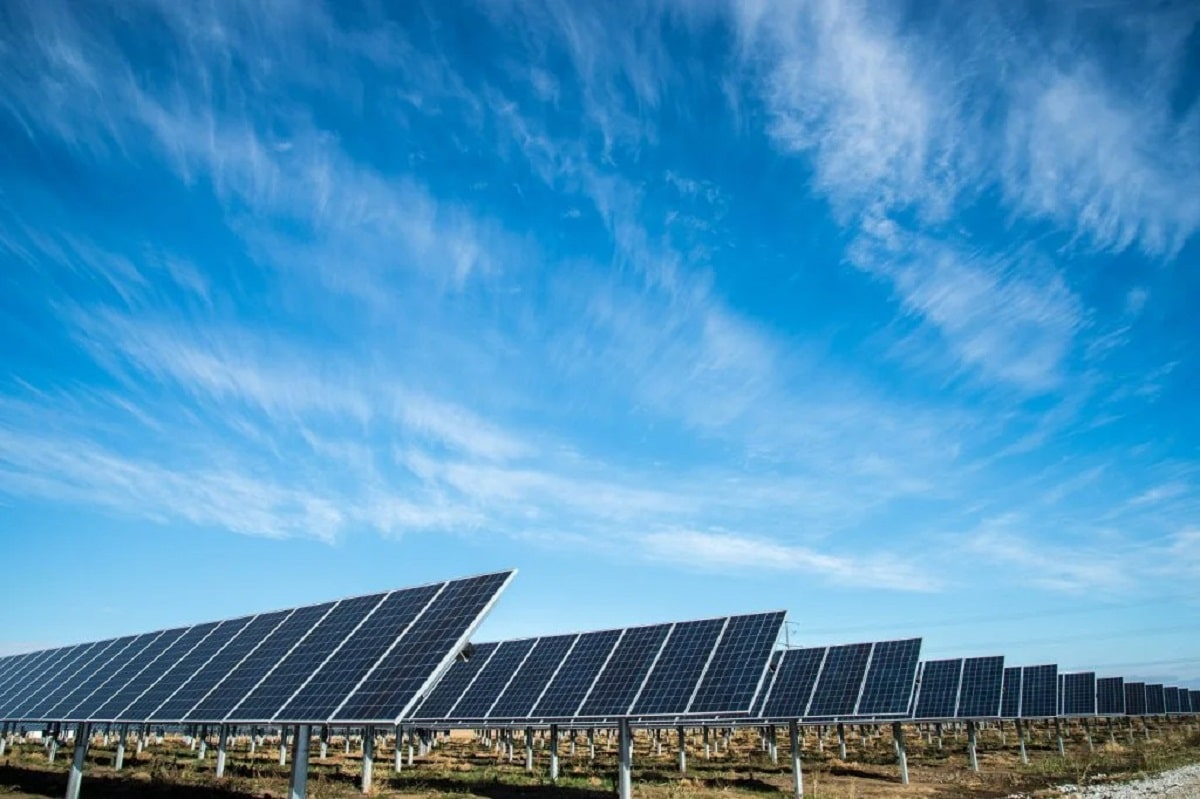
He backed this up with a compelling stat: just 2.5 square kilometers of solar panels could churn out around 3 gigawatt-hours of electricity. That’s no drop in the bucket—it’s enough to power a small city. And Musk didn’t stop there. In a previous talk, he calculated that powering the entire U.S. could be achieved with a modest 160 km by 160 km patch of solar panels. Imagine: a sliver of land in Nevada or Texas lighting up the whole country.
The Practical Roadblocks: Storage, Grids, and Economics
Of course, turning Musk’s solar dream into reality isn’t as simple as spreading panels across the desert. One of the biggest hurdles? Intermittency. The sun, as dependable as it may seem, doesn’t shine 24/7. Bad weather, nightfall—it all throws a wrench into consistent energy production.
To bridge the gap, we need large-scale storage solutions capable of holding surplus power and releasing it when demand peaks. Think massive battery farms or next-gen tech that’s still in its infancy. Right now, storage is expensive and not quite up to the job, especially when electricity prices can dip so low they’re almost worthless.
And then there’s the issue of our aging electrical grids. Integrating such a massive influx of solar power would require a revamp of existing infrastructure, ensuring grids are flexible, resilient, and smart enough to handle it. It’s a puzzle of economics and logistics, and solving it will demand serious innovation and investment.
More Than Just Panels : A Holistic Energy Strategy
Musk, ever the pragmatist, knows solar panels alone won’t get us to a sustainable utopia. It’s about crafting a systemic approach: improving storage tech, modernizing grids, and putting smart policies and incentives in place to speed adoption.
It’s no surprise his own ventures, from SolarCity to the sleek (if pricey) Tesla Solar Roof, have been at the forefront of tackling these challenges. While the results have been mixed, they reflect Musk’s belief that tackling climate change requires an all-encompassing strategy, not piecemeal solutions.
NASA warns China could slow Earth’s rotation with one simple move
This dog endured 27 hours of labor and gave birth to a record-breaking number of puppies
A Vision That Pushes Boundaries
Is Musk’s prediction a moonshot? Perhaps. But history has shown that great leaps often start with bold ideas. His solar-powered vision doesn’t just shine a light on renewable potential—it nudges governments, industries, and individuals to rethink energy at every level.
In a world increasingly aware of the dangers of fossil fuel dependency, Musk’s forecast feels less like science fiction and more like a necessary evolution. And if his track record is anything to go by, betting against him might not be the smartest move.
One thing is certain: if we’re ever to ascend the Kardashev Scale, it won’t happen by playing small. It’ll take the kind of daring, tech-driven thinking Musk thrives on—and perhaps, the next breakthrough is already glinting on the horizon.