
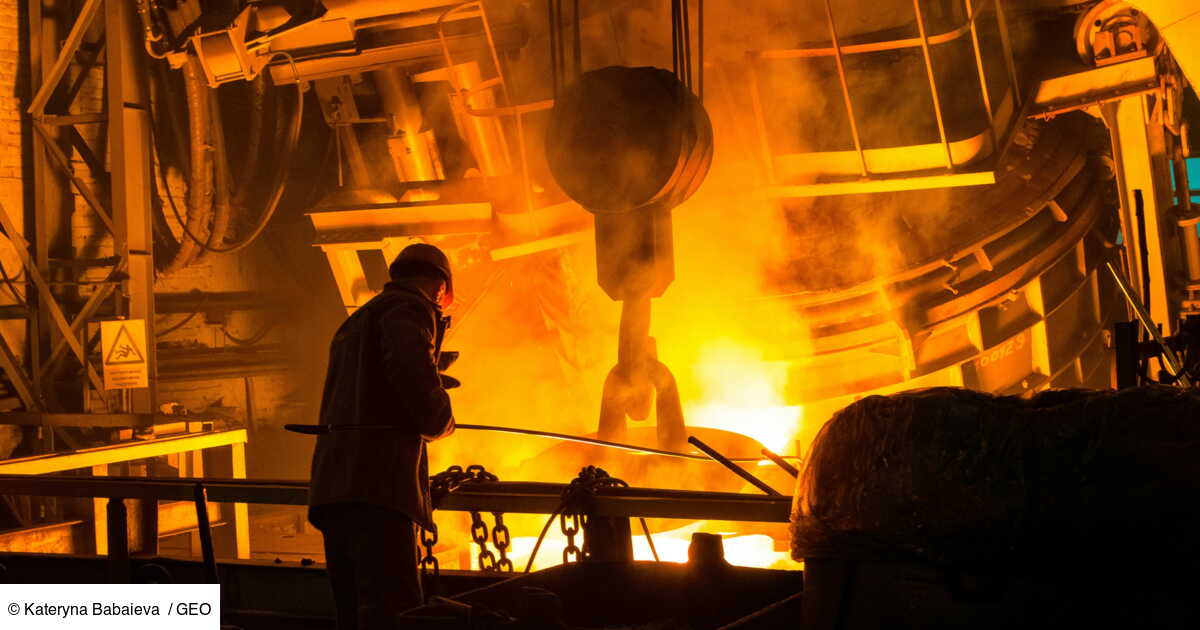
In a world where industries are under mounting pressure to go green, China has just thrown down a game-changing gauntlet. After a decade of meticulous research, a team of Chinese scientists has developed a groundbreaking method to produce steel without coal—and not just faster, but an eye-popping 3,600 times faster than traditional techniques. The potential impacts on both the environment and the global steel market are hard to overstate.
Amazon co-founder MacKenzie Scott has donated over $19 billion to charity in just five years
Diamond batteries powered by nuclear waste promise 28,000 years of clean energy
The Old Way: Slow, Dirty, and Carbon-Heavy
For centuries, making steel has followed a well-worn, if somewhat environmentally damaging, path. It begins with iron ore, which is crushed and processed, then cooked at searing temperatures above 1,300°C in blast furnaces fueled by coke—a derivative of coal. This coke isn’t just a heat source; it’s also essential for the chemical reaction that extracts iron from the ore.
But here’s the catch: the process takes hours (five to six, typically) and comes with a hefty side order of carbon dioxide emissions. In fact, steelmaking has long been one of the industrial world’s worst climate offenders, responsible for roughly 7-9% of global CO₂ emissions, according to the World Steel Association.
Steel in Six Seconds: The New Chinese Method
Now, enter China’s radical new approach. Professor Zhang Wenhai and his team have figured out how to sidestep coal entirely and crank out steel in just three to six seconds—yes, seconds, not hours.
Their secret sauce? It’s all about injecting ultra-fine iron ore powder into a furnace using a vortex lance. Imagine blasting this powder into a superheated environment where, instead of a long, energy-draining process, a rapid-fire chemical reaction takes place almost instantly. The iron melts into droplets that fall to the furnace’s base, ready to be transformed into high-quality steel.
What’s more, the technique isn’t picky. It works with both low-grade and high-grade iron ore, which is especially important for China. Historically, the country has leaned heavily on imports from resource-rich nations like Australia, Brazil, and various African countries to meet its need for high-grade ore. This breakthrough could shift that balance, allowing China to rely more on its own lower-grade reserves.
A Win for Industry and the Planet
This isn’t just a speed record—it’s a sustainability milestone. By removing coal from the process entirely, the method is projected to slash energy consumption by up to one-third. That dovetails perfectly with China’s broader push toward carbon neutrality, a goal it’s set to reach by 2060.
China is already the heavyweight champion of global steel production, contributing more than half of the world’s supply. But this innovation could tip the scales even further. Imagine a future where China not only produces steel more efficiently but also leads the charge in creating a low-carbon steel industry. The ripple effect across sectors like construction, automotive manufacturing, and infrastructure could be monumental.
NASA warns China could slow Earth’s rotation with one simple move
This dog endured 27 hours of labor and gave birth to a record-breaking number of puppies
And here’s the broader question: if this technology scales successfully, could it prompt a global domino effect? Could other nations adopt similar methods and finally begin untangling steel production from its carbon-heavy past?
A Glimpse of Steel’s Greener Future
This breakthrough stands as more than just a technical marvel—it’s a signal. A reminder that even the world’s most entrenched, energy-intensive industries can adapt, evolve, and innovate when the stakes are high enough.
Of course, scaling this method and integrating it into existing production lines won’t happen overnight. There will be economic, logistical, and regulatory hurdles. But if history has taught us anything, it’s that game-changing ideas often start with bold steps, and right now, China seems to be leading that charge—one molten droplet at a time.