
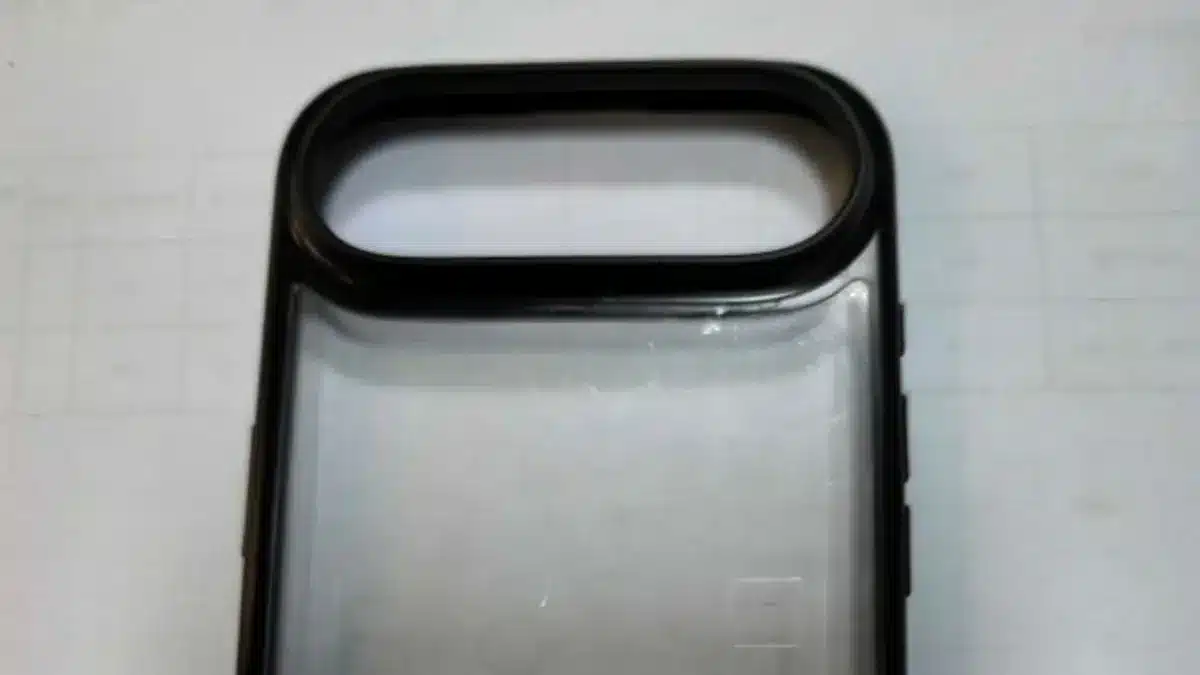
The buzz around the iPhone 17 Air continues to grow, particularly concerning the bar that will adorn the back of some models in the upcoming iPhone generation. Following last week’s mold leaks, an alleged case for the device has now surfaced online. As expected, it confirms the back design of the iPhone.
Amazon co-founder MacKenzie Scott has donated over $19 billion to charity in just five years
Diamond batteries powered by nuclear waste promise 28,000 years of clean energy
Replacing the Bulge with a Bar
The image, once again shared by Sonny Dickson, aligns with the rumors and leaks from the past few months. The iPhone 17 Air is expected to be significantly thinner than standard models, with a potential thickness of just 5.5 mm, excluding the camera bar. This represents a notable slimming down from the iPhone 16 Pro Max, which measures 8.25 mm.
This extreme thinness likely required Apple to make some potentially risky compromises. These include a more compact chassis, possibly eliminating the SIM port globally (not just in the U.S. as with the iPhone 14). It might also lead to the removal of the mmWave 5G antenna, affecting only certain markets, primarily the U.S. Additionally, a thinner battery raises questions about the device’s battery life.
Larger Screen and Refined Handling
Despite its ultra-slim profile, the iPhone 17 Air is not a small device. Its screen size is expected to be 6.6 inches, slightly smaller than the iPhone 16 Plus at 6.7 inches. The design difference is most noticeable around the edges and on the back, with a horizontal bar for the camera block that is reminiscent of older Pixel models from Google.
As is typical with accessories, case manufacturers often rely on preliminary sketches and can predict trends without having official information from Apple. However, Sonny Dickson has a solid track record with leaks, including accurate early reveals of the iPhone 16 models in 2024.
If these rumors prove accurate, Apple could be introducing its thinnest iPhone since the iPhone 6. In exchange, some trade-offs would have been made. At this point, it’s unclear whether this approach will appeal to users. Some are concerned that the extreme thinness could lead to greater fragility and potentially a new BendGate scenario.