
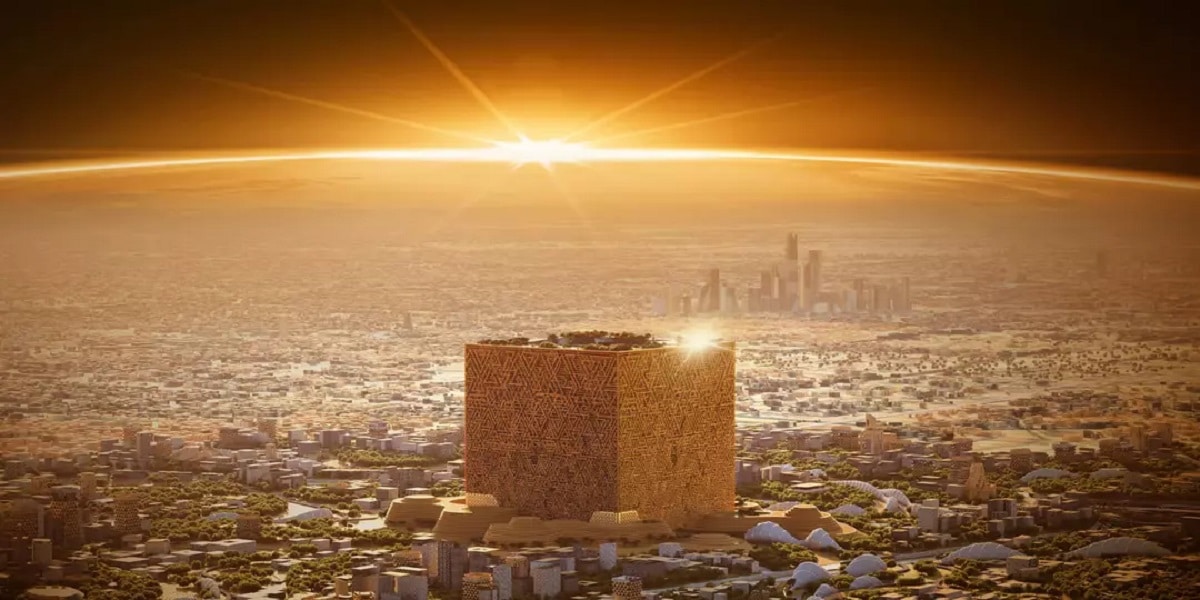
In an ambitious move that’s catching the world’s attention, a country is building what will soon be the largest structure on Earth. This monumental cube, which is designed to house 400,000 people, is set to reach a staggering 400 meters in height. Once completed, it will redefine both the urban landscape and the concept of city living.
Amazon co-founder MacKenzie Scott has donated over $19 billion to charity in just five years
Diamond batteries powered by nuclear waste promise 28,000 years of clean energy
A Monumental Project with Monumental Ambitions
Throughout history, the construction of impressive buildings has always been a way for nations to demonstrate power, wealth, and vision. From the ancient pyramids of Egypt to the towering skyscrapers of New York, humanity has often sought to leave a legacy through its architecture. Today, one project stands poised to continue this tradition on an unprecedented scale: the creation of the world’s largest building.
This structure, known as the Mukaab, will be no ordinary high-rise. Standing at 400 meters tall, the cube-shaped building will dwarf iconic landmarks such as the Eiffel Tower, which stands at 312 meters. However, the Mukaab is more than just a tall building. It is being designed as a vertical city, housing everything from residential units and luxury hotels to shopping malls, cultural centers, and entertainment venues. The structure will even feature holographic projections on its facades, offering an immersive experience that promises to be unlike anything seen before.
The Vision Behind the Mukaab
This ambitious undertaking is being spearheaded by Saudi Arabia, a country eager to diversify its economy and reduce its reliance on oil. Under the leadership of Crown Prince Mohammed bin Salman, the nation has launched a series of groundbreaking projects aimed at transforming Saudi Arabia into a global tourism hub. The Mukaab is a central piece of this vision, fitting seamlessly into the broader Saudi Vision 2030, a national initiative that seeks to reshape the country within a single decade.
The Mukaab isn’t the only futuristic project on the horizon for Saudi Arabia. In 2017, the government also unveiled plans for The Line, a 170-kilometer city in the desert that will feature two parallel skyscrapers, each rising 500 meters high. Designed to be fully automated and powered by renewable energy, The Line will aim to house nine million people, creating a self-sustaining, hyper-efficient environment.
Big Ideas, Bigger Questions
While these projects are undeniably fascinating from a technical perspective, they also raise several important questions. One of the most pressing concerns is the environmental impact. How will such massive structures affect the delicate desert ecosystem and local wildlife? The scale of these projects could significantly disrupt the natural environment, and it remains to be seen how developers will mitigate these effects.
Then, there’s the cost. The sheer expense of building structures on this scale is astronomical, and while Saudi Arabia has vast financial resources, it still faces challenges in securing the necessary funding and ensuring that these projects stay within budget.
Another key issue is the livability of these hyper-technological cities. Will residents feel a sense of community, or will they find themselves in isolated, sterile environments, disconnected from nature? With so much technology integrated into daily life, it’s unclear whether these cities will foster a genuine sense of belonging or become more like futuristic versions of corporate complexes.
NASA warns China could slow Earth’s rotation with one simple move
This dog endured 27 hours of labor and gave birth to a record-breaking number of puppies
Finally, there’s the crucial question of timing. The Mukaab and The Line are both part of the Vision 2030 initiative, which has ambitious goals for the next decade. However, with the clock ticking, both projects are already facing significant delays. The Line, for instance, was announced in 2017, but as of now, only a small section is expected to be completed by 2030—far less than the original target of 175 kilometers.
The Reality of the Vision : Will It Be Achieved?
The Mukaab is still in its early stages, and while the vision is grand, many remain skeptical about how such a massive project can be completed in the coming years. Constructing a building on this scale requires not just financial backing but also cutting-edge engineering and technology—resources that take time to develop and implement.
While Saudi Vision 2030 is an ambitious plan, the timeline is quickly shrinking. As these visionary projects move forward, it’s uncertain whether Saudi Arabia can meet its goals or if these grand plans will remain more of a dream than a reality.
For now, one thing is certain: Saudi Arabia’s attempt to create the world’s largest structure is destined to be remembered in history—whether it’s completed on time or not. It’s a testament to the power of ambition and innovation, but the road ahead is far from guaranteed.