
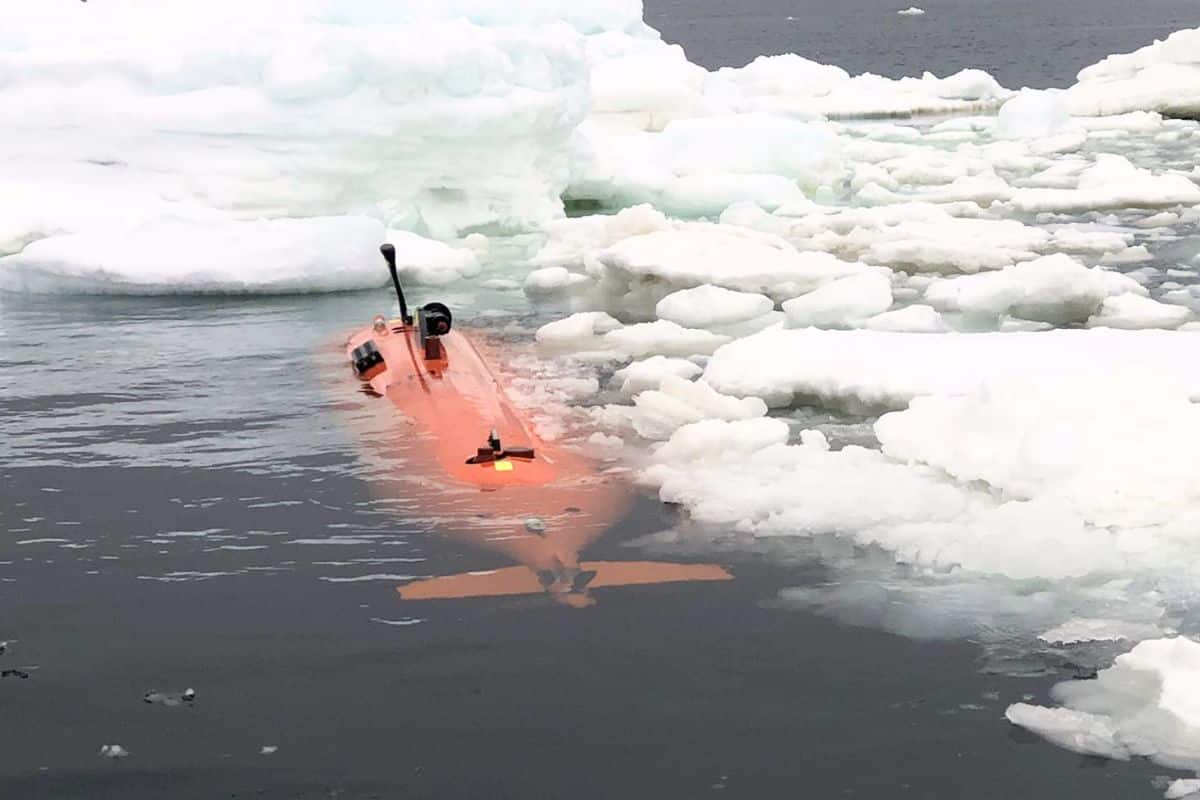
Deep under the relentless Antarctic ice, a little-explored world has recently unfolded its secrets. An international team of researchers deployed an advanced, autonomous submarine—affectionately known as Ran—to navigate the mysterious depths beneath a colossal ice shelf in West Antarctica. Over a journey spanning 27 days and traversing over 1,000 kilometers, Ran pushed more than 17 kilometers under the ice, a feat reminiscent of venturing into an alien realm.
Amazon co-founder MacKenzie Scott has donated over $19 billion to charity in just five years
Diamond batteries powered by nuclear waste promise 28,000 years of clean energy
Unveiling Antarctica’s Invisible Depths
I still remember the first time I heard about a submersible exploring beneath thousands of meters of ice—it felt like something out of a science fiction movie. Led by experts from a renowned northern university, the mission aimed to chart the previously inaccessible underbelly of the Dotson Ice Shelf. Outfitted with sophisticated sonar technology, Ran produced high-resolution maps that gave scientists a rare glimpse into the unseen landscape. As Professor Anna Wåhlin, an oceanography expert, remarked, this expedition provided insight into features that have long remained a mystery. It’s a reminder of how our planet constantly presents us with challenges that push the boundaries of technology and exploration.
What Lies Beneath: Key Discoveries Under the Ice
During its epic journey, Ran measured ocean currents and detected the dynamic forces behind the accelerating melt of the ice shelf’s western edge. The submarine’s sensors revealed that warm ocean water was infiltrating through vertical crevices in the glacier, causing significant melting in these localized areas. This discovery is akin to observing how a small, unexpected crack in a dam can lead to much larger problems.
Moreover, Ran’s sonar uncovered a diverse range of sub-ice topographies. Imagine peaks, valleys, and plateaus that form an intricate landscape, not unlike the varied terrains encountered on a long hiking trip in a rugged mountain range. Even formations resembling sand dunes were spotted, sparking theories that the Earth’s rotation—the Coriolis effect—might be subtly reshaping these hidden features.
A New Perspective for Climate Models
The data collected by Ran is already proving indispensable in the realm of climate science. For many years, researchers have struggled to fully understand and model the complex behaviors of glacial melt. With detailed maps at their disposal, scientists are now better equipped to refine climate models. Karen Alley, a noted glaciologist, highlighted how these new observations complement satellite data, enhancing our overall understanding of the Antarctic system. This advancement reminds me of upgrading from an old black-and-white TV to a modern high-definition display—suddenly, details once blurred into obscurity become strikingly clear. With improved models, we can make more reliable predictions about the future impact of glacial melt on global sea levels.

The Disappearance of Ran
Every pioneering expedition carries its risks, and sadly, Ran’s adventure came with an unforeseen twist. During its return journey in 2024, the submarine mysteriously vanished beneath the ice. As many explorers can attest from their own forays into challenging and unpredictable environments, such a loss is both a somber reminder of nature’s peril and a beacon of the courage required in scientific discovery. Professor Wåhlin encapsulated this bittersweet moment by acknowledging the inherent challenges of operating in one of Earth’s most hostile frontiers, all while celebrating the wealth of knowledge gleaned from the mission.
Why This Matters for the Future
The stability of Antarctica’s ice shelves plays a crucial role in moderating global sea levels. They act as natural barriers that slow down the flow of ice into the ocean. The findings from Ran are vital because they open new avenues for understanding the melt dynamics of these colossal structures. Such insights are key when it comes to preparing for future climate scenarios—especially as the pace of global warming accelerates.
NASA warns China could slow Earth’s rotation with one simple move
This dog endured 27 hours of labor and gave birth to a record-breaking number of puppies
Reflecting on the expedition, I’m reminded of journeys where every step into the unknown is met with simultaneous wonder and caution. Just as a seasoned traveler might note the subtle shifts in a landscape to predict a coming storm, climatologists now have a clearer blueprint to foresee how our polar regions might behave in the years ahead.
Looking Ahead
Although the mission ended abruptly, the legacy of Ran endures. Its groundbreaking achievements lay the foundation for future explorations using even more sophisticated submersibles. The hope is that these subsequent missions will extend our reach even further into the icy abyss of Antarctica. As scientists continue to analyze the rich dataset provided by Ran, the global community stands to benefit from deeper insights into one of the most extreme environments on Earth.
In the end, Ran’s journey is a testament to human ingenuity and the relentless pursuit of knowledge. As we confront the challenges posed by climate change, every discovery from the depths of Antarctica helps forge a clearer path towards understanding—and ultimately protecting—our planet. Trusted experts and organizations in the field agree that advancements like these are a crucial stepping stone in the ongoing quest to unravel the mysteries of our natural world.