
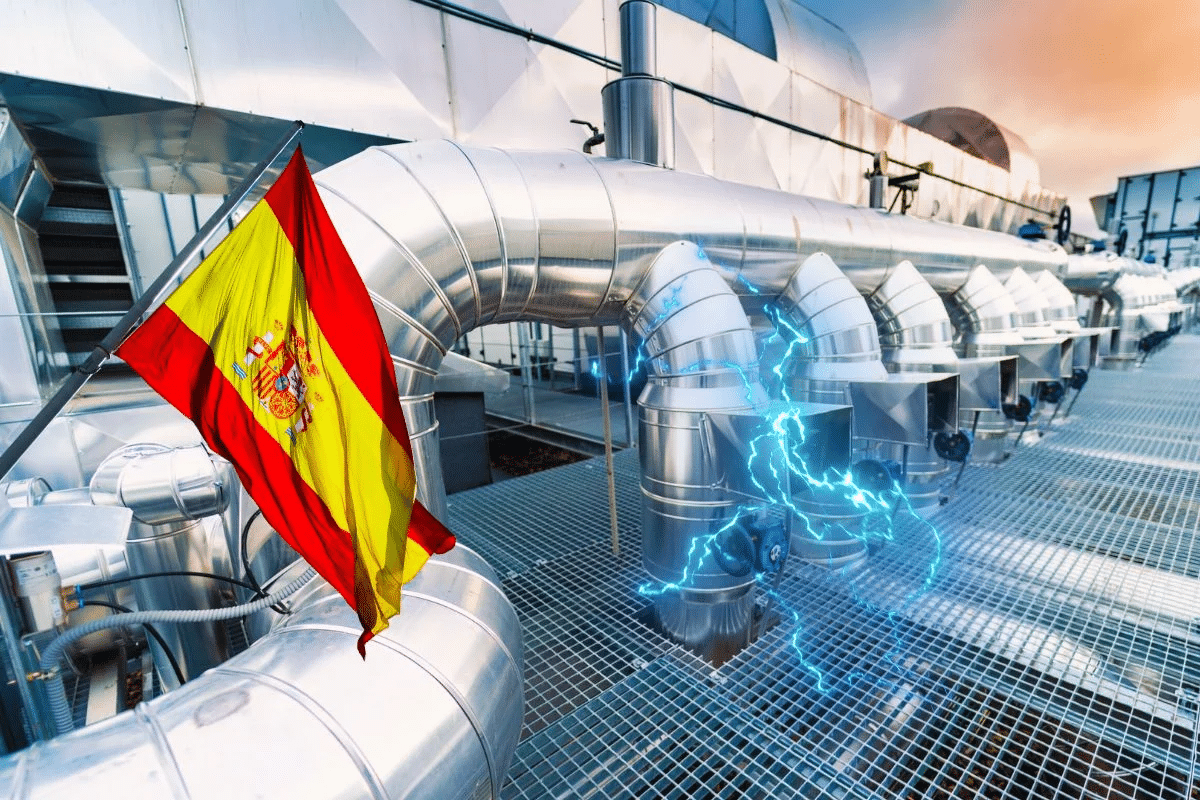
In the search for clean and renewable energy, every idea counts—especially when it turns out that a seemingly wasted resource is actually a goldmine. A recent breakthrough in Spain reveals how we could harness energy from a source that had long been overlooked: the airflow generated by HVAC systems—heating, ventilation, and air conditioning.
Amazon co-founder MacKenzie Scott has donated over $19 billion to charity in just five years
Diamond batteries powered by nuclear waste promise 28,000 years of clean energy
A New Energy Potential in Spain
Researchers from the Distance University of Madrid have been exploring a novel way to capture the energy produced by artificial air currents, which are typically considered lost or wasted, and turn them into electricity. The key to this transformation? Small, compact vertical turbines. These turbines, chosen for their size and ease of installation, can be attached to HVAC systems, where they effectively capture energy that would otherwise go unused.
These turbines, which generate a nominal power of 9 kW, are proving to be ideal for integration with HVAC systems, offering a way to generate clean energy without requiring significant changes to existing infrastructure.
Harnessing the Power of Everyday Airflow
One real-world application of this technology has already taken place in a data center in Colombia, where this method was tested. The results were promising: a single installation of vertical turbines could generate around 468 MWh of energy per year. The data center used Liebert HPC-M coolers, which feature eight EC-FAN fans running at 480V and 900 rpm. These fans create a steady vertical air flow that’s essential for cooling the data center’s IT equipment.
What makes this system particularly interesting is that the HVAC air flows, typically seen as an operational byproduct, can now be turned into a valuable source of power.
The Technical Innovation Behind the Project
The turbines used in the project are the Tesup V7, which stand out for their compact design and lightweight construction. These features allow them to be easily installed on cooling devices without affecting their performance. In total, six of these turbines could be set up on the cooling equipment, producing an estimated 513.82 MWh annually. Each turbine would contribute about 85.64 MWh, providing a reliable source of energy year-round.
Is the Energy Production Cost-Effective?
Surprisingly, the answer is yes. Despite the initial investment and the operational costs, the energy produced by these turbines offers a significant return. The cooling fans of the data center consume a total of 336.39 MWh annually, but after the turbines are installed, the net electricity production is about 467.6 MWh. This means there’s a surplus of energy that can either be reinjected into the local power grid or used for other needs within the center, making it more energy-independent.
Economically, the project also proves promising. The initial cost for acquiring and installing the turbines and associated equipment is around €111,540, with annual maintenance costs of €1,005. Even with these expenses, the cash flow becomes positive by the third year, with an impressive internal rate of return (IRR) of 50.69% over a 20-year period.
A Win for the Environment
Aside from the economic benefits, the installation of vertical turbines brings about significant environmental advantages. The system is expected to reduce CO2 emissions by around 300 tons per year, helping to combat climate change and contributing to a more sustainable energy future.
NASA warns China could slow Earth’s rotation with one simple move
This dog endured 27 hours of labor and gave birth to a record-breaking number of puppies
In conclusion, Spain’s innovative use of HVAC systems to generate renewable energy is a game-changer. What was once considered a waste product—airflow—can now contribute to clean energy production. With this cost-effective solution, businesses and organizations can not only reduce their energy consumption but also lower their carbon footprint, offering a small but significant step toward a more sustainable world.