

With the Tesla Model 3 “Highland” garnering attention for its sleek redesign, improved suspension, and quieter cabin, many owners of older Model 3 versions are left wondering if their vehicles are falling behind. But one resourceful Tesla owner has proven that you don’t need to upgrade to the latest model to enjoy a better driving experience. With some ingenuity and a modest budget, this DIY project brought the benefits of Tesla’s latest suspension technology to an older car.
Amazon co-founder MacKenzie Scott has donated over $19 billion to charity in just five years
Diamond batteries powered by nuclear waste promise 28,000 years of clean energy
Why the Highland Model Stands Out ?
Tesla’s recent Model 3 Highland update introduced several key improvements that make it stand out in the lineup. The most talked-about enhancement is its frequency-selective dampers, a suspension upgrade designed to balance comfort and performance. This system adjusts shock absorber stiffness based on driving conditions, smoothing out rough roads while maintaining agility through sharp turns.
Other updates, like enhanced acoustic insulation and refined interior design, further elevate the Highland experience. However, the suspension stands out as the most impactful upgrade—and fortunately, it’s also one of the easiest to replicate on older models.
A DIY Suspension Upgrade: Costs, Process, and Results
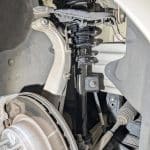
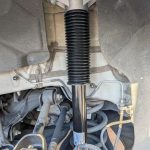
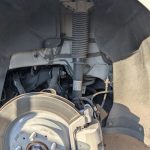
A Tesla owner, known as Cookaacoo on Reddit, decided to retrofit his 2022 Model 3 RWD with the Highland’s updated suspension. Although Tesla initially declined to sell the parts due to “incompatibility” with the car’s serial number, Cookaacoo managed to order the components through a Tesla service center.
Cost Breakdown:
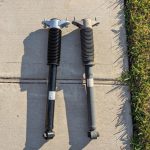
- Front shock absorbers (2 different types): €160 each
- Rear shock absorbers (identical): €115 each
- Total cost: €550 for the RWD version
For AWD models, the cost is slightly higher but remains far more affordable than upgrading to a new vehicle.
Using Tesla’s online service manual as a guide, Cookaacoo replaced the shocks with a friend’s help. The process took 3 to 4 hours, and while it required some effort, it was straightforward enough for anyone comfortable with automotive repairs.
The results? Remarkable. Cookaacoo estimates that the ride quality now feels 90% comparable to a Model 3 Highland, citing smoother handling and improved comfort. The remaining differences, he noted, stem from other components like suspension arms and seats, which are more challenging to retrofit.
Why Doesn’t Tesla Offer This Upgrade?
This success story raises an intriguing question: why doesn’t Tesla provide such retrofits as an official service? While many owners would likely embrace the chance to modernize their vehicles, Tesla has yet to introduce this option. Possible reasons include technical constraints, logistical challenges, or a strategic focus on selling new models rather than supporting upgrades for older ones.
For now, motivated Tesla owners like Cookaacoo are finding ways to take matters into their own hands, often sharing insights and advice within the growing Tesla DIY community.
NASA warns China could slow Earth’s rotation with one simple move
This dog endured 27 hours of labor and gave birth to a record-breaking number of puppies
Extending the Life of an Electric Vehicle
This project underscores the potential for electric vehicle longevity. As technology evolves, retrofitting older models with new features can significantly enhance the driving experience without the need for a full upgrade. With moderate costs and a little elbow grease, DIY enthusiasts can keep their vehicles feeling fresh and competitive.
Cookaacoo’s suspension upgrade is a testament to how accessible some of these improvements can be. Beyond improving ride quality, the project highlights the importance of community knowledge-sharing, where owners can inspire each other to push the boundaries of what’s possible.
In a world where technology often feels disposable, stories like this remind us that innovation doesn’t always require starting from scratch. Sometimes, it’s about finding the right tools—and the courage to roll up your sleeves.