
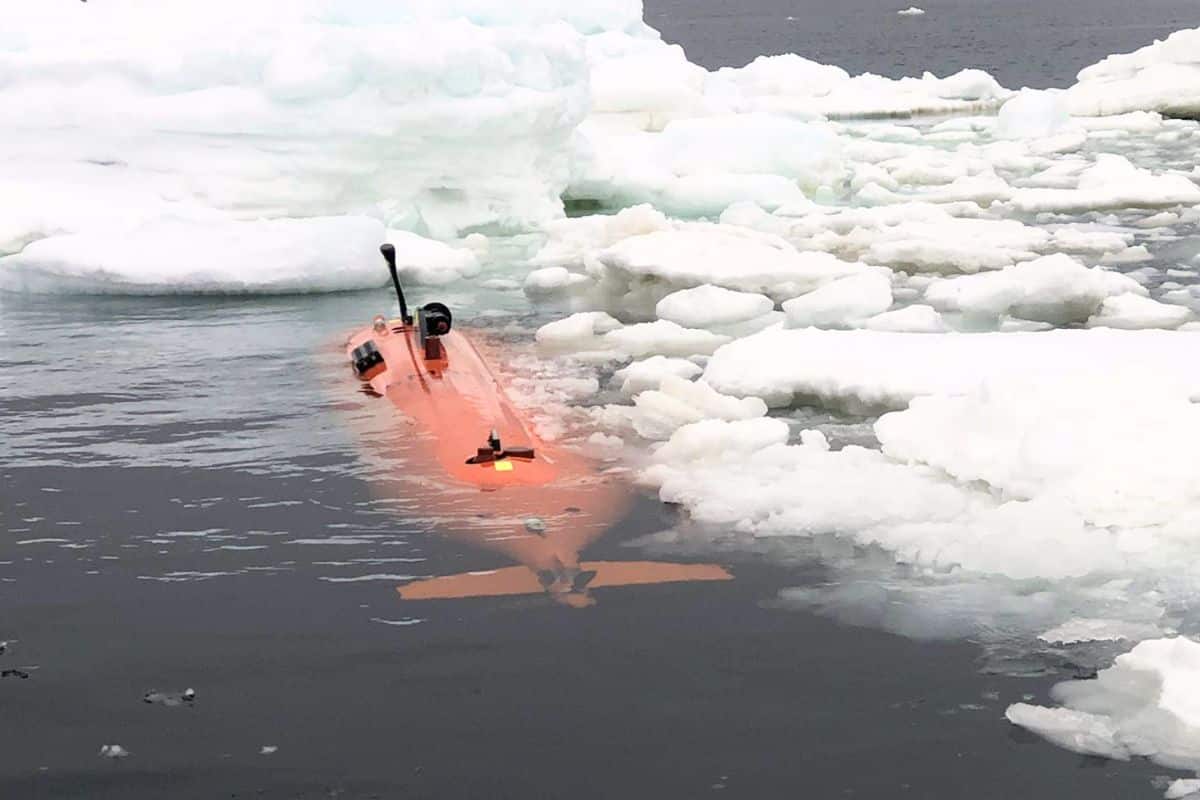
Beneath the impenetrable ice sheets of Antarctica, there exists a world that has long been a mystery to scientists—until now. An international team from the University of Gothenburg deployed the autonomous submarine Ran to explore the depths beneath the Antarctic glaciers, revealing crucial data about the potential for rising sea levels. Though the mission ended in the submarine’s disappearance, its discoveries have opened a new chapter in understanding one of the most remote and challenging places on Earth.
Amazon co-founder MacKenzie Scott has donated over $19 billion to charity in just five years
Diamond batteries powered by nuclear waste promise 28,000 years of clean energy
Unveiling Antarctica’s Invisible Depths
The Ran submarine was specifically designed to navigate the Dotson Ice Shelf cavity in West Antarctica, equipped with advanced sonar technology to scan the glacier above it. Over 27 days, Ran covered over 1,000 kilometers, diving 17 kilometers deep beneath the ice—an endeavor that has been compared to the difficulty of exploring the dark side of the moon.
“This mission gave us a glimpse into something we’ve never been able to observe before,” said Anna Wåhlin, a professor of oceanography at the University of Gothenburg and lead researcher of the study. The data collected by Ran offered high-resolution maps of the underside of the glacier—information that was previously inaccessible but critical for understanding patterns of glacial melt.
What Lies Beneath: Key Discoveries Under the Ice
For the first time, scientists were able to measure the currents flowing beneath the glacier and understand the causes behind the rapid melting of the western edge of the Dotson Ice Shelf. Their observations revealed that high melt rates were concentrated around vertical fractures in the glacier, where warmer ocean waters infiltrate and accelerate the ice’s melting.
Ran’s sonar also uncovered unexpected landscapes beneath the ice—peaks, valleys, plateaus, and even formations that resembled sand dunes. These unique structures might be influenced by the Coriolis effect, the result of Earth’s rotation acting on moving water. Such formations are vital for researchers as they provide new insights into how environmental forces shape the region’s ice dynamics.
A New Perspective for Climate Models
The findings from Ran are expected to significantly enhance climate models. Existing models have struggled to explain the complex melt patterns under the glacier, but the high-quality maps produced by the submarine now offer crucial data to help refine those models. Karen Alley, a glaciologist at the University of Manitoba and co-author of the study, pointed out the importance of this data in complementing satellite observations. “What we see from space is now clearer than ever,” she said. These refined models could help scientists predict more accurately how quickly glaciers will melt and how this will impact global sea levels.
The Disappearance of Ran
Unfortunately, the mission ended on a somber note when Ran mysteriously disappeared during a return trip to Antarctica in 2024. Somewhere beneath the thick ice, the submarine was lost, leaving researchers both grateful for the groundbreaking data it had collected and with lingering questions about what further discoveries it could have made.
“This highlights the challenges of exploring such a remote and hostile environment,” Wåhlin noted. Despite its disappearance, the data gathered by Ran has already reshaped our understanding of Antarctic glaciers and their role in the global climate system.
NASA warns China could slow Earth’s rotation with one simple move
This dog endured 27 hours of labor and gave birth to a record-breaking number of puppies
Why This Matters for the Future
Antarctica’s ice shelves are vital in regulating global sea levels, acting as barriers that slow the flow of ice into the ocean. Understanding the causes and patterns of their melting is crucial for forecasting future sea-level rise. While the findings from Ran mark a significant step forward, they also raise more questions. The complexity of melt patterns beneath the glaciers remains only partially understood, highlighting the need for further exploration and innovation in polar research.
Looking Ahead
As scientists continue to analyze the data collected by Ran, the mission has paved the way for future expeditions. The lessons learned from this mission will be instrumental in designing more advanced submersibles capable of delving even deeper into the unknown. Despite its premature end, the legacy of Ran serves as a testament to human ingenuity and the relentless pursuit of knowledge.
Beneath Antarctica’s ice lies a mysterious world, one that holds the key to understanding the climate challenges we will face in the future. The journey of the Ran submarine may have ended, but its discoveries continue to shape our view of the planet’s most remote frontiers.