
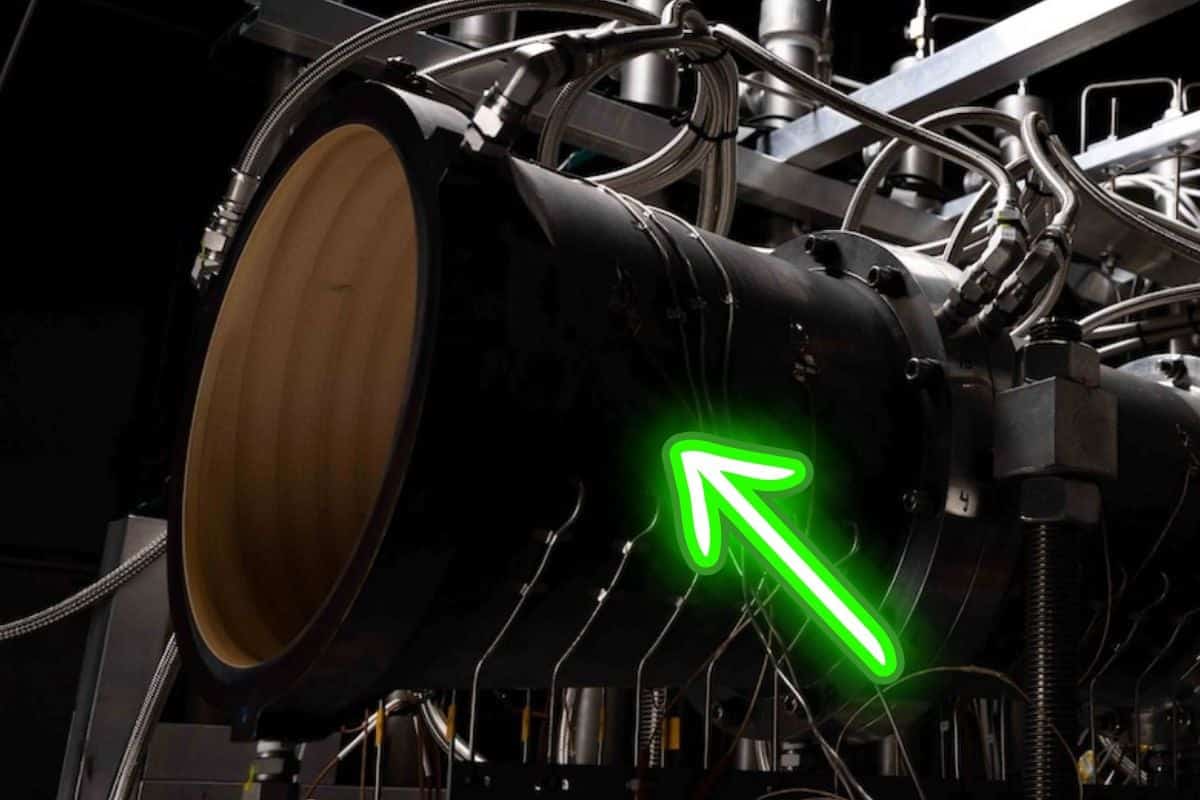
GE Aerospace, a leader in the aerospace industry, has made a bold announcement that promises to change the landscape of hypersonic flight. The company unveiled a groundbreaking hypersonic scramjet engine technology, set for deployment in 2025, that aims to push the limits of speed and efficiency in flight. With this innovation, GE Aerospace is positioning itself at the forefront of the global hypersonic race, taking an important step toward revolutionizing both military and commercial aviation.
Amazon co-founder MacKenzie Scott has donated over $19 billion to charity in just five years
Diamond batteries powered by nuclear waste promise 28,000 years of clean energy
Innovative Propulsion for Extreme Performance with Hypersonic Scramjets
GE Aerospace is on the verge of enhancing its propulsion systems with the integration of the latest breakthroughs in jet engine technology. The new hypersonic scramjet engine will play a critical role in enabling flight at hypersonic speeds, where aircraft travel faster than five times the speed of sound. This engine is designed to meet the extreme demands of hypersonic flight, offering unprecedented performance and efficiency in an era where speed and technology are key to staying ahead in global aviation and defense.
Major Breakthrough with Rotary Detonation Combustion
One of the most exciting aspects of this new technology is the integration of rotary detonation combustion (RDC). Revealed in July 2024, GE Aerospace’s bimodal scramjet engine incorporates this innovative combustion technique, which significantly increases air intake flow compared to previous systems. This breakthrough allows for improved performance, longer operational ranges, and more powerful thrust, making it a vital advancement in the world of hypersonic propulsion. Remarkably, the engine was developed in just 11 months, showcasing the rapid progress GE’s engineers have made in this cutting-edge field.
Rotary detonation combustion is a complex process, where detonations are used to accelerate air through the engine, providing more energy with less fuel. This allows for higher efficiency, making hypersonic flight not just possible but sustainable for longer durations.
Overcoming Challenges in Hypersonic Propulsion
Building a system that can handle the extreme conditions of hypersonic flight is no small feat. Unlike conventional jet engines, scramjets work by compressing air for combustion without the use of moving parts. The challenge lies in igniting the fuel at supersonic speeds, which is like trying to light a match in the middle of a hurricane. However, thanks to years of collaboration with organizations like NASA and other industry partners, GE Aerospace has made significant strides in overcoming these obstacles. The engine’s development is a result of cutting-edge research and years of trial and error, pushing the boundaries of aerodynamics and material science.
Operational Readiness by 2026
The success of ground testing has paved the way for flight testing to begin in 2026, with the goal of finalizing a fully operational hypersonic propulsion system. These tests are expected to validate the engine’s capabilities, ensuring it can deliver the speed, stability, and endurance needed for real-world applications. If successful, the engine could dramatically alter the trajectory of both military operations and civil aviation, offering fast, efficient, and highly adaptable propulsion solutions.
Global Stakes and International Competition
The race to develop hypersonic flight technology is not limited to commercial applications—it also has immense strategic importance for national security. As countries like China and Russia make rapid advancements in hypersonic systems, maintaining a technological edge is more critical than ever. With the ability to travel at incredible speeds, hypersonic aircraft can significantly reduce reaction times in military scenarios, providing a strategic advantage for countries with advanced systems. GE Aerospace’s propulsion systems are designed to offer unmatched speed and range, making it a vital tool for defense forces around the world.
In an increasingly competitive and volatile geopolitical environment, the ability to deploy hypersonic technologies could change the balance of power. Hypersonic aircraft could transform the way nations approach military defense, border security, and even global diplomacy.
NASA warns China could slow Earth’s rotation with one simple move
This dog endured 27 hours of labor and gave birth to a record-breaking number of puppies
Future Prospects and Strategic Implications
Successfully integrating this rotary detonation combustion technology into practical systems could have profound implications for multiple industries, not just aerospace. If it proves viable, the technology could revolutionize aviation, making ultra-fast, long-distance air travel a reality. In the military sphere, it could strengthen capabilities to respond to threats more quickly, while in civilian use, it could reduce travel times drastically, opening up possibilities for intercontinental flights in mere hours rather than days.
As GE Aerospace continues to innovate, the implications for both national security and global aviation are immense. The development of hypersonic flight technologies not only challenges the limits of what is possible in aerospace engineering but also reshapes the global balance of power. As competition in this field intensifies, the continued advancements in scramjet propulsion will play a crucial role in determining the future of high-speed flight and the way the world operates at large.