
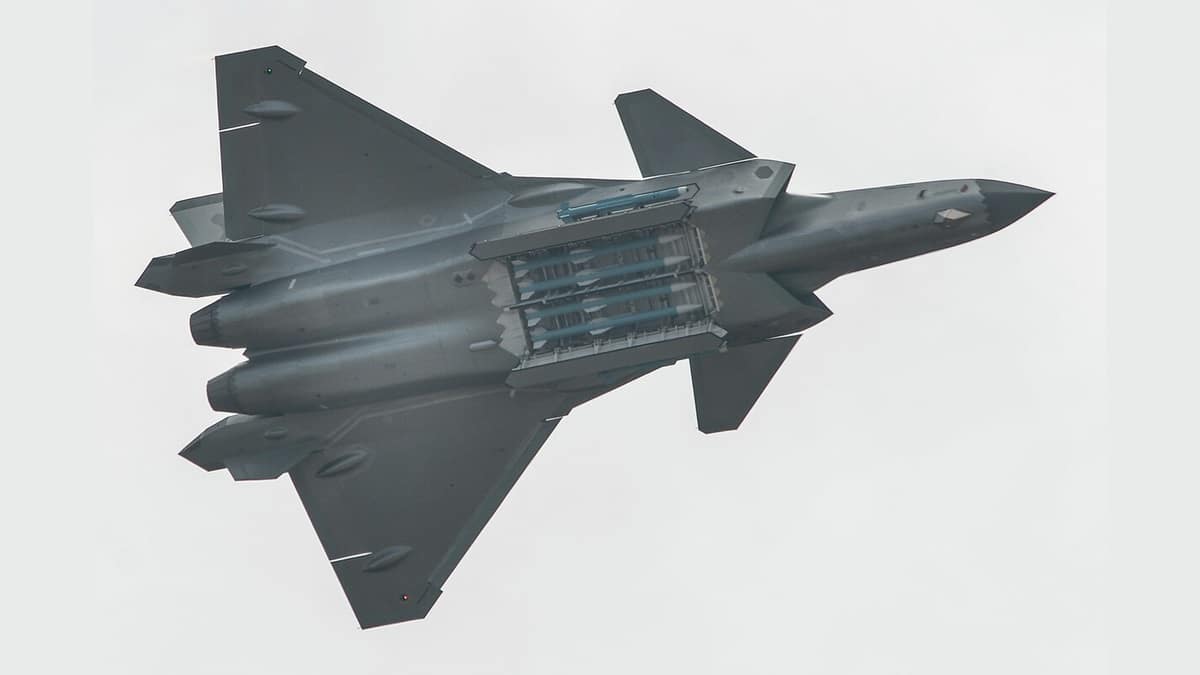
In a groundbreaking achievement that has left the global scientific community in awe, Chinese researchers have defied long-standing assumptions about materials used in advanced defense technology. They’ve developed a hypersonic missile component using stainless steel—once deemed unsuitable for such extreme applications—creating a technology that is set to revolutionize the aerospace and defense industries. Here’s a closer look at how this innovation is reshaping the future of high-speed travel and weaponry.
Amazon co-founder MacKenzie Scott has donated over $19 billion to charity in just five years
Diamond batteries powered by nuclear waste promise 28,000 years of clean energy
A Breakthrough in Material Science
Materials are often the unsung heroes of technological innovation. When working on ambitious projects, the materials used can make or break the entire endeavor. I recall a time working on a product where we were faced with the challenge of finding materials that met both our performance requirements and budget constraints. It’s a challenge faced by industries across the globe, especially in aerospace and military technology. For years, tungsten alloys were the go-to material for hypersonic missile components, thanks to their incredible ability to withstand temperatures over 3,400°C. But as effective as tungsten is, its high cost and scarcity have posed major hurdles for manufacturers.
This is where the team at the Beijing Institute of Technology, led by Professor Huang Fenglei, stepped in with a game-changing solution: stainless steel. Although stainless steel is widely used in construction, kitchen appliances, and automotive industries, it has never been considered viable for extreme high-temperature applications like missile components. However, by combining their expertise in materials science with innovative thinking, the researchers managed to unlock stainless steel’s potential for hypersonic flight.
Overcoming Extreme Temperatures
One of the most significant obstacles the researchers faced was the challenge of creating a missile nose cone that could endure temperatures exceeding 3,000°C during hypersonic flight. Under normal circumstances, stainless steel starts to lose its structural integrity at around 1,200°C. So how did they pull this off? The answer lies in a thermal protection system designed to protect the material from the extreme heat it would encounter.
By layering the stainless steel with ultra-high-temperature ceramics and incorporating a 5mm layer of aerogel, a material known for its excellent insulating properties, the team managed to shield the metal from the heat. This allowed the stainless steel to maintain its strength and integrity, even at speeds exceeding Mach 8—about eight times the speed of sound. The result was a component that could perform reliably under the harshest conditions, while drastically reducing production costs compared to traditional tungsten-based materials.

A Strategic Move for China’s Defense
This technological breakthrough holds immense strategic value for China’s defense capabilities. By using stainless steel, the country can manufacture hypersonic missiles more efficiently, significantly reducing reliance on expensive materials like tungsten. This shift not only helps China strengthen its military might but also makes it less dependent on foreign sources for critical defense technology.
The People’s Liberation Army (PLA) has already begun integrating these stainless steel components into its missile designs, indicating a new era of advanced yet cost-effective weaponry. This development could alter the balance of global defense power, especially as the cost of hypersonic technology rises worldwide.
NASA warns China could slow Earth’s rotation with one simple move
This dog endured 27 hours of labor and gave birth to a record-breaking number of puppies
Real-World Applications and Future Prospects
Though the immediate application of this innovation lies in military technology, its implications extend far beyond defense. The thermal protection system developed for hypersonic missiles could also have significant uses in other high-temperature industries, such as aerospace and energy production. For instance, the technology could be applied to the development of reusable space vehicles or next-generation power plants, offering even greater fuel efficiency and longevity.
Looking ahead, Chinese scientists are already exploring ways to enhance stainless steel’s performance under extreme conditions, signaling that we are only scratching the surface of what is possible. This project has laid the foundation for future breakthroughs in materials science, and who knows where this innovative spirit will take us next?
Conclusion
China’s recent breakthrough in using stainless steel for hypersonic missile components is a stunning achievement that challenges the very limits of what we thought was possible in engineering. By overcoming the material constraints of traditional technologies, the researchers have not only opened the door to more affordable missile technology but have also set a new benchmark for high-performance materials. This development positions China as a powerful player in the global defense race, offering solutions that combine both technological sophistication and economic efficiency. As the world watches, this feat exemplifies the power of innovation and resourcefulness in tackling some of the world’s most challenging engineering problems.