
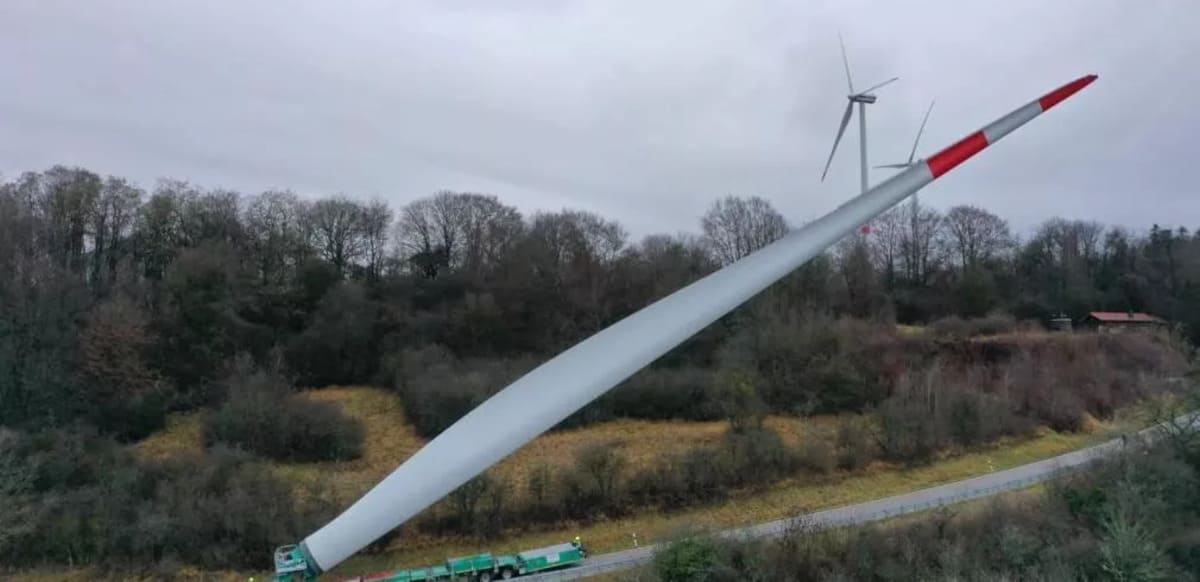
Imagine driving through a quiet city street, only to see a massive, oversized truck carrying something that looks like a giant metal blade, stretching nearly 75 meters long. This isn’t a scene from a futuristic movie—it’s the reality of transporting massive equipment, like wind turbine blades, that require specially designed vehicles and significant planning. When it comes to transporting these extraordinary loads, the term “exceptional convoy” couldn’t be more fitting.
Amazon co-founder MacKenzie Scott has donated over $19 billion to charity in just five years
Diamond batteries powered by nuclear waste promise 28,000 years of clean energy
The Challenge of Transporting Giant Loads
Transporting oversized loads is a logistical feat that requires more than just big trucks. These special convoys are often responsible for moving huge wind turbine blades, sometimes reaching lengths of up to 80 meters. The scale of these objects is hard to imagine—despite being made from ultra-lightweight composite materials, these blades can still be incredibly heavy.
The vehicles used for such transports are unlike your everyday trucks. They’re specially designed to accommodate these giant structures. Often, the blades are placed on enormous flatbeds, and in some cases, the truck doesn’t even have a traditional driver’s cabin. Instead, these convoys are remotely controlled, guided by operators who carefully monitor the vehicle’s movement through cities and towns. This is essential because navigating such a massive load through urban environments, with all their obstacles, requires the highest precision and care.
Navigating Obstacles and Closing Roads
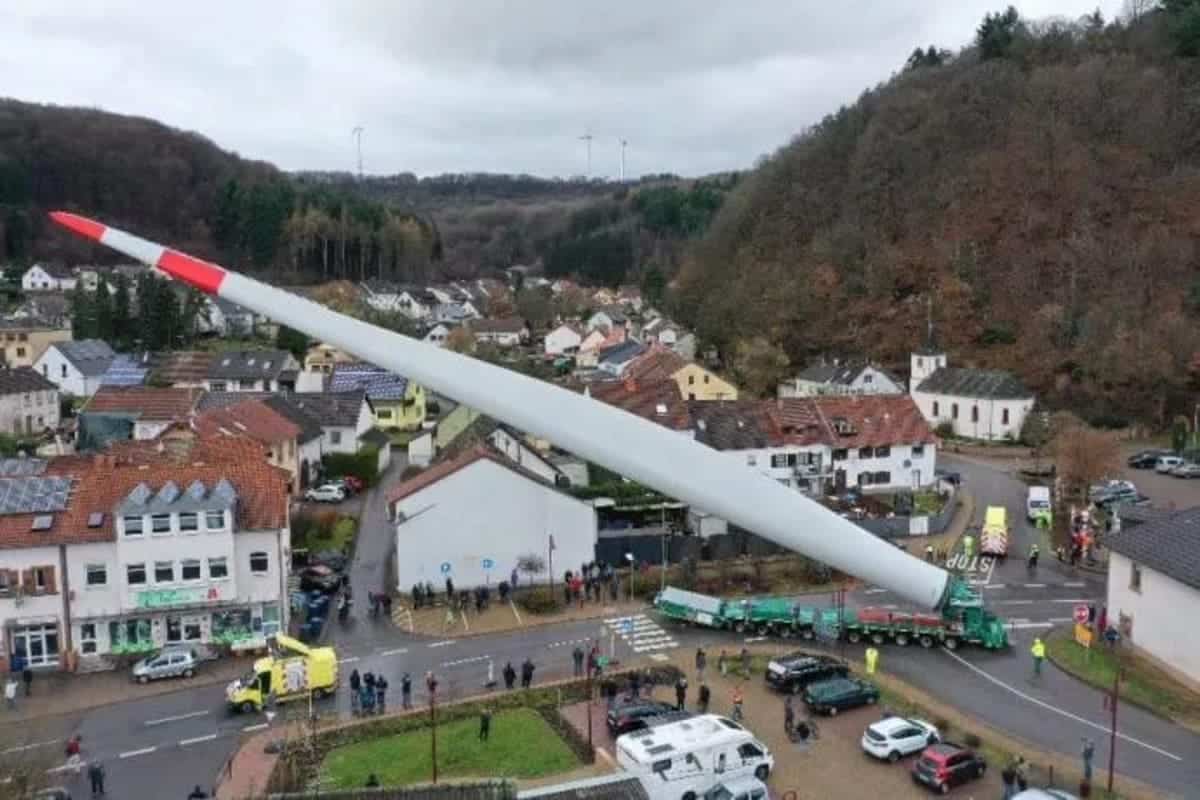
The sheer size of these oversized transports means that entire sections of roads may need to be closed to ensure the convoy can pass through without a hitch. Every maneuver, whether it’s turning a corner or moving through tight spaces, is meticulously planned. The convoy drivers and support teams work in tandem to ensure that the oversized load stays secure and avoids any damage or disruption.
These convoys don’t just move at regular traffic speeds. Due to the size and complexity of the load, they may move at a slower pace, and traffic in certain areas might be halted until the transport passes through. In fact, special permissions are often required to conduct these transports, and they typically happen during off-peak hours to minimize the impact on daily traffic. The coordination between local authorities, traffic management teams, and the convoy drivers is key to making these massive transports happen smoothly.
For example, navigating a sharp turn in a residential area with such a large load is no small feat. Every step is carefully executed, with pilot cars and other vehicles helping to guide the way, ensuring there’s enough clearance for the oversized load. The complexity of these moves makes the entire process a real-time puzzle, where the stakes are high but the rewards—getting the wind turbine blades safely to their installation site—are worth it.
The Need for Precision and Coordination
Every aspect of the transport, from the design of the vehicle to the way the load is secured, is intended to ensure that these exceptional convoys move as smoothly as possible. It’s not just about the trucks; it’s about the entire support system working behind the scenes. Teams of engineers, logisticians, and drivers must collaborate closely to make sure everything goes according to plan.
NASA warns China could slow Earth’s rotation with one simple move
This dog endured 27 hours of labor and gave birth to a record-breaking number of puppies
In the end, these convoys are a reminder of the complexity and scale of modern infrastructure projects, especially in industries like renewable energy. As wind energy continues to grow around the world, the demand for transporting large components like wind turbine blades will only increase. The next time you see one of these giant convoys, remember the precision, care, and coordination that make these exceptional transports possible.