
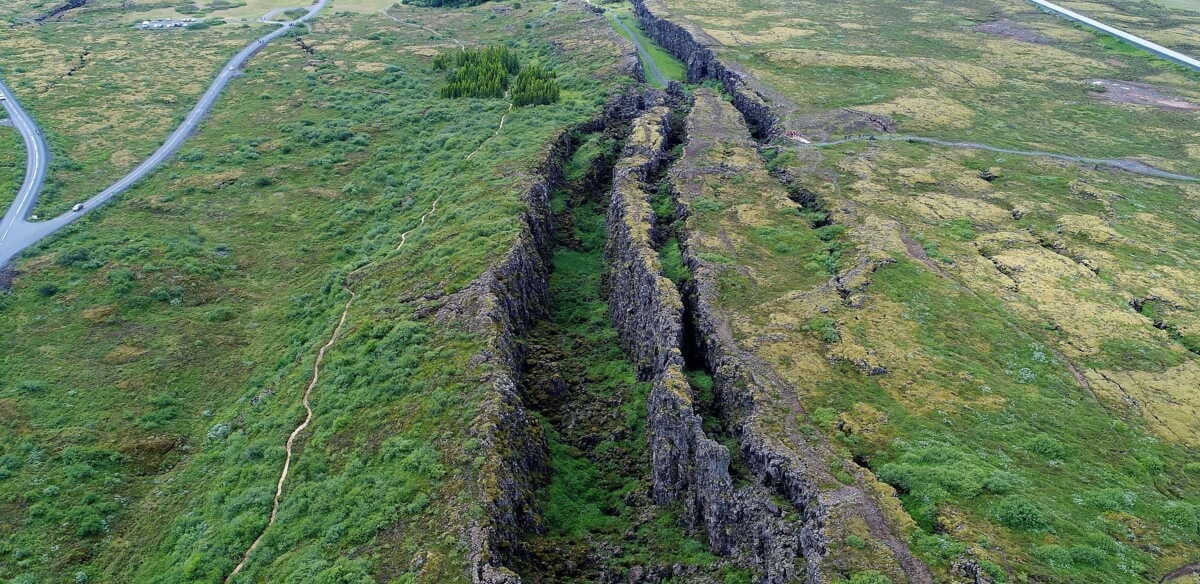
For years, our understanding of Earth’s tectonic plates has been shaped by a combination of seismic data and theoretical models. The idea that tectonic plates move in a predictable manner, based on subduction zones and the movement of Earth’s mantle, has long been accepted. But what if all that we know about these processes could be fundamentally wrong? A recent groundbreaking study has raised new questions about the inner workings of our planet, challenging traditional beliefs about the Earth’s mantle and tectonic activity.
Amazon co-founder MacKenzie Scott has donated over $19 billion to charity in just five years
Diamond batteries powered by nuclear waste promise 28,000 years of clean energy
A Surprising Discovery Shakes the Foundations of Plate Tectonics
In a study published in Nature in November 2024, geophysicists from Zurich’s ETH University and Caltech made an unexpected discovery that has sent ripples through the scientific community. Using an advanced imaging technology, the researchers uncovered anomalies in the lower mantle of the Earth—regions that didn’t align with the current maps of tectonic plate boundaries. These findings are not just minor anomalies, but rather, they suggest the presence of previously unknown rock formations beneath the oceans and continents, which could potentially redefine our understanding of how Earth’s crust behaves.
Unlike traditional methods, which rely on seismic wave propagation to estimate the position of tectonic plates, these scientists employed Full Waveform Inversion (FWI), an advanced geophysical imaging technique. Originally developed for the oil industry to explore underground material properties, FWI analyzes the movement of seismic waves with incredible precision, offering a more detailed picture of the Earth’s inner layers.
Unraveling the Mystery of the Lower Mantle
The discovery came as a surprise to many, including Thomas Schouten, the lead author of the study and a doctoral researcher at ETH Zurich. According to Schouten, “Apparently, these zones in the Earth’s mantle are much more widespread than we previously thought.” The new anomalies were identified in various locations, but one particularly intriguing finding was beneath the Western Pacific—close to a previously known tectonic boundary, where the presence of such an anomaly had been considered impossible.
As it stands, scientists don’t yet fully understand the nature of these findings. The researchers are speculating about two main possibilities: the anomalies could either be ancient siliceous material that has been trapped in the mantle since the planet’s formation around 4 billion years ago, or they could be areas where iron-rich rocks have accumulated over billions of years due to convective mantle movements. Either way, this new data points to the need for further research to understand the complex dynamics of Earth’s interior.
A Turning Point in Earth Exploration
This discovery marks a turning point in the exploration of Earth’s mantle, which has long been a mystery due to its inaccessibility. For decades, our knowledge of the Earth’s interior was primarily based on seismic waves and the assumption that tectonic plates moved in a fairly predictable manner. The latest study has shattered that assumption, suggesting that our planet’s internal structure is far more complicated than previously believed.
Geophysicists are now faced with the challenge of reinterpreting their models of the Earth’s mantle. As Schouten notes, the findings indicate that much of the mantle’s composition remains unknown. “This research highlights the need for further studies to refine our understanding of the internal dynamics of Earth,” he says, emphasizing the importance of pushing the boundaries of current scientific knowledge.
This unexpected twist in the story of our planet’s tectonics serves as a reminder of how much we still have to learn about the Earth beneath our feet. With new tools and technologies, such as Full Waveform Inversion, scientists are gaining a clearer and more detailed picture of the forces that shape the world we live on. These discoveries not only challenge our existing theories but also open up exciting new avenues for exploration, one layer of the Earth at a time.
NASA warns China could slow Earth’s rotation with one simple move
This dog endured 27 hours of labor and gave birth to a record-breaking number of puppies