

As summer approaches and beachgoers start planning their vacations, an essential question lingers: is the beach you’re heading to safe for swimming? In France, polluted beaches have become a serious concern, and this year, an updated map has highlighted areas where you might want to think twice before diving into the water.
Amazon co-founder MacKenzie Scott has donated over $19 billion to charity in just five years
Diamond batteries powered by nuclear waste promise 28,000 years of clean energy
The State of France’s Beaches in 2025
For the second year running, the association Eau et Rivières de Bretagne (ERB) has published its report, “La Belle Plage,” which evaluates the water quality of beaches in mainland France and Corsica. In 2025, the results are both eye-opening and concerning: of the 1,761 beaches examined, 364 are discouraged, and 83 should be avoided altogether.
ERB uses a color-coded map ranging from green (good quality) to red (unsafe), with some areas even marked in black due to missing data. This system is designed to help beachgoers easily interpret the quality of the water before taking a swim. The map also shows that nearly a fifth of France’s coastal areas are regularly polluted, a trend that has worsened over the years, especially after a relatively rainy summer in 2024.
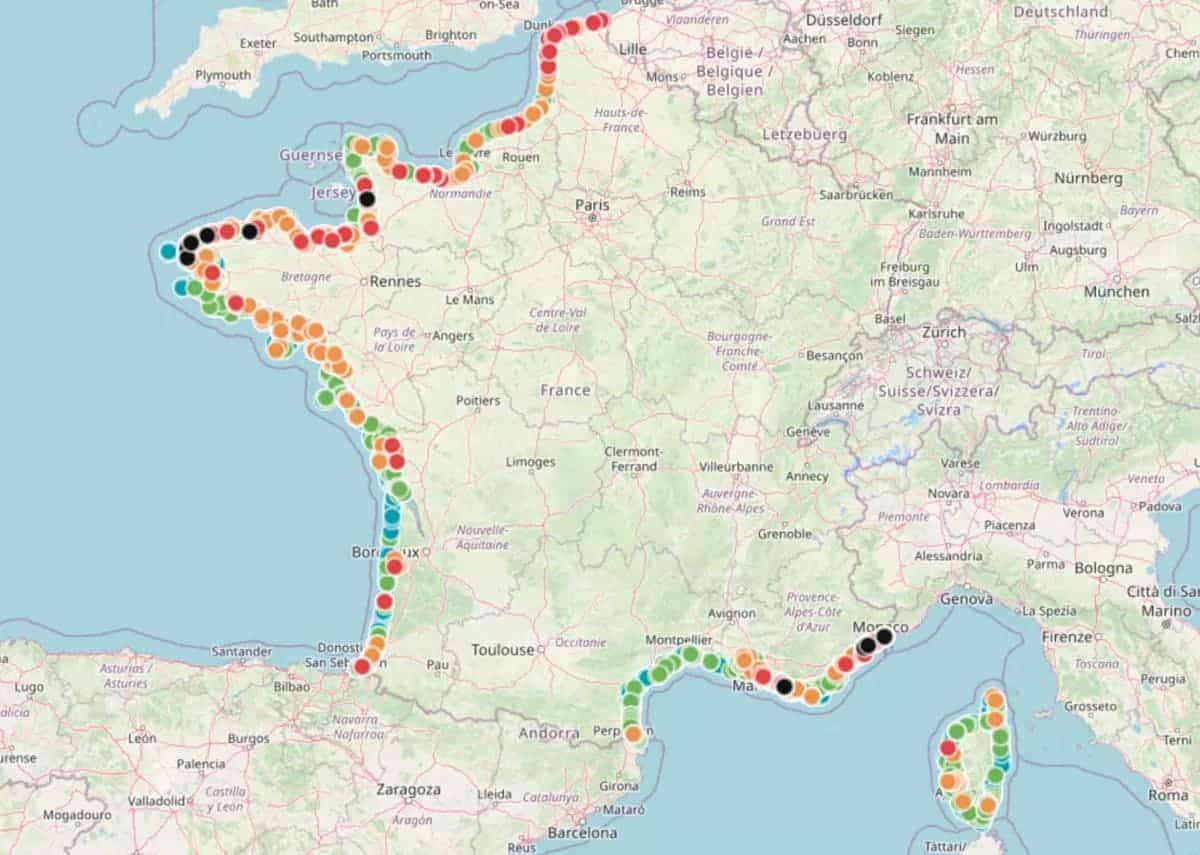
Why Are So Many Beaches Polluted?
According to Laurent Le Berre, ERB’s regional delegate, intense rainfall often causes overflowing sewage systems where stormwater and wastewater mix. This leads to higher levels of contamination in the water, which can pose health risks to swimmers. In addition to sewage problems, heavy rain can wash fertilizers and manure from nearby farms into rivers and eventually out to sea, further polluting the water. As much as these conditions are tied to the weather, they also reflect broader environmental issues, particularly related to intensive farming practices.
The regions most affected by pollution tend to have high human or livestock concentrations, both of which contribute to the contamination of local water sources. In fact, according to Le Berre, just one pig can contribute as many bacteria as 30 humans—so imagine the effects of thousands of pigs in a coastal area.
Shifting Beach Rankings: Surprises and Concerns
In addition to the regular pollution issues, some surprising changes have occurred in the rankings from 2024 to 2025. For example, 83 beaches that were previously classified as “low risk” have now been reclassified as “discouraged,” while 45 beaches have improved their status, moving from “discouraged” to “low risk.” However, there’s also a mystery surrounding several beaches in Brittany. Despite being classified as “to avoid” in 2024, some of these beaches were unexpectedly reclassified by the Regional Health Agencies (ARS) and no longer have accessible water quality data.
While the reason for this change remains unclear, the lack of transparency about these reclassifications has raised concerns. The ARS, which conducts regular water tests during the summer months to assess the quality of the swimming areas, has not provided an explanation for this discrepancy.
NASA warns China could slow Earth’s rotation with one simple move
This dog endured 27 hours of labor and gave birth to a record-breaking number of puppies
Impact of Intensive Farming on Beach Water Quality
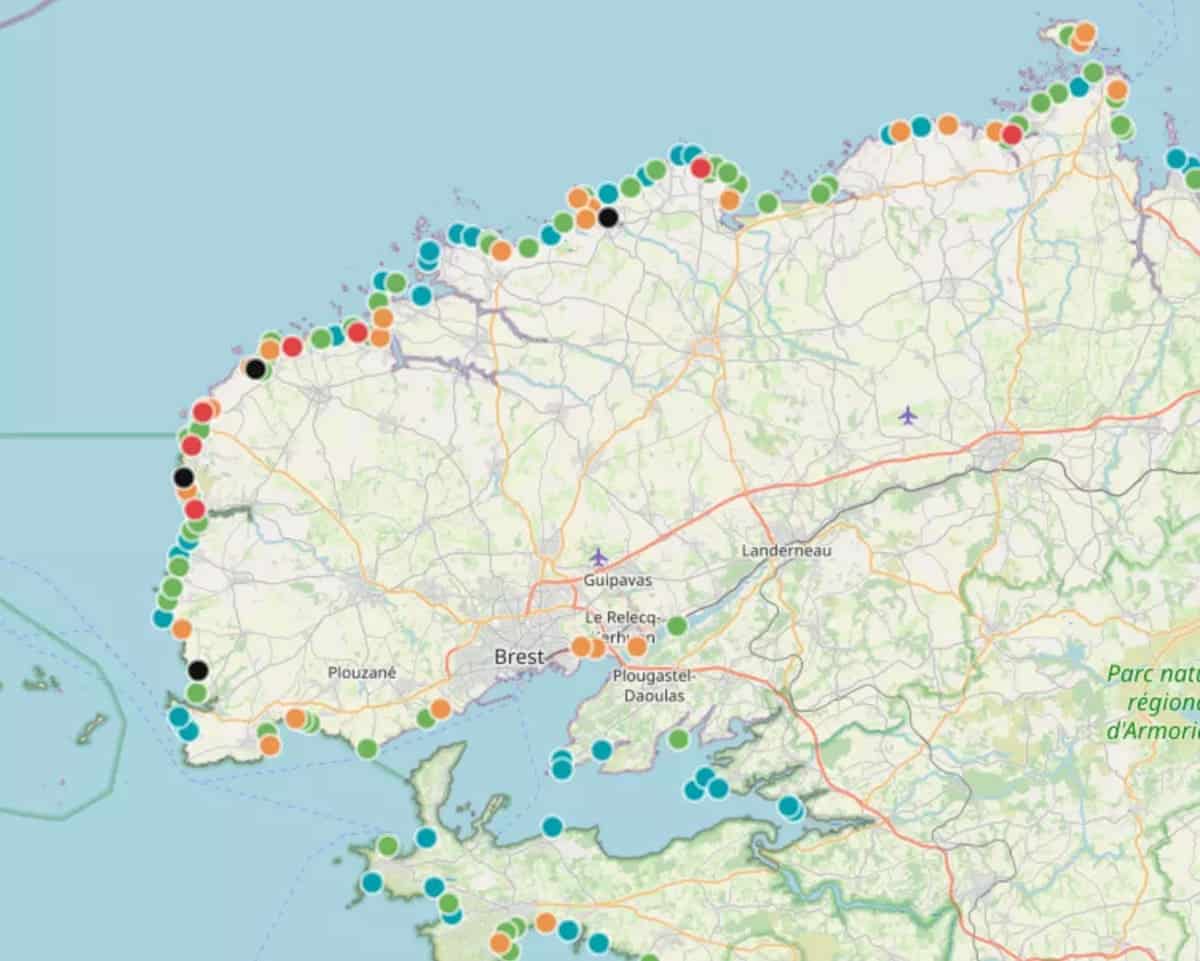
One of the key contributors to water pollution along France’s coastline is the presence of intensive livestock farming. In regions such as Brittany, where farming is widespread, the runoff from farms can carry harmful substances into nearby bodies of water. This is especially true for green algae, which, when decomposed, releases toxic gases, creating a hazardous environment for both the local ecosystem and swimmers.
Le Berre explains that this concentration of livestock is partly responsible for the high number of “discouraged” beaches in the northwest of Brittany. In contrast, the southwest of the region, which has fewer farms, tends to have better water quality.
How to Protect Yourself This Summer
With the summer season fast approaching, it’s more important than ever to check the water quality before heading out to the beach. While the ERB’s updated map offers a valuable tool for identifying potential hazards, it’s also crucial for the public to stay informed about ongoing water quality tests. Swimming in polluted water can lead to illnesses like gastroenteritis or eye infections, caused by bacteria like E. coli.
This year’s map highlights the need for improved water quality management, especially in areas impacted by intense rainfall and agricultural runoff. As more people turn to the coast for their summer breaks, it’s essential to raise awareness about water pollution and its impact on public health. While some beaches remain safe, others are best avoided, particularly if you want to avoid health risks during your much-needed beach getaway.
As the ERB’s report shows, the summer of 2025 may be a season for beachgoers to exercise caution and take a closer look at the waters they plan to dive into. With a simple check of the map, you can ensure your beach trip doesn’t turn into a health hazard.