
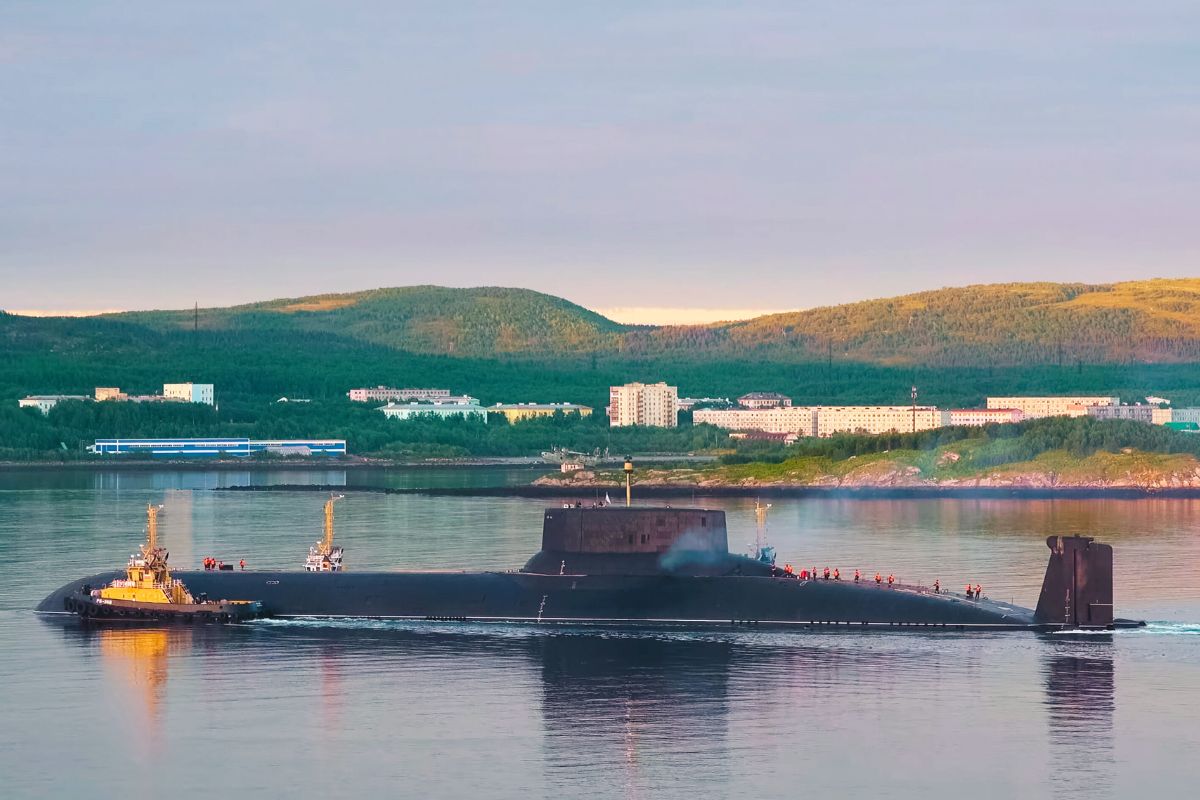
In the world of energy logistics, innovation is often born out of necessity, and Russia may be about to embark on a bold, unconventional solution that could revolutionize the transportation of liquefied natural gas (LNG). Picture this: massive nuclear-powered submarines quietly navigating the icy waters of the Arctic, bypassing traditional shipping lanes and geopolitical tensions. It may sound like a plot straight out of a sci-fi movie, but it’s becoming a real possibility. Here’s how Russia is exploring this groundbreaking approach.
Amazon co-founder MacKenzie Scott has donated over $19 billion to charity in just five years
Diamond batteries powered by nuclear waste promise 28,000 years of clean energy
A Submarine Revolution in Energy Transport?
Russia’s knack for harnessing nuclear-powered technology is well-known, and just recently, the country unveiled the world’s largest nuclear-powered icebreaker. Now, it’s floating the idea of using nuclear submarines to transport LNG from the Arctic to Asia—a strategy that could help circumvent the obstacles posed by Western sanctions and the shifting of gas exports due to the ongoing conflict in Ukraine.
This ambitious project, a collaboration between Gazprom and the Kurchatov Institute, aims to solve logistical challenges and create a new, more secure way of transporting natural gas. The proposed submarine model would weigh a staggering 180,000 tons, making it significantly larger than traditional vessels, and capable of navigating areas where conventional LNG carriers cannot.
Technical Specifications: A Feat of Engineering
The design of this submarine is nothing short of extraordinary. Equipped with three Rhythm-200 nuclear reactors, this colossal vessel would rely on 30 MW electric propellers to reach speeds of 17 knots (about 31.5 km/h). To put that in perspective, it would be around 360 meters long and 70 meters wide, making it comparable in size to the largest oil tankers in the world. But the true innovation lies in its efficiency and speed. The time it would take to transport gas from the Arctic fields to Asian markets would drop dramatically, from 20 days to just 12.
But that’s not all. The nuclear-powered submarines would operate year-round, even during the harshest Arctic winters, when ice often blocks traditional shipping routes. This gives Russia a distinct advantage, allowing it to maintain a consistent energy supply despite seasonal challenges.

Safety, Efficiency, and a Few Caveats
While the potential benefits of this nuclear submarine idea are clear—increased security and efficiency—there are also important considerations. Proponents argue that these nuclear submarines could provide a safer, more autonomous option compared to pipelines, which are vulnerable to political and environmental risks. A small fleet of these submarines could carry the same amount of gas as a subsea pipeline, offering Russia a new alternative to traditional infrastructure.
That said, there are a few hurdles. The Ob Bay, for example, contains shallow waters where the submarines would still need icebreaker assistance to navigate safely. Another major concern is the environmental and safety risks of transporting nuclear-powered submarines loaded with LNG under the ice. Critics warn that any mishap could have disastrous consequences for the Arctic ecosystem—a region that is already vulnerable to climate change and human activity.
NASA warns China could slow Earth’s rotation with one simple move
This dog endured 27 hours of labor and gave birth to a record-breaking number of puppies
A Solution Born of Necessity
This proposal has emerged in response to Russia’s growing logistical challenges. Novatek, the country’s largest LNG producer, recently announced plans to acquire 16 ice-class LNG carriers, but technological limitations and sanctions have slowed progress. By turning to nuclear-powered submarines, Russia hopes to bypass these barriers, reinforcing its sovereignty over the Arctic and securing access to energy markets in Asia.
The boldness of this idea is a reflection of a broader trend: countries are increasingly willing to think outside the box in order to secure energy independence. For Russia, the Arctic is a treasure trove of untapped resources, and leveraging this technology could be a game-changer in their push for global energy dominance.
Navigating Toward the Future
Though the concept of using submarines for LNG transport might sound far-fetched, it’s becoming clear that countries are willing to pursue innovative solutions to meet energy demands. Russia’s move to utilize nuclear submarines represents a significant step in rethinking how we transport energy across the globe.
If this project goes forward, it could revolutionize not just maritime energy transport but also the geopolitical landscape of the Arctic. Whether praised as a technological triumph or criticized for its environmental risks, Russia’s bold vision is already sparking discussions worldwide.
Could this be the beginning of a new era in energy logistics? Only time will tell. But for now, Russia’s ambitious project is a fascinating reminder that when necessity meets innovation, the possibilities are endless.