
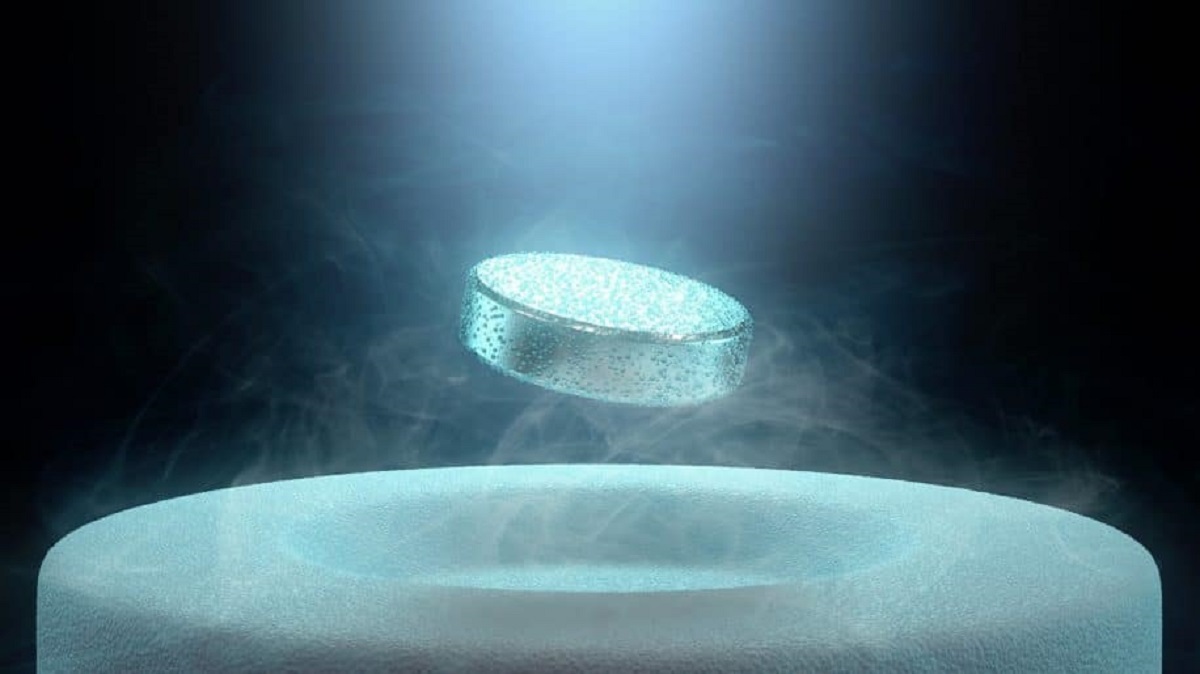
A revolutionary breakthrough in the world of quantum physics has emerged, as scientists have discovered a new state of matter that defies established theories about superconductivity. This new discovery, involving a material composed of iron, could change our understanding of how electrons behave in extremely cold conditions and, more profoundly, challenge a cornerstone theory in physics.
Amazon co-founder MacKenzie Scott has donated over $19 billion to charity in just five years
Diamond batteries powered by nuclear waste promise 28,000 years of clean energy
A Breakthrough Beyond Superconductivity
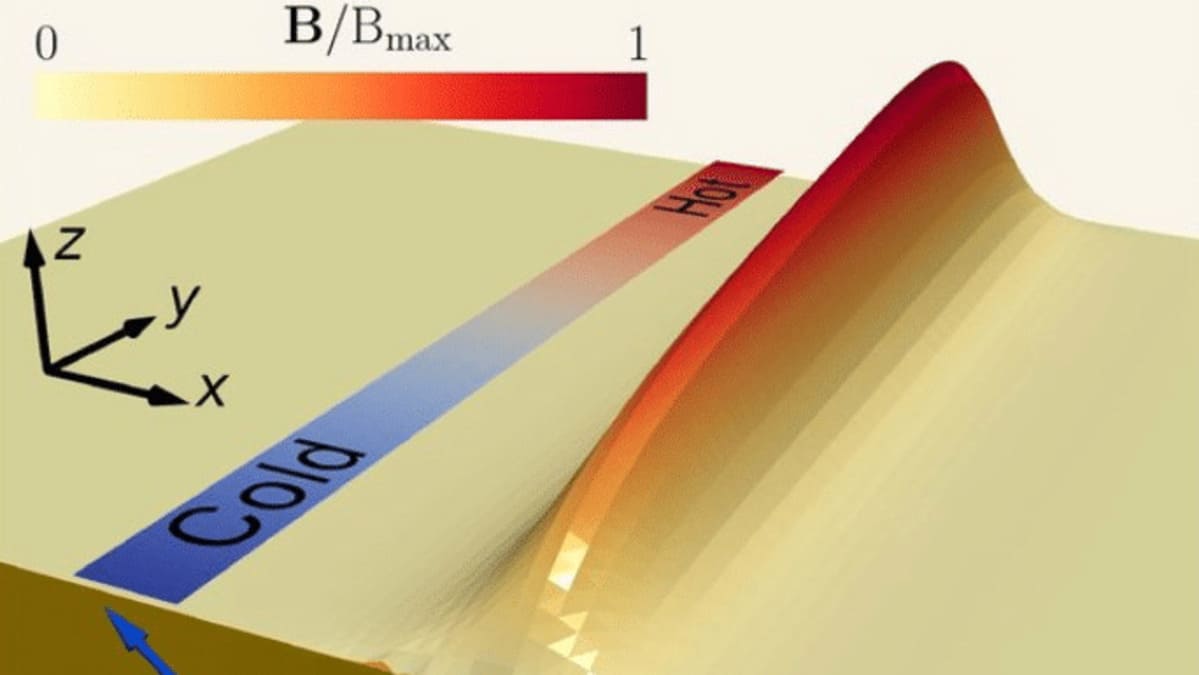
In a study published in Nature Physics on October 18, an international team of scientists, led by physicist Egor Babaev, made a groundbreaking discovery while experimenting with a compound known as Ba1-xKxFe2As2, or Ba-122 for short. This material, which was initially behaving as a superconductor—allowing electrons to flow without resistance—transformed under specific conditions. Instead of maintaining its superconductive properties, the material shifted to a new state, where electron quadruplets formed instead of the usual pairs of electrons that typically drive superconductivity.
This phenomenon was completely unexpected. In superconductivity, electrons pair up and move seamlessly through the material, creating no resistance. However, in this case, the Ba-122 material formed quadruplets of electrons, resulting in a material that resisted the flow of electricity—an entirely new state of matter that breaks the mold of traditional physics.
Breaking the Time Symmetry
What makes this discovery even more remarkable is that it defies time symmetry, a fundamental concept in particle physics. Time symmetry refers to the principle that a system behaves the same way when the direction of time is reversed—essentially, if you could “rewind” time, the laws of physics would remain consistent.
However, in this new state of matter, the behavior changes when time is reversed. As Dr. Babaev puts it, “If you reversed time in this new state, the material would behave differently—like turning a glass of water into ice by rewinding time!” This break in time symmetry means that the formation of electron quadruplets does not follow the laws of traditional superconductivity, where time symmetry should hold.
A Twenty-Year Pursuit of the Impossible
For Dr. Babaev, this discovery represents the culmination of nearly 20 years of work. Initially, his research focused on the theoretical possibility of electron quadruplets in superconducting materials. In 2004, he proposed that these quadruplets might form under specific conditions, and by 2012, he was confident that such a phenomenon could be observed in a real material. Over the next several years, the team meticulously studied various materials before finally observing the quadruplets in Ba-122 in 2018.
This finding disrupts a well-established framework in superconductivity, known as the BCS theory, which won the Nobel Prize in Physics in 1972. The BCS theory suggests that electrons pair up in a way that allows them to flow without resistance at very low temperatures. But this new discovery, where electron quadruplets replace pairs, demonstrates that the rules can be bent, if not broken altogether.
NASA warns China could slow Earth’s rotation with one simple move
This dog endured 27 hours of labor and gave birth to a record-breaking number of puppies
A New Frontier in Matter Research
While this new state of matter is still being studied, its implications are vast. The discovery opens the door to a host of new questions about how electrons behave at extreme conditions and how we might manipulate matter at a quantum level. As Dr. Babaev explains, “It will take many more years of research to fully understand this new state of matter, but it’s a compelling step forward in our exploration of the quantum world.”
The ability to create and understand materials that exist beyond the traditional boundaries of superconductivity could lead to advances in everything from quantum computing to energy transmission. As research in this area expands, it promises to reveal new insights into the fundamental nature of matter and the laws that govern our universe. This discovery isn’t just about a new material—it’s about a new way of thinking about the very fabric of our reality.